

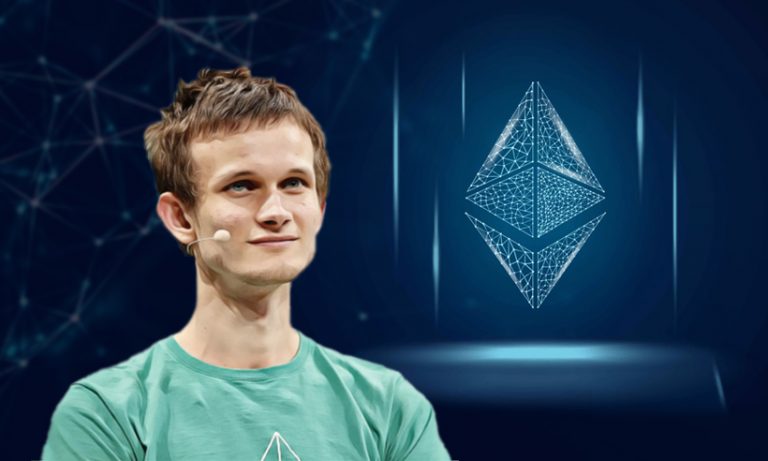
Vitalik Buterin recently shared insights on how AI is dramatically accelerating Ethereum’s development progress. He highlighted an impressive experiment where someone used AI-assisted “vibe-coding” to prototype much of Ethereum’s proposed 2030 roadmap in just weeks.
He described it as remarkable, noting that even six months prior, such rapid progress was unimaginable. He gave a personal example: using an open-source model to recreate an equivalent of his blog software in about an hour, suggesting more advanced models could handle it in one shot.
Vitalik emphasized that AI is “massively accelerating coding,” but stressed a balanced approach: split the gains—half toward speed, half toward security. This means using AI to generate far more test cases, pursue formal verification of complex components, and create multiple implementations for cross-checking.
He pointed to specific wins in the Ethereum ecosystem, like a collaborator in the Lean Ethereum effort using AI to generate a machine-verifiable proof for one of the most intricate theorems underpinning STARK security.
Register for Tekedia Mini-MBA edition 20 (June 8 – Sept 5, 2026).
Register for Tekedia AI in Business Masterclass.
Join Tekedia Capital Syndicate and co-invest in great global startups.
Register for Tekedia AI Lab.
Lean Ethereum focuses on formally verifying everything, and AI is greatly speeding up that work—along with broader test generation. While acknowledging caveats; AI-generated code often has bugs, inconsistencies, or incomplete “stub” implementations.
He argued the overall trend is powerful: even debugging and wrestling with issues can happen 5x faster and more thoroughly. Ultimately, Vitalik suggested openness to the idea that Ethereum’s roadmap could finish much faster than expected—and at a higher security standard—thanks to these tools.
He expressed excitement about the potential for “bug-free code” to move from idealistic dream to realistic expectation in key areas, enhancing trustlessness by verifying specific security claims and eliminating most failure modes.

This aligns with broader recent discussions from Vitalik on Ethereum’s roadmap, where AI could help accelerate prototyping, verification, and implementation of these ambitious changes. The Solana ecosystem is aggressively embracing AI, not just for on-chain applications like autonomous agents, but also to accelerate core development and smart contract building—mirroring trends seen in Ethereum.
While Vitalik Buterin highlighted AI’s potential to speed up Ethereum’s roadmap through rapid prototyping, test generation, and formal verification, Solana’s approach leans heavily into practical tooling for faster iteration and its unique strengths in high-speed, low-latency execution. AI-powered coding assistants tailored for Solana.
Tools like Cursor, Copilot, and specialized ones; Solana Developer MCP—Machine Conversation Protocol integrate directly into IDEs. They pull up-to-date Solana docs, debug errors, generate code snippets, and explain concepts instantly.
Helius.dev guides emphasize structured prompting to overcome initial limitations allowing devs to build secure, optimized programs much faster often turning multi-week tasks into hours or days. Solana-specific advantages amplified by AI.
As Helius CEO Mert noted in early 2026, Solana’s program model; reusable on-chain pipes for tokens and swaps without new contracts is inherently safer and more AI-friendly than EVM’s. AI can integrate existing protocols via a few prompts, slashing audit needs and enabling rapid feature shipping.

Rust’s complexity gap vs. Solidity is shrinking dramatically with AI assistance. Solana offers guides like “How to get started with AI tools on Solana” and “AI innovation at the speed of Solana,” plus a curated GitHub repo (awesome-solana-ai) listing AI tooling for code gen, agents, and more.
Projects like Código.ai provide Solana-specific code completion, error detection, and natural language program generation. Solana’s sub-second finality ~400ms and high throughput make it ideal for AI agents that need real-time on-chain actions like trading, DeFi execution without latency kills.
This attracts AI builders, creating a flywheel: more AI-focused projects ? more demand for dev tools ? faster iteration. Recent pushes include AI incubators, hackathons, and $10M+ grants for AI-Web3 intersection. AI agents represent the fastest-growing project category, with toolkits like SendAI’s Solana Agent Kit enabling 50+ actions across protocols.
Solana co-founder Anatoly Yakovenko has discussed AI’s role in future upgrades—envisioning network fees funding AI-assisted codebase improvements for continuous evolution; contrasting Vitalik’s focus on long-term self-sustainability. He sees AI helping Solana “adapt or die” by accelerating protocol enhancements.
AI-generated code can introduce bugs or inconsistencies, so careful review, step-by-step builds, and security focus remain essential. But the net effect is clear—Solana devs report 5-10x faster cycles in many cases, fueling explosive growth in AI-integrated dApps.
AI isn’t just building on Ethereum and Solana; it’s supercharging its developer velocity and positioning it as prime real estate for the agentic economy. The pace feels electric—expect even more acceleration as models improve.