

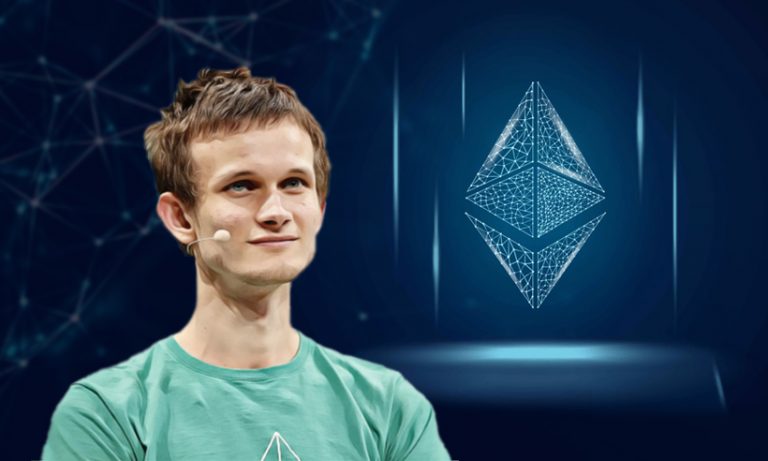
Ethereum co-founder Vitalik Buterin has outlined a detailed “quantum resistance roadmap” for Ethereum, addressing the long-term threat posed by quantum computers that could potentially break current cryptographic systems like ECDSA and BLS signatures.
This announcement came via a comprehensive post on X, building on the Ethereum Foundation’s recent efforts, including establishing a dedicated post-quantum research team earlier in the year. Practical quantum computers capable of breaking modern cryptography don’t exist yet, but progress in the field has raised concerns, with some warnings suggesting risks could materialize by around 2028.
The roadmap focuses on proactively upgrading Ethereum’s vulnerable components over the coming years, integrating these changes into broader Layer 1 improvements like faster finality and scalability. Vitalik highlighted four main quantum-vulnerable parts of Ethereum: Consensus-layer BLS signatures; used by validators.
Data availability mechanisms relying on KZG commitments and proofs. EOA signatures (ECDSA, the standard for externally owned accounts and wallets). Application-layer zero-knowledge proofs; those using KZG or Groth16, common in privacy tools, L2s, and apps.
Register for Tekedia Mini-MBA edition 20 (June 8 – Sept 5, 2026).
Register for Tekedia AI in Business Masterclass.
Join Tekedia Capital Syndicate and co-invest in great global startups.
Register for Tekedia AI Lab.
The plan involves step-by-step replacements with quantum-resistant alternatives, primarily hash-based signatures; variants of Winternitz or similar schemes, STARKs for aggregation and proofs, and native account abstraction. Consensus-layer signatures: Replace BLS with hash-based signatures. Use STARKs for efficient aggregation in full “Lean consensus.”
An intermediate “Lean available chain” step could come sooner with fewer signatures per slot. Selecting a final hash function; options include enhanced Poseidon variants, Poseidon1, or BLAKE3 for efficiency and security. Shift from KZG-based erasure coding to STARK-based alternatives.
Stick to maximized 1D DAS rather than pushing for 2D, given Ethereum’s scale goals. Recursive STARKs handle proofs for correct blob construction. EOA signatures: Introduce native account abstraction; building on proposals like EIP-8141 to support any signature scheme.

Current quantum-resistant options (hash-based) verify at higher gas costs ~200k vs. ECDSA’s 3k, but lattice-based schemes could improve with vectorized math precompiles. Long-term: Protocol-level recursive aggregation to minimize overhead.
Current ZK-SNARKs cost 300-500k gas; quantum-resistant STARKs could hit 10M gas. Protocol-layer recursive signature and proof aggregation via “validation frames” in transactions (EIP-8141). These frames can be replaced by compact STARK proofs, potentially verified at the mempool level; one proof every 500ms rather than on-chain per transaction.
This ties into the Ethereum Foundation’s “Strawmap”, which envisions roughly seven hard forks over ~4 years (every ~6 months), with upgrades like Glamsterdam and Hegotá in 2026. Goals include faster block production and finality (seconds), higher throughput, and full post-quantum security alongside privacy enhancements.
The approach emphasizes gradual migration, engineering feasibility, and avoiding disruption, while acknowledging trade-offs like proof sizes and gas costs. It’s part of a broader push toward “Lean Ethereum” — simpler, more secure, and future-proof. This development reinforces Ethereum’s proactive stance on long-term security.

While quantum computers capable of breaking current cryptography remain years away, this proactive stance positions Ethereum as forward-thinking in long-term security. The roadmap targets four vulnerable areas; consensus BLS signatures, KZG-based data availability, ECDSA for EOAs/wallets, and certain ZK proofs like Groth16/KZG.
Replacing them with quantum-resistant alternatives—primarily hash-based signatures, STARKs for proofs and aggregation, and native account abstraction—aims to make Ethereum resilient against future quantum attacks like Shor’s algorithm. This could prevent catastrophic risks, such as stolen funds from exposed private keys or disrupted consensus.
Vitalik noted that even if quantum threats arrive early, the chain would “keep chugging along” with reduced finality guarantees but no halt. Hash-based/STARK solutions increase proof sizes and gas costs initially ~200k gas for signatures vs. ECDSA’s 3k; STARKs potentially 10M gas without aggregation.
Protocol-layer recursive aggregation via EIP-8141 “validation frames” and mempool-level proving could offset this, keeping costs near-zero long-term. The roadmap bundles this with broader goals: block times down to ~2 seconds, finality in 6-16 seconds from ~16 minutes, gigagas/sec L1 throughput, and teragas L2 scaling—making Ethereum faster and more scalable overall.
Proactive quantum hardening signals Ethereum prioritizes durability, encouraging builders in DeFi, L2s, privacy tools, and ZK apps. It integrates with privacy enhancements and formal verification, potentially attracting more institutional-grade development. However, heavier computations could temporarily raise costs for ZK-heavy apps until aggregation matures.
Bridges, oracles, and cross-chain systems remain vulnerable points (as noted in related discussions). Ethereum’s approach could set a standard, pressuring other chains; Bitcoin lacks a similar detailed plan to follow. Projects like Naoris Protocol highlight full-stack quantum resilience as a growing focus.
This bolsters Ethereum’s case as a secure, future-proof settlement layer for trillions in value. It differentiates ETH from competitors and aligns with institutional interest from BlackRock, Goldman. No immediate price surge is evident from recent coverage, but it strengthens the “ultrasound money” and durability thesis.
By addressing existential threats early, it reduces tail risks for holders. Vitalik’s ongoing ETH sales (noted in context) appear unrelated, tied to personal and portfolio management. Multiple forks introduce upgrade risks though Ethereum’s history shows smooth transitions. Gas cost increases during transition could affect user experience temporarily.
This roadmap reinforces Ethereum’s maturity—treating quantum resistance as a core engineering priority rather than a panic fix. It ties into the “Lean Ethereum” vision: simpler, faster, more secure, and privacy-focused. If executed well by ~2029-2030, it could cement Ethereum’s lead in institutional and long-horizon adoption.