

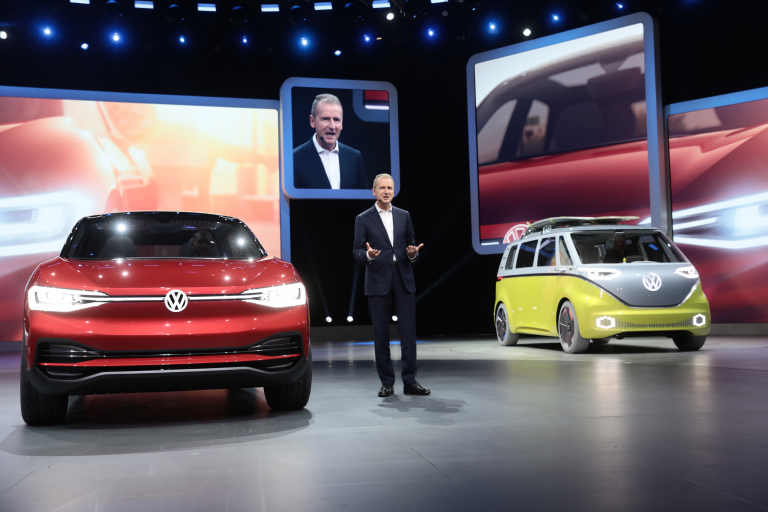
Volkswagen reported a sharp decline in second-quarter earnings, underscoring the growing challenges facing one of the world’s largest automakers.
The German automotive giant announced that its net profit fell 32.9% year-over-year to €1.54 billion ($1.8 billion), reflecting mounting pressure from weakening demand in China, rising competitive intensity, and the broader transformation of the global automotive industry.
The results highlight the difficult environment European car manufacturers face as they navigate slowing economic growth, shifting consumer preferences, and the accelerating transition toward electric vehicles.
China has long been Volkswagen’s most important market, accounting for a substantial share of its global vehicle sales and profitability. For decades, the company enjoyed a dominant position in the country through successful joint ventures and a reputation for quality engineering.
Register for the next Tekedia Mini-MBA.
Register for Tekedia AI in Business Masterclass.
Join Tekedia Capital Syndicate and co-invest in great global startups.
That advantage has gradually eroded as domestic Chinese automakers have rapidly expanded their market presence. Companies such as BYD, Geely, and several emerging electric vehicle manufacturers have captured growing market share by offering technologically advanced vehicles at competitive prices.
The slowdown in China’s economy has also contributed to weaker consumer spending on big-ticket purchases such as automobiles. Buyers have become more cautious amid concerns about economic uncertainty, property market weakness, and slowing income growth.
Aggressive price competition among automakers has squeezed profit margins across the industry. To remain competitive, Volkswagen has been forced to introduce discounts and promotional campaigns, reducing profitability even as it seeks to maintain sales volumes.
The company’s financial results illustrate the scale of these challenges. A decline of nearly one-third in quarterly net profit signals that Volkswagen is facing pressure not only from lower sales but also from increasing operational costs and significant investments in future technologies.

Automakers worldwide are spending billions of euros on electric vehicle development, battery technology, software platforms, and digital services to remain competitive in an industry undergoing its most profound transformation in decades.
Volkswagen continues to push forward with its electrification strategy despite the earnings setback. The company has committed substantial resources to expanding its electric vehicle lineup across multiple brands, including Volkswagen, Audi, Porsche, and Škoda.
It is also investing in battery production facilities, charging infrastructure partnerships, and next-generation software systems designed to enhance vehicle connectivity and autonomous driving capabilities.

These investments come during a period of slowing global electric vehicle demand in several regions. While EV adoption continues to grow, consumer enthusiasm has moderated due to higher financing costs, concerns about charging infrastructure, and reduced government incentives in some markets.
This has complicated manufacturers’ efforts to balance current profitability with long-term strategic investments. Europe presents its own set of challenges for Volkswagen. Inflation, elevated interest rates, and persistent supply chain pressures have affected vehicle demand across the region.
Meanwhile, stricter emissions regulations require continued investment in cleaner technologies while maintaining production efficiency. Balancing regulatory compliance with shareholder expectations has become increasingly difficult as operating conditions remain uncertain.
Despite the disappointing quarterly performance, Volkswagen retains significant competitive advantages. The company possesses a globally recognized portfolio of brands, an extensive manufacturing network, and decades of engineering expertise.
Management continues to emphasize cost discipline, operational efficiency, and strategic investments aimed at strengthening long-term competitiveness. Success in these areas will be critical as the company seeks to regain momentum in China while expanding its presence in other growth markets.
Volkswagen’s recovery will largely depend on its ability to adapt to rapidly changing market conditions. Revitalizing sales in China, improving profitability in its electric vehicle business, and successfully managing costs will be central to its strategy.
Although the second-quarter earnings decline represents a significant setback, Volkswagen’s continued commitment to innovation and global expansion suggests that the automaker remains focused on positioning itself for long-term success in an increasingly competitive automotive landscape.
Germany Accelerates Digital Railway Revolution with €1.7 Billion ETCS Funding
Germany is making one of its largest long-term investments in railway modernization, committing around €1.7 billion ($1.93 billion) through the end of 2030 to accelerate the rollout of the European Train Control System across its rail network.
The funding reflects the country’s determination to modernize rail infrastructure, improve safety, increase network capacity, and strengthen cross-border rail transport throughout Europe.
As railways become increasingly central to Europe’s climate and mobility goals, Germany’s commitment underscores the importance of digital technology in shaping the future of transportation.
The European Train Control System is a standardized digital signaling and train protection system developed under the European Rail Traffic Management System. Unlike traditional signaling methods.
ETCS enables continuous communication between trains and trackside equipment, allowing trains to operate more efficiently while maintaining high safety standards. The technology reduces reliance on physical signals by transmitting movement authorities directly to train drivers through onboard digital displays.
This results in more accurate train operations, lower risks of human error, and better management of railway traffic. Germany’s investment comes at a critical time. The country’s rail infrastructure has faced increasing pressure due to aging equipment, growing passenger demand, and expanding freight transport.
Delays, congestion, and maintenance challenges have highlighted the need for a comprehensive digital transformation. By allocating €1.7 billion over the next several years, the Federal Transport Ministry aims to equip trains with ETCS technology while supporting the broader modernization of the national rail network.
One of the biggest advantages of ETCS is its ability to increase railway capacity without requiring entirely new tracks.
Because trains equipped with digital signaling can safely operate with shorter distances between them, rail operators can run more services on existing infrastructure. This is particularly valuable in densely populated regions where constructing new rail lines is expensive, time-consuming, and often constrained by environmental or urban planning concerns.
Safety remains another major benefit. ETCS continuously monitors train speed and position, automatically intervening if a train exceeds speed limits or approaches danger zones. By reducing dependence on manual operations and conventional trackside signals, the technology significantly lowers the risk of accidents caused by human error.
This makes rail travel safer for passengers while also improving operational reliability for freight services. The investment also supports Germany’s broader environmental objectives. Rail transport produces significantly fewer greenhouse gas emissions than road or air travel.
Making it a cornerstone of Europe’s climate strategy. Improving railway efficiency and reliability encourages more passengers and businesses to choose trains over less sustainable transportation options. As governments across Europe work toward ambitious carbon reduction targets, digital rail infrastructure is increasingly viewed as an essential component of sustainable mobility.
Beyond Germany’s borders, ETCS promotes seamless international rail travel. Europe has historically operated multiple national signaling systems, creating technical barriers for trains crossing borders.
Standardizing digital train control through ETCS enables locomotives to move more easily between countries without requiring expensive modifications or multiple onboard systems. This improves freight logistics, strengthens supply chains, and makes international passenger rail services more efficient and competitive.
The funding is also expected to stimulate innovation within Germany’s railway and technology sectors. Equipment manufacturers, engineering firms, software developers, and infrastructure companies will all play key roles in deploying ETCS across the country’s rail network.
The modernization effort is likely to create skilled jobs while reinforcing Germany’s leadership in advanced transportation technologies. Challenges remain, including coordinating upgrades across thousands of kilometers of railway infrastructure, managing installation schedules without disrupting existing services, and ensuring interoperability between legacy systems.
The long-term benefits are expected to outweigh these complexities as Germany gradually builds a smarter, more resilient railway system. Germany’s €1.7 billion commitment represents more than an infrastructure upgrade.
It is a strategic investment in safer transportation, greater economic competitiveness, environmental sustainability, and deeper European integration.
As ETCS deployment expands over the coming years, Germany is positioning its rail network to meet the demands of a digital, connected, and climate-conscious future while setting an example for railway modernization across Europe.