

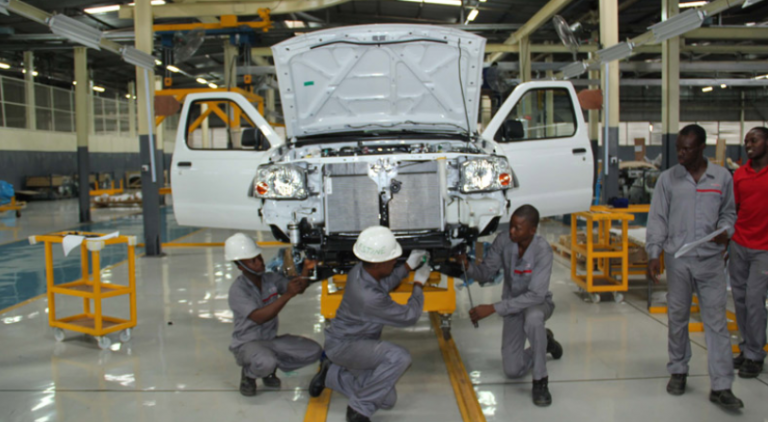
Volkswagen Chief Executive Oliver Blume has outlined ambitious targets for the struggling German automaker, aiming to sell nine million vehicles worldwide by 2030 while achieving a 9% rate of return.
The targets represent an important part of the company’s efforts to restore profitability, strengthen its competitive position and navigate an increasingly challenging global automotive industry.
Speaking to Germany’s mass-circulation Bild newspaper, Blume expressed confidence in Volkswagen’s ability to improve its performance over the coming years.
Register for the next Tekedia Mini-MBA.
Register for Tekedia AI in Business Masterclass.
Join Tekedia Capital Syndicate and co-invest in great global startups.
His ambitions suggest that the company is preparing for a significant transformation as it confronts slowing demand, rising competition, technological disruption and pressure on its traditional business model.
Volkswagen remains one of the world’s largest automotive manufacturers, with an extensive portfolio of brands serving different customer segments.
Its position has come under pressure from several directions. Chinese manufacturers are expanding rapidly, particularly in electric vehicles, while established competitors are investing heavily in new technologies and more efficient production systems.
China represents one of Volkswagen’s most important challenges. The company has historically enjoyed a strong presence in the country, but domestic manufacturers have become increasingly competitive through affordable electric vehicles, advanced software and faster product development.
This shift has made it more difficult for foreign automakers to maintain their market share and pricing power. Volkswagen’s ambitious 2030 sales target therefore depends partly on its ability to defend its position in China while identifying new growth opportunities in other markets.
The company must also ensure that its vehicles remain attractive to consumers who are becoming more selective about pricing, technology, efficiency and overall ownership costs.
The profitability objective is equally significant. A 9% rate of return would require Volkswagen to improve operational efficiency, control manufacturing expenses and generate stronger earnings from its vehicle portfolio.
Selling more cars alone will not guarantee success if production costs remain elevated or competition forces the company to reduce prices. Volkswagen will need to make difficult decisions about investments, production capacity and its workforce.
Its restructuring efforts are important as European manufacturers face high energy costs, expensive labour and substantial investments in electric vehicle development.
The transition to electric mobility also presents opportunities and risks. Volkswagen has invested billions of euros in electric vehicle platforms, battery technology and software development.
Weaker-than-expected demand in some markets and intense competition have complicated the financial returns from these investments.
The company must balance its electric vehicle ambitions with continued demand for conventional and hybrid models. Maintaining flexibility across different powertrain technologies could help Volkswagen respond to changing consumer preferences without abandoning its longer-term electrification strategy.
Competition from Chinese electric vehicle manufacturers is forcing Volkswagen to accelerate innovation and reconsider its pricing strategies.
Developing affordable models, improving software capabilities and shortening product development cycles will be essential to remaining competitive.
Blume’s targets offer investors, employees and customers a measurable indication of where Volkswagen wants to be by the end of the decade.
However, achieving nine million annual vehicle sales and a 9% return will require consistent execution rather than ambitious announcements.
Volkswagen’s 2030 objectives represent a major test of its ability to reinvent itself. The company must combine technological innovation, financial discipline and global market strength to regain momentum.
Whether Blume can deliver on these promises will determine how successfully Volkswagen navigates the automotive industry’s transformation.