

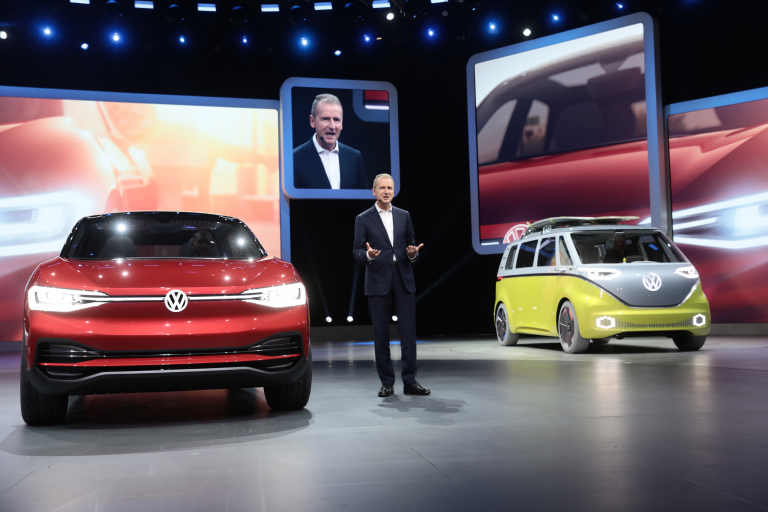
Volkswagen plans to cut costs by 20% across all brands by the end of 2028, according to Manager Magazin.
The move comes as Europe’s largest carmaker seeks to reinforce its balance sheet against rising expenses, intensifying competition in China, and U.S. tariff pressures.
Chief Executive Oliver Blume and finance chief Arno Antlitz presented what the publication described as a “massive” savings plan during a closed-door meeting with top executives in Berlin in mid-January.
Register for Tekedia Mini-MBA edition 20 (June 8 – Sept 5, 2026).
Register for Tekedia AI in Business Masterclass.
Join Tekedia Capital Syndicate and co-invest in great global startups.
Register for Tekedia AI Lab.
A company spokesperson said Volkswagen began a group-wide cost programme three years ago and has already achieved savings in the double-digit billion-euro range, helping to offset geopolitical headwinds such as U.S. tariffs. Further details on where additional reductions will be implemented were not disclosed.
China, Tariffs, and Technology Costs
Volkswagen’s push comes amid mounting structural challenges across its core markets.
In China, once the company’s most profitable region, German automakers are contending with an aggressive price war led by domestic electric vehicle manufacturers. Local brands have combined competitive pricing with advanced software features and shorter development cycles, eroding the traditional advantages of European incumbents.

At the same time, the group faces elevated development costs tied to parallel investment in combustion engines and electric drivetrains. According to Manager Magazin, expenditures on software and dual powertrain development remain significant, straining margins during a period of slower global demand growth.
While Volkswagen operates production facilities in North America, transatlantic trade tensions and shifting industrial policy, marked by U.S. tariffs, continue to complicate supply chains and cost structures.
Speculation that plant closures could form part of the savings drive has drawn attention from labor representatives. Daniela Cavallo, head of Volkswagen’s works council, acknowledged the report but referenced an agreement reached with Volkswagen AG at the end of 2024.

“With this agreement, we have expressly ruled out plant closures and layoffs for operational reasons,” Cavallo said in a statement.
Volkswagen is already undertaking a major workforce restructuring. The company is cutting 35,000 jobs in Germany by 2030 as part of its competitiveness programme. In January, the core Volkswagen brand said it would reduce management positions and consolidate its production platform, targeting €1 billion in savings over the same period.
The balance Volkswagen must strike is delicate: delivering structural cost reductions while maintaining labor peace in Germany, where worker representation on supervisory boards carries significant influence.
Industry-Wide Cost Discipline
The tightening environment is not limited to Volkswagen. Mercedes-Benz said last week that profit margins at its automotive division could decline further this year and pledged “relentless cost discipline.”
Across Europe’s auto sector, manufacturers are grappling with:
- Slowing electric vehicle demand growth in some markets.
- High capital expenditure is tied to electrification and digitalization.
- Competitive pricing pressure from Chinese entrants.
- Regulatory requirements are pushing low-emission vehicle development.
Volkswagen, headquartered in Wolfsburg, said on Friday it remains committed to its long-term transition toward more efficient and low-emission vehicles, signaling that cost-cutting will not reverse its electrification trajectory.
Platform Consolidation and Brand Synergies
A 20% cost reduction across all brands implies deeper integration within Volkswagen Group’s multi-brand structure, which includes mass-market, premium, and performance marques. Analysts expect further consolidation of vehicle platforms, shared software architectures, and streamlined procurement to deliver scale efficiencies.
Improving inter-brand cooperation — long a challenge within the group’s decentralized structure — may become a key lever. Shared development of battery systems, software stacks, and manufacturing modules could reduce duplication and accelerate time-to-market.
The emphasis on software spending also reflects Volkswagen’s ongoing efforts to strengthen in-house digital capabilities after earlier setbacks in its software division. Containing those costs while remaining competitive in vehicle intelligence and connectivity will be central to margin stabilization.
Blume is expected to provide further details at Volkswagen’s annual results press conference on March 10.
The 20% target underscores the scale of the adjustment facing Europe’s automotive champions. With China no longer delivering easy growth, U.S. trade policy adding volatility, and technology investments compressing returns, German carmakers are entering a phase defined by capital discipline and structural reform.