

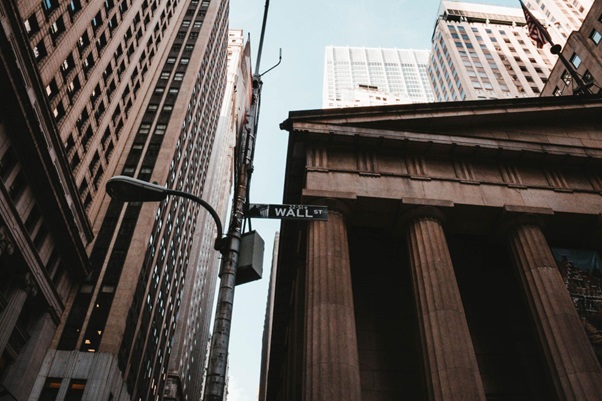
The U.S. interest-rate outlook has shifted sharply as Wall Street increasingly anticipates that the Federal Reserve will resume monetary tightening in September, with 19 of 22 major financial institutions now expecting a rate increase.
The emerging consensus marks a significant change in expectations and suggests that investors are preparing for a potentially more restrictive monetary-policy environment through the remainder of 2026.
The forecasts vary considerably on the size of the move.
Register for the next Tekedia Mini-MBA.
Register for Tekedia AI in Business Masterclass.
Join Tekedia Capital Syndicate and co-invest in great global startups.
Goldman Sachs expects a 25-basis-point increase, while Bank of America, Deutsche Bank and RBC are reportedly looking for a larger 75-basis-point adjustment. Several major institutions, including JPMorgan Chase, Morgan Stanley, Barclays, Citigroup, HSBC and UBS, are positioned around a 50-basis-point increase.
This dispersion highlights the uncertainty surrounding how aggressively the Fed may respond to renewed inflationary pressure. Inflation has become a central factor behind the changing expectations.
Recent August price data have reinforced concerns that inflation is proving more persistent than policymakers would prefer, while higher energy prices have added another potential source of pressure.

Brent crude has returned to elevated levels, creating a difficult backdrop for central bankers attempting to distinguish temporary supply shocks from broader inflation persistence.
The labor market and broader economic activity also matter. A rate hike becomes easier for policymakers to justify when economic conditions remain sufficiently resilient to absorb tighter financial conditions.
Yardeni Research noted that recent inflation readings and labor-market conditions have strengthened the case for a September increase, while emphasizing that the Federal Reserve’s eventual decision remains dependent on incoming economic data.

What makes the current situation particularly important for financial markets is the expectation that September may not represent a one-off adjustment. Most of the Wall Street institutions surveyed reportedly anticipate a second rate hike during 2026.
That possibility would represent a materially different policy trajectory from an isolated September move because investors would have to reassess borrowing costs, Treasury yields, equity valuations and the broader cost of capital.
Higher interest rates generally increase the discount rate applied to future corporate earnings. That can place pressure on highly valued equities, particularly companies whose investment cases depend heavily on earnings growth several years into the future.
Higher rates can support the dollar and increase yields available from fixed-income instruments, potentially changing how investors allocate capital across equities, bonds, cash and alternative assets. For cryptocurrency markets, the implications can also be significant.
Bitcoin and other digital assets have increasingly traded within a macroeconomic environment shaped by liquidity conditions, Treasury yields and expectations for Federal Reserve policy. A more hawkish interest-rate path could therefore create additional volatility as investors reassess the availability and cost of capital.
Yet the 19-of-22 Wall Street consensus remains a forecast rather than a decision by the Federal Reserve. Market expectations can change quickly when inflation, employment, consumer spending or financial conditions deliver unexpected signals.
CME-linked market pricing had placed the probability of a September increase near 87% ahead of the meeting, illustrating how strongly expectations had moved. The September meeting represents more than a question of whether rates rise.
Markets are also watching the size of the move and, perhaps more importantly, whether policymakers signal another increase later in 2026. The distinction will determine whether investors interpret September as a limited policy adjustment or the beginning of a broader tightening cycle.