

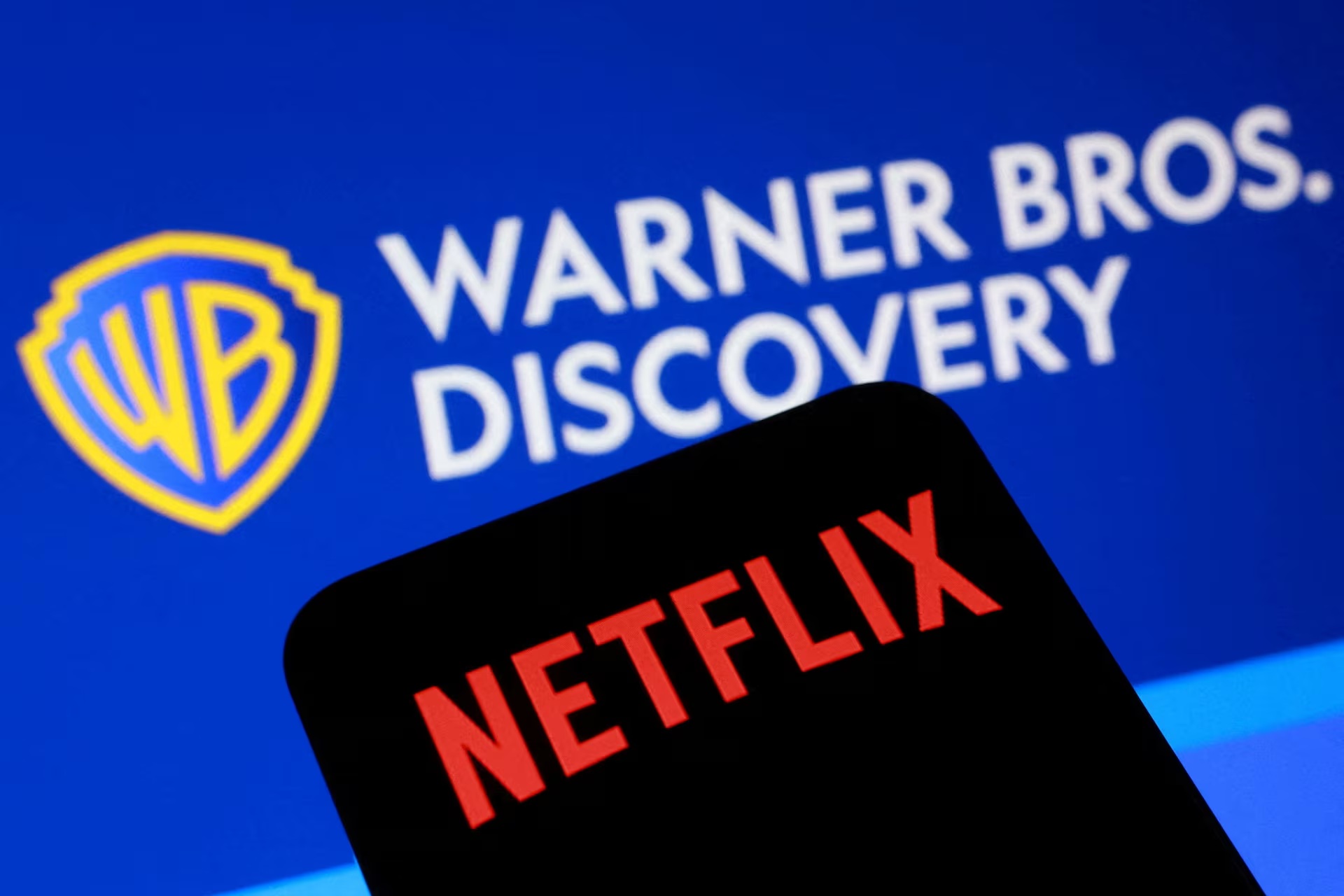
Warner Bros. Discovery’s board is reassessing its Netflix agreement after Paramount Skydance enhanced its all-cash bid, deepening uncertainty around a transaction already facing legal, financial, and regulatory complexities.
Warner Bros. Discovery is considering reopening discussions with Paramount Skydance after receiving an amended proposal that improves the economics of its hostile bid, according to a Bloomberg News report citing people familiar with the matter.
The renewed deliberations come months after Warner Bros. agreed in December to sell its film studio and HBO Max streaming service to Netflix for $27.75 per share. Paramount, which owns CBS and MTV, subsequently launched an unsolicited all-cash offer of $30 per share.
Register for Tekedia Mini-MBA edition 20 (June 8 – Sept 5, 2026).
Register for Tekedia AI in Business Masterclass.
Join Tekedia Capital Syndicate and co-invest in great global startups.
Register for Tekedia AI Lab.
Last week, Paramount further sweetened its proposal, introducing a “ticking fee” of 25 cents per share for every quarter the deal remains unclosed after Dec. 31, 2026, due to regulatory delays. According to prior reporting by CNBC.com, that mechanism could amount to roughly $650 million in additional cash value per quarter.
Paramount also pledged to absorb the $2.8 billion termination fee owed to Netflix if Warner Bros. were to abandon the existing agreement, and said it would eliminate $1.5 billion in potential debt refinancing costs.
Together, those concessions materially alter the financial calculus for Warner Bros.’ board and shareholders.

Escalating Deal Complexity
The board’s willingness to evaluate Paramount’s enhanced proposal adds another layer of complexity to a transaction that was already multifaceted.
At the core is a three-sided dynamic:
• A signed agreement with Netflix at $27.75 per share
• A hostile, higher all-cash bid from Paramount at $30 per share
• Competing signals that both bidders are prepared to improve their terms

The situation effectively introduces an auction environment after a definitive agreement has already been executed. That dynamic increases legal, fiduciary, and execution considerations for Warner Bros.’ board.
Under typical merger agreements, boards retain fiduciary-out clauses allowing them to consider superior proposals. However, exercising such clauses can trigger termination fees, litigation risk, and shareholder scrutiny. Paramount’s willingness to cover the $2.8 billion break fee is designed to neutralize one of the largest barriers to switching suitors.
Even so, reopening negotiations could expose the company to claims from Netflix if procedural obligations are not strictly observed.
Beyond price, the outcome has significant strategic implications for the media landscape.
Acquiring Warner Bros.’ studio and HBO Max would dramatically expand Netflix’s content production capacity and intellectual property library, reinforcing its position in global streaming. It would also accelerate vertical integration by pairing one of Hollywood’s major studios with the largest subscription streaming platform.
For Paramount, the acquisition would represent a transformative scale move. The company has faced competitive pressure in streaming and traditional broadcasting. Securing Warner Bros.’ assets could reposition it more aggressively in a market dominated by a few global players.
The emergence of competing bids underlines broader industry stress. Streaming profitability remains uneven, advertising markets have been volatile, and legacy media companies continue to grapple with cord-cutting and declining linear TV revenues.
In that context, Warner Bros.’ assets are viewed as strategically valuable, making the deal particularly sensitive.
Regulatory and Financing Risks
Regulatory review remains a central variable.
A Netflix–Warner Bros. combination could attract scrutiny over content concentration and market power in streaming distribution. A Paramount-led transaction could face examination over media consolidation and ownership structures.
The ticking fee signals Paramount’s expectation that regulatory review may extend beyond standard timelines. By compensating shareholders for delay, the mechanism attempts to mitigate uncertainty, but it also highlights the possibility of protracted approval processes.
Financing strength is another factor. An all-cash bid may offer greater certainty than a stock-heavy transaction, but it also depends on access to capital markets and balance sheet capacity. Paramount’s promise to eliminate $1.5 billion in refinancing costs addresses one dimension of execution risk, yet broader financing conditions remain relevant.
Growing Questions Surrounding the Deal
The latest development adds to mounting issues surrounding the transaction:
• A signed agreement is now subject to competitive pressure
• A hostile bidder escalating terms
• Potential regulatory headwinds
• Significant termination fees and refinancing implications
• The prospect of litigation or shareholder activism
What began as a straightforward asset sale has evolved into a high-stakes bidding contest with legal and strategic ramifications.
Bloomberg reported that both Paramount and Netflix have indicated a willingness to raise their offers further. The mere possibility of a higher bid increases leverage for Warner Bros.’ board but also prolongs uncertainty for employees, investors, and counterparties.