

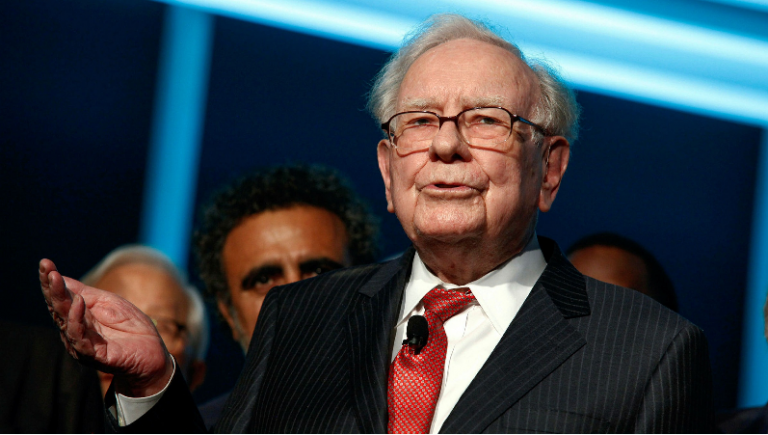
Warren Buffett, the billionaire investor widely known as the “Oracle of Omaha,” has stepped down as Chief Executive Officer of Berkshire Hathaway on Wednesday, ending a remarkable six-decade tenure that transformed the company into a global powerhouse.
Renowned for his astute wisdom and clear-eyed approach to investing, Buffett played a central role in demystifying finance for millions of investors worldwide. He took control in 1965, delivering compounded annual returns of 19.9% that crushed the S&P 500’s 10.4%, turning a $10,000 investment into tens of millions.
According to The Wall Street Journal, Buffett remained consistent with his long-held investment philosophy in his final year at the helm. Berkshire Hathaway sold approximately $10 billion more in stocks than it purchased through September, while the company’s cash reserves swelled to a record $358 billion—underscoring Buffett’s cautious stance amid market uncertainty.
Register for Tekedia Mini-MBA edition 20 (June 8 – Sept 5, 2026).
Register for Tekedia AI in Business Masterclass.
Join Tekedia Capital Syndicate and co-invest in great global startups.
Register for Tekedia AI Lab.
When Buffett took control of Berkshire Hathaway, it was a struggling textile company. Through disciplined capital allocation and long-term thinking, he transformed it into one of the most valuable conglomerates in the world. Under his leadership, Berkshire evolved into a diversified empire with major interests in insurance (GEICO), railroads (BNSF), energy (Berkshire Hathaway Energy), manufacturing, retail, and some of the world’s most iconic public companies, including Apple, Coca-Cola, and American Express.
Berkshire’s growth under Buffett was remarkable. Shareholders who invested early saw returns that consistently outperformed the broader market, making Berkshire Hathaway a benchmark for long-term value creation. His investment philosophy became his signature legacy. Rooted in the value-investing principles pioneered by his mentor, Benjamin Graham, he emphasized buying high-quality businesses with strong fundamentals, durable competitive advantages, and trustworthy management—at reasonable prices. He famously avoided speculation, market timing, and complex financial engineering, advocating instead for patience and discipline.
His annual letters to shareholders became must-read documents for investors worldwide, offering clear insights into markets, economics, and human behavior. In simple, relatable language, Buffett demystified investing and made financial wisdom accessible to millions.

As CEO, Buffett set a high standard for corporate leadership. He ran Berkshire Hathaway with a decentralized structure, trusting managers to operate independently while holding them to strict ethical standards. Integrity, transparency, and accountability were non-negotiable.
He also aligned himself closely with shareholders. He drew a relatively modest salary, avoided excessive executive compensation, and consistently treated shareholders as long-term partners. This approach strengthened trust and reinforced Berkshire’s reputation as a company built to last.
Buffett’s exit as CEO reflects careful succession planning rather than abrupt change. He spent years preparing the next generation of leadership and embedding Berkshire’s culture and values into the organization. His successor inherit not only a strong balance sheet, but a clear philosophy centered on long-term thinking, ethical conduct, and disciplined decision-making.

Notably, Buffett’s exit as CEO reflects careful succession planning rather than abrupt change. He spent years preparing the next generation of leadership and embedding Berkshire’s culture and values into the organization. His successor Greg Abel, steps in as CEO on January 1, inheriting a $381.7 billion cash pile and a diversified empire. As Greg prepares to assume the role of CEO, he faces the immediate challenge of reassuring investors and maintaining confidence in Berkshire’s future.