

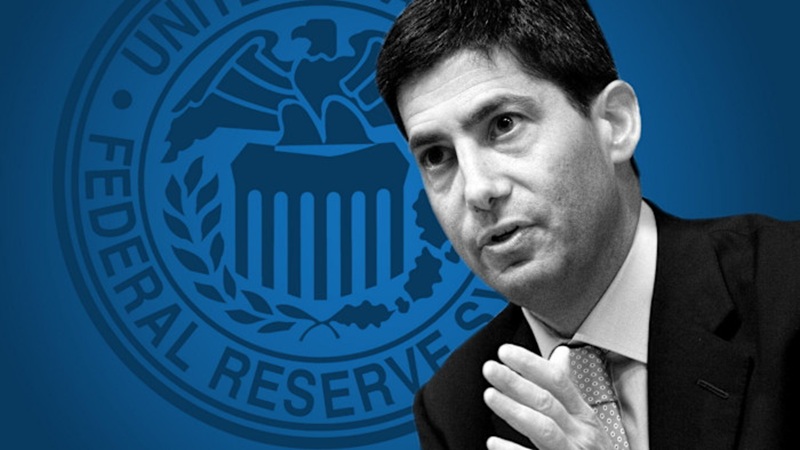
Financial markets experienced a sharp bout of volatility following the first Federal Open Market Committee (FOMC) meeting led by Kevin Warsh, as investors rapidly reassessed the trajectory of U.S. monetary policy.
What was initially expected to be a relatively uneventful policy gathering instead became a catalyst for significant market turbulence, sending stocks lower, bond yields higher, and boosting expectations that the Federal Reserve could raise interest rates as soon as July.
The most notable outcome of the meeting was the sudden increase in market-implied odds of a July rate hike. Prior to the announcement, traders largely believed the Federal Reserve would maintain its cautious stance and continue monitoring inflation and labor market conditions before making any further policy moves.
However, Warsh’s remarks and the committee’s updated outlook suggested a more hawkish approach than investors had anticipated. As a result, futures markets quickly adjusted, with the probability of a July rate increase climbing to approximately 25%.
Register for the next Tekedia Mini-MBA.
Register for Tekedia AI in Business Masterclass.
Join Tekedia Capital Syndicate and co-invest in great global startups.
The reaction highlights the immense influence that Federal Reserve leadership can have on financial markets. Warsh, who has long been viewed as a policy hawk, entered the role with a reputation for prioritizing inflation control and maintaining the credibility of the central bank. His first meeting appeared to reinforce those expectations.
While the Fed did not immediately raise rates, policymakers signaled that inflation risks remain elevated and that premature easing could jeopardize progress made in restoring price stability. Equity markets responded negatively to the prospect of tighter monetary conditions.
Growth-oriented sectors, particularly technology stocks, experienced the greatest pressure as investors recalculated future earnings valuations using higher discount rates. The possibility of increased borrowing costs also weighed on consumer discretionary and real estate shares, sectors that typically benefit from lower interest rates.

Major indexes recorded notable declines as traders digested the implications of a potentially more aggressive Federal Reserve. The bond market likewise reflected changing expectations. Treasury yields moved higher across much of the curve, particularly in shorter maturities that are most sensitive to monetary policy decisions.
Rising yields indicate that investors are demanding greater compensation for holding government debt amid expectations of higher future interest rates.
At the same time, the U.S. dollar strengthened against several major currencies as international investors responded to the prospect of tighter American monetary policy relative to other developed economies. Supporters of a more hawkish stance argue that the Federal Reserve must remain vigilant.
Although inflation has moderated from its post-pandemic peaks, price pressures in key sectors continue to persist. Labor markets remain relatively resilient, wage growth has stayed firm, and consumer spending has not weakened significantly. From this perspective, maintaining a restrictive policy framework may be necessary to ensure inflation returns sustainably to the Fed’s long-term target.

Critics, warn that additional rate increases could place unnecessary strain on economic growth. Higher borrowing costs can reduce business investment, weaken housing activity, and increase financial stress for households carrying variable-rate debt. Some economists fear that tightening policy too aggressively could raise the risk of a recession at a time when economic momentum is already slowing.
As markets look ahead to the July meeting, investors will closely monitor incoming inflation, employment, and consumer spending data. Warsh’s first FOMC meeting has already demonstrated that leadership transitions at the Federal Reserve can significantly alter market expectations. Whether a July rate hike ultimately occurs remains uncertain, but one thing is clear: investors are now taking the possibility far more seriously than they were just days ago.