

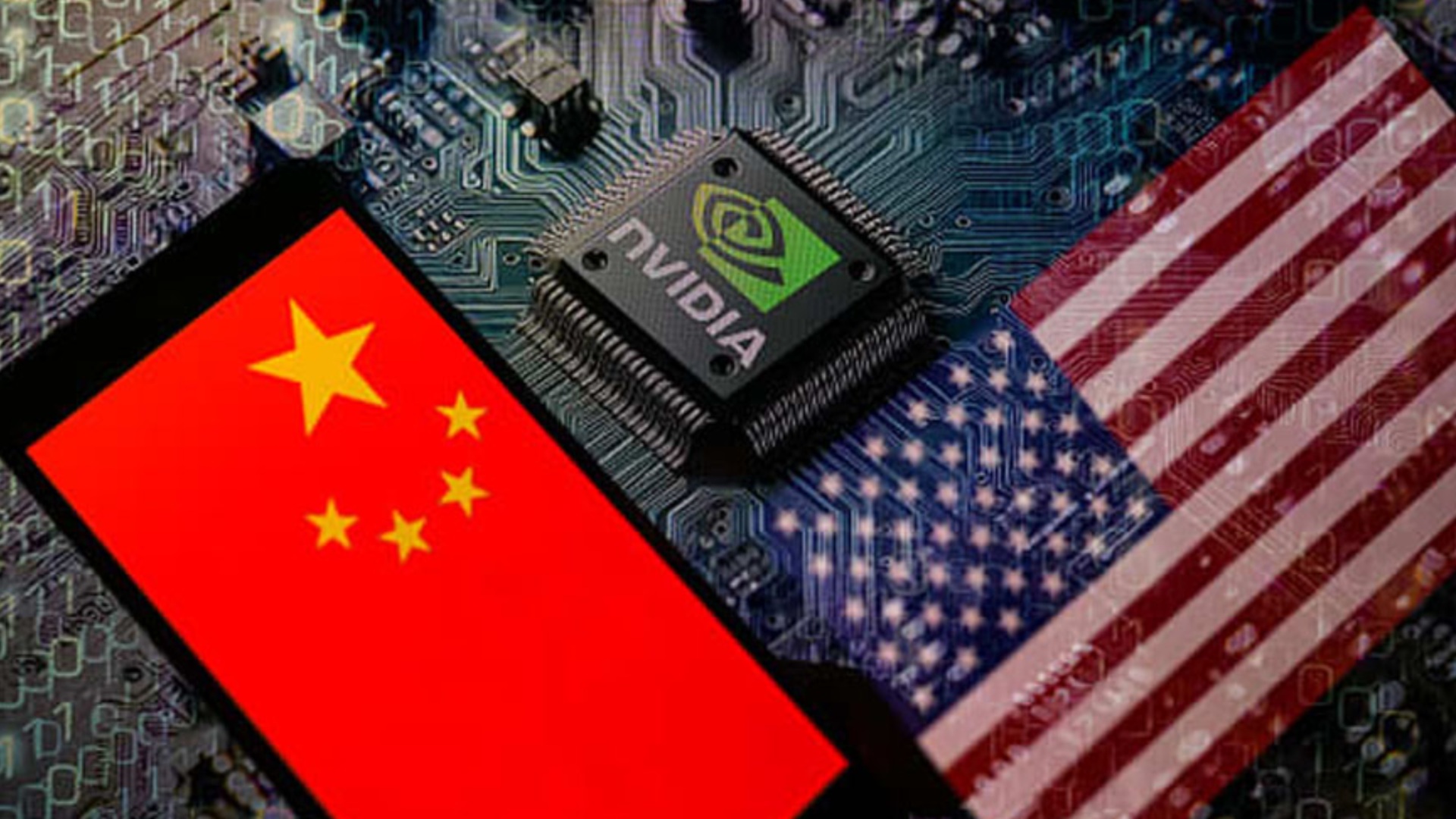
The U.S. Department of Commerce has moved to close what experts describe as a significant gap in America’s AI export control regime, issuing new guidance that could restrict Chinese companies from acquiring the world’s most advanced artificial intelligence chips through overseas subsidiaries.
The action targets a potential weakness that emerged after the Trump administration abandoned enforcement of the Biden-era AI Diffusion Rule in May 2025. Industry observers say the decision may have inadvertently allowed Chinese firms operating outside mainland China to purchase cutting-edge processors from companies such as Nvidia and AMD without the licenses typically required for exports to China.
The new guidance, released on Sunday, clarifies that advanced AI chips exported to entities headquartered in China will remain subject to U.S. licensing requirements regardless of where those entities are physically located.
Register for the next Tekedia Mini-MBA.
Register for Tekedia AI in Business Masterclass.
Join Tekedia Capital Syndicate and co-invest in great global startups.
The move represents the latest effort by Washington to tighten restrictions on technologies viewed as critical to the global race for artificial intelligence supremacy and national security.
At the center of the issue are Nvidia’s Blackwell and Rubin processors and AMD’s MI350X accelerators, chips considered among the most powerful AI computing products currently available. These processors are essential for training and deploying frontier AI models and have become a focal point of U.S. efforts to limit China’s access to advanced computing capabilities.
The Commerce Department’s clarification suggests concerns inside Washington that Chinese firms may have been exploiting overseas operations in countries such as Malaysia and other Southeast Asian technology hubs to continue acquiring advanced U.S. hardware.

While the government has not disclosed the scale of the activity, one industry source familiar with semiconductor supply chains estimated that hundreds of thousands of advanced chips may have been shipped during the period in question, according to Reuters.
If accurate, such volumes would represent a substantial flow of AI computing power at a time when U.S. policymakers have been attempting to constrain China’s ability to develop next-generation artificial intelligence systems.
Technology analyst and former U.S. State Department official Chris McGuire described the issue as a major vulnerability in America’s export control framework.

“This is a HUGE problem,” McGuire wrote on social media, arguing that the gap effectively allowed overseas subsidiaries of Chinese firms to purchase Nvidia Blackwell processors without obtaining export licenses.
“Chinese companies have been buying these chips, very likely at scale,” he added.
While restrictions can prohibit direct shipments into China, multinational corporations often operate extensive networks of subsidiaries, affiliates, and data center operations across multiple jurisdictions. As a result, regulators have increasingly focused not only on where advanced chips are shipped, but also on who ultimately controls and uses them.
The issue has become more pressing as Southeast Asia emerges as a critical hub for AI infrastructure investment. Countries such as Malaysia, Singapore, and Indonesia have attracted billions of dollars in data center spending from global technology companies seeking access to power, land, and connectivity needed for AI computing.
Those same locations have also become areas of concern for U.S. officials seeking to prevent advanced semiconductors from indirectly reaching restricted Chinese entities.
The guidance reflects a broader shift in U.S. policy from controlling physical exports to monitoring beneficial ownership and end-use access. Rather than focusing solely on geography, regulators are increasingly scrutinizing whether Chinese companies can gain effective access to advanced AI computing resources regardless of where those resources are located.
Importantly, the Commerce Department stopped short of requiring existing facilities to shut down operations or disconnect servers already equipped with advanced processors. That distinction may prove significant for cloud providers, data center operators, and infrastructure investors that have built AI computing facilities serving multinational customers.
The guidance appears aimed primarily at preventing future transactions rather than disrupting existing deployments.
The decision is likely to create new compliance challenges for semiconductor manufacturers, cloud providers, and data center operators, which may now face heightened scrutiny over customer ownership structures and cross-border corporate relationships.
For Nvidia and AMD, the clarification adds a fresh challenge to an already evolving regulatory landscape. Both companies have repeatedly found themselves caught between growing global demand for AI computing power and increasingly stringent U.S. export restrictions.
The latest action also underscores a broader reality of the U.S.-China technology rivalry: as export controls become more sophisticated, companies and governments continue searching for new pathways to access critical technologies.
Washington’s latest move exposes policymakers’ belief that controlling advanced AI capabilities requires monitoring not just where chips are shipped, but who ultimately benefits from their computing power.
The episode also raises questions about how much advanced AI hardware may already be operating within the global networks of Chinese technology firms. While the new guidance closes a potential pathway for future acquisitions, it remains unclear how much computing capacity may have already been accumulated during the period when the regulatory ambiguity existed.