

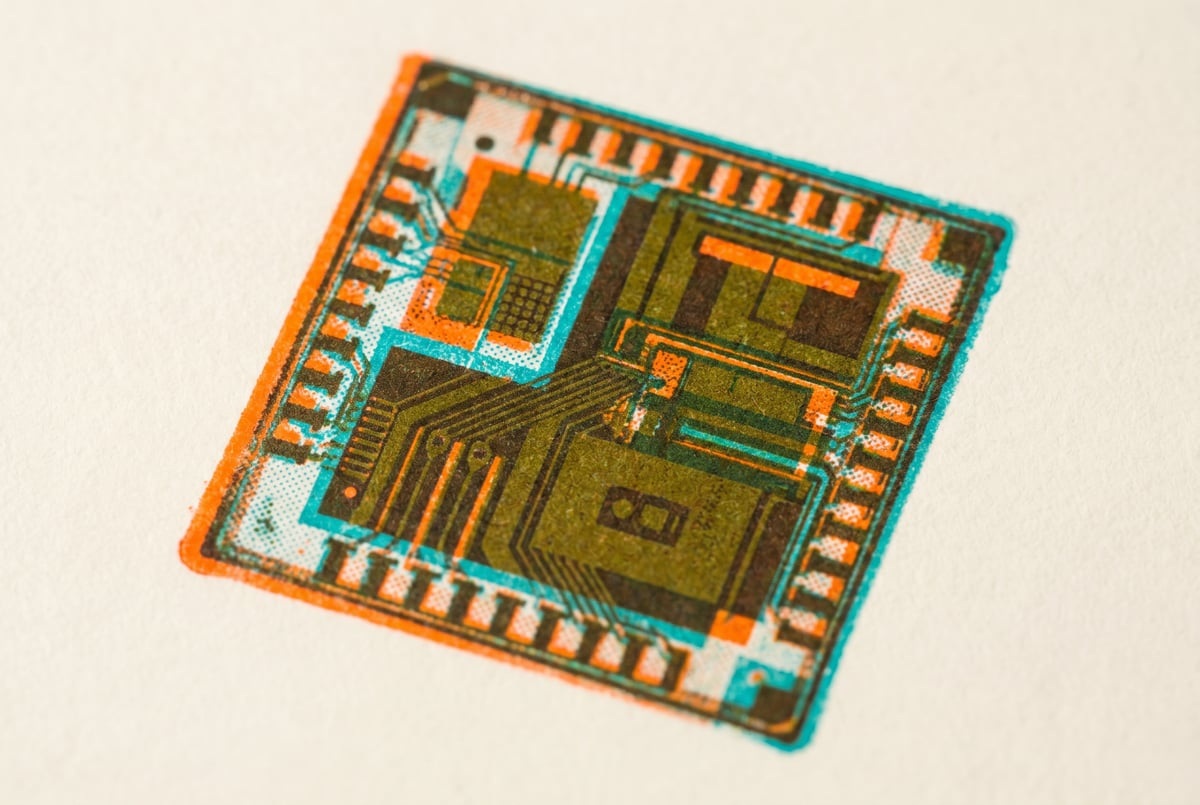
Broadcom just built a chip that beats Nvidia at its own game, and almost nobody outside the semiconductor trade press noticed. OpenAI’s Jalapeño, unveiled in detail last month, is a reticle-sized inference ASIC that reportedly edges out Nvidia’s Rubin architecture on performance-per-watt. That’s not a spec-sheet curiosity. It’s the kind of shift that eventually shows up in places nobody expects, including the fraud engine sitting behind your favorite betting app.
Tekedia readers have been tracking this chip race for a while now, from ChipMango’s semiconductor talent push to the broader OpenAI-Nvidia-Broadcom standoff playing out in real time. What gets less attention is where all that inference capacity actually goes once it leaves the data center slide deck. A meaningful chunk of it goes into consumer platforms that need decisions made in milliseconds: is this transaction fraudulent, is this account being farmed by a bot, should this player see bonus offer A or offer B. Real-money gaming sits right in the middle of that use case, whether the operators say so publicly or not.
Here’s the part that matters for anyone actually tracking platform quality rather than just chip specs. As inference silicon gets cheaper and faster, the gap widens between operators who’ve invested in real-time infrastructure and operators still running batch-processed fraud checks overnight. Figuring out which platforms have actually made that leap isn’t obvious from a homepage. It’s the kind of granular, platform-level tracking that NewGameNetwork has built a reputation around, cataloguing not just game libraries but the operational backbone operators run underneath them.
What Jalapeño Actually Does Differently
Most of what you read about AI chips focuses on training, the process of teaching a model. Jalapeño is built for inference instead, which is the process of runningan already-trained model against live data. Training happens once. Inference happens every single time a user does anything.
According to CNBC’s report on the Broadcom-OpenAI partnership, the chip was purpose-built to move away from Nvidia’s general-purpose GPU approach toward something narrower and far more efficient for repetitive, high-volume decisioning. That’s a fundamentally different design goal than training a frontier model from scratch.
Tom’s Hardware went deeper on the architecture, noting the chip went from concept to silicon in roughly nine months, an unusually fast cycle for custom ASIC development. Nine months. For context, a full-custom chip normally takes two to three years. That speed only makes sense if you assume there’s a backlog of inference-hungry applications waiting for cheaper compute. Gaming platforms, payment processors, and ad-tech networks are three of the biggest queues.
Why does perf-per-watt matter more than raw speed here? Because inference workloads run constantly, not in occasional bursts. A model checking every login attempt for account-takeover patterns runs 24/7, across millions of sessions. Shave the power draw per inference call and you’re not saving a few dollars. You’re saving enough to change whether a mid-size operator can afford real-time fraud scoring at all, or whether they’re stuck running it in overnight batches like it’s 2015.
Where This Actually Touches Real-Money Platforms
I’ve spent enough time poking around operator infrastructure (mostly through withdrawal delays and KYC hiccups, which tend to reveal exactly how automated or manual a backend is) to notice a pattern. The platforms with genuinely fast, low-friction verification are almost always the ones that have quietly modernized their inference stack. The slow ones are running rules-based fraud checks that flag everything and resolve nothing quickly.
Three areas where cheaper, faster inference silicon shows up on the player-facing side:
- Real-time fraud and AML scoring. Instead of flagging a withdrawal and parking it in a manual review queue for 48 hours, a model can score the transaction against behavioral patterns the moment it’s submitted. I had a withdrawal flagged once at a mid-tier operator on a Friday night. It sat for three days because their review process was entirely human. That’s the exact failure mode faster inference is meant to eliminate.
- Personalization and bonus targeting. The offer you see after a losing session versus a winning one isn’t random. It’s a model deciding, in real time, what’s likely to keep you engaged. Cheaper inference means smaller operators can afford this too, not just the giants with in-house data science teams.
- Bot and multi-accounting detection. This one’s less visible but arguably more important for game integrity. Detecting whether the same person is running six accounts to farm a welcome bonus requires pattern matching across sessions in near real time, not a weekly audit.
None of this touches RNG certification or RTP, to be clear. Random number generation is a separate, heavily audited process and no inference chip changes how a slot’s math model works. What’s changing is everything aroundthe game: the layer that decides who gets to play, how fast they get paid, and whether the account behind the screen is real.
The Infrastructure Gap Is Becoming a Trust Signal
Here’s my actual opinion, and it’s one plenty of affiliate content won’t say out loud: platform infrastructure quality is becoming a better predictor of a good user experience than bonus size. A 200% welcome bonus with a 40x wagering requirement means nothing if your withdrawal sits in review for five days because the operator’s fraud stack can’t clear you fast enough.
The McKinsey-cited data center investment analysis from Data Center Dynamics puts a number on how much capital is chasing exactly this kind of compute buildout, and it’s not small. When that much investment flows into inference-optimized infrastructure, the operators who adopt it early get a durable edge. Not a flashy one. A boring, structural one: faster payouts, fewer false-positive account freezes, better fraud catch rates without punishing legitimate players.
South Korea just committed $597 billion toward AI and chip industries this year alone, and that kind of national-scale investment tends to trickle down into exactly the commodity inference hardware that smaller platforms eventually get to license cheaply. Give it 18 to 24 months and the chips that seemed exotic in an OpenAI keynote will be running fraud models for operators nobody’s heard of yet.
Why African and Emerging Markets Should Care
This isn’t just a Silicon Valley story. Cheaper inference compute lowers the barrier for smaller regional operators, including ones building for African markets where payment rails are already more fragmented than in the US or UK. A platform processing mobile money transactions alongside card payments needs fraud detection that can handle multiple payment behaviors simultaneously. That used to require infrastructure only a handful of global operators could afford.
As inference costs keep dropping (and Jalapeño’s perf-per-watt gains are exactly the kind of pressure that keeps pushing prices down across the industry, not just for Broadcom’s direct customers), the operators building for underserved markets get access to tools that were previously out of reach. That’s a genuinely underrated knock-on effect of the chip race Tekedia readers already follow closely.
Frequently Asked Questions
Does Jalapeño affect how slot games calculate payouts? No. RNG and RTP calculations are separate, independently audited systems unrelated to inference chips. Jalapeño and similar ASICs affect the infrastructure layer around games, things like fraud detection and personalization, not the game math itself.
Why would a betting platform need an AI inference chip at all? Real-time fraud scoring, account verification, and bonus abuse detection all run inference models continuously against live user data. Faster, cheaper inference silicon means these checks happen in seconds rather than being queued for manual review hours or days later.
Is this the same technology used in casino table games or live dealer streams? Not directly. Live dealer video processing uses different hardware entirely. The inference chips discussed here are for backend decisioning, fraud, personalization, risk scoring rather than video rendering or streaming infrastructure.
How can I tell if an operator has invested in this kind of infrastructure? Watch withdrawal speed and how verification issues get resolved. Operators with modern fraud stacks tend to clear standard KYC checks in minutes rather than days, and flagged transactions get resolved faster because a model, not a queue, is doing first-pass triage.
Will chip advances like this lower costs for players? Indirectly, yes. Cheaper backend infrastructure lowers operating costs, which can translate into better bonus terms or lower fees over time, though there’s no guarantee operators pass savings on rather than pocketing the margin.
The chip race between OpenAI, Nvidia, and Broadcom will keep making headlines for the training side of AI, the flashy model releases and benchmark wars. But the inference side, unglamorous as it sounds, is what actually reaches your bank account when you cash out a bet. Watch the perf-per-watt numbers, not just the model releases. They’re a better predictor of which platforms will feel fast and trustworthy two years from now.
Gambling involves risk. Please play responsibly and only wager what you can afford to lose. If you feel gambling is becoming a problem, visit BeGambleAware.org or call 1-800-GAMBLER.