

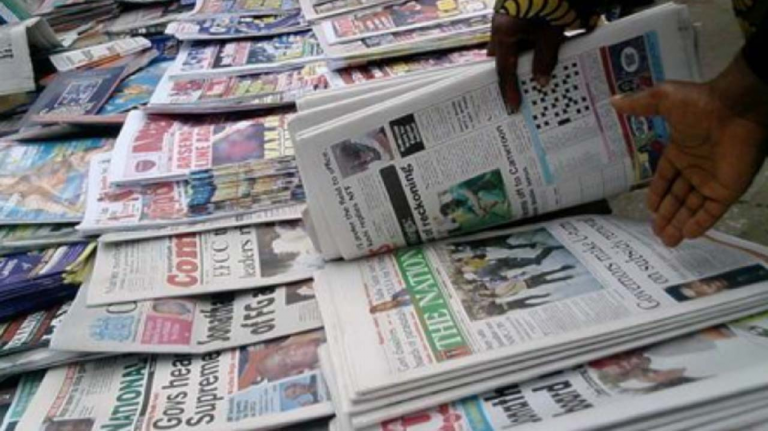
For decades, the headline of a Nigerian newspaper served a simple, sacred purpose, which was to provide an unambiguous summary of the day’s most important events. It was the “golden rule” of journalism that a headline should stand alone, offering a glimpse of the truth before a reader even turned the page. However, as the digital revolution reshapes how we consume information, results of a recent research by our analyst and his colleague [Published in 2022] indicate that these rules are being rewritten in a way that threatens the very fabric of our national discourse.
The Business of Attention
The shift from informative to “clickbait” headlines is not merely a change in style; it is a response to a survival crisis. With the rise of social media, mainstream Nigerian newspapers are locked in an unbridled competition for eyeballs. To generate revenue and stay relevant in a market dominated by instant sharing, many respected newsrooms have begun to adopt the hyperbolic and propagandistic formats once reserved for anonymous bloggers.
Register for the next Tekedia Mini-MBA.
Register for Tekedia AI in Business Masterclass.
Join Tekedia Capital Syndicate and co-invest in great global startups.
This “redefinition” of news construction has led to a dangerous decline in gatekeeping and content scrutiny. When the priority shifts from informing the public to winning the market, journalistic ethics are often the first casualty.
How the Bait is Set
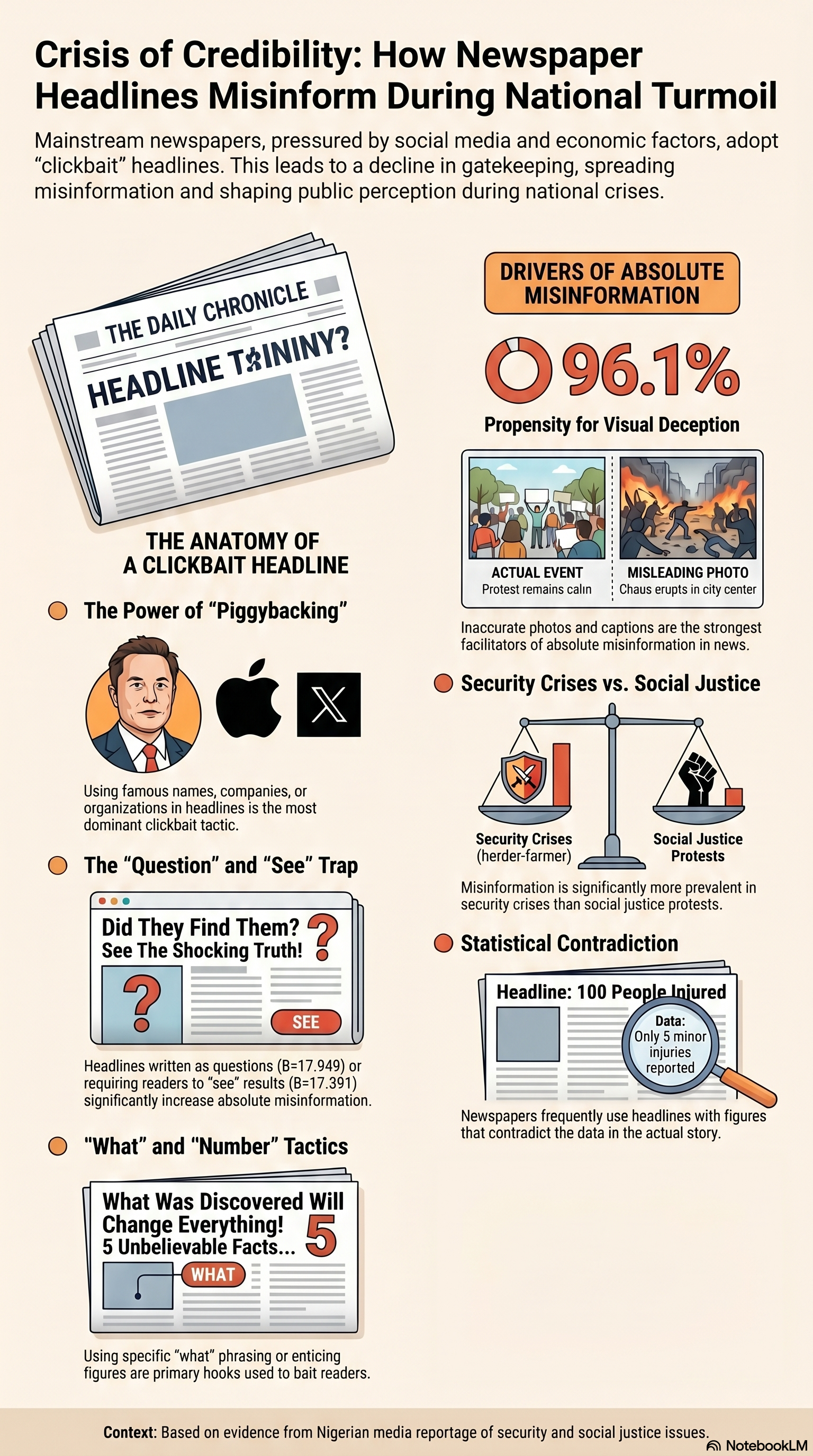
Modern clickbait in Nigeria relies on specific psychological triggers designed to bypass our critical thinking. Research into hundreds of headlines reveals that newspapers predominantly use tactics like “piggybacking”, leveraging the names of well-known people or organisations to grab attention, and the use of dramatic numbers to establish a sense of urgency.

Even more concerning is the use of “question” formats or headlines that command a reader to “See” a specific issue. Data suggests that when a headline is framed as a question or uses a “See” feature, the likelihood of that story containing absolute misinformation increases by more than 17 times. These headlines are no longer summaries; they are traps designed to exploit curiosity, often leading to content that fails to deliver on the headline’s promise.
The Deception of the Visual
We have often been told that “seeing is believing,” but in the era of digital misinformation, the eyes can be easily deceived. One of the most potent tools for spreading false information in Nigerian media is the use of inaccurate photos and captions.

When a news story is accompanied by a photo that does not relate to the actual event, its “believability” among the public ironically increases. Repeated exposure to these misleading visuals makes the misinformation seem less unethical to share, even when readers have doubts about its accuracy. In fact, the use of inaccurate visualisations has a 96% propensity for facilitating absolute misinformation, making it one of the most effective and dangerous tools in the clickbait arsenal.
Fueling National Crises
The consequences of this trend are most visible during times of national tension. During crises like the herder-farmer conflict, headlines have been used to frame newsmakers in divisive ways, often demonising specific ethnic groups. By portraying certain actors as the perpetrators of every crime, these headlines do more than just attract clicks; they shape public concern and incite resentment between communities.
This “information pollution” acts as a catalyst for insecurity, threatening the unity and peaceful coexistence of the nation. When mainstream media (which the public trusts for balanced views) participates in this sensationalism, they lend a veneer of credibility to falsehoods that can lead to real-world violence.
Reclaiming the Golden Rules
Clickbait is a conduit for misinformation that erodes public trust. For Nigerian journalism to survive and serve its role in a democracy, media practitioners and managers must urgently revise their headline construction practices, especially during times of crisis.
We must move away from a model driven by “expected gratification”, the desire to pollute the public mind for economic gain, and return to the principles of clarity and accuracy. The public’s preference for conventional newspapers is built on a foundation of perceived credibility. If that foundation is traded for short-term traffic, the cost to our society will be far higher than any advertising revenue can cover. It is time for the Nigerian press to remember that a headline’s first duty is to the truth, not the click.