

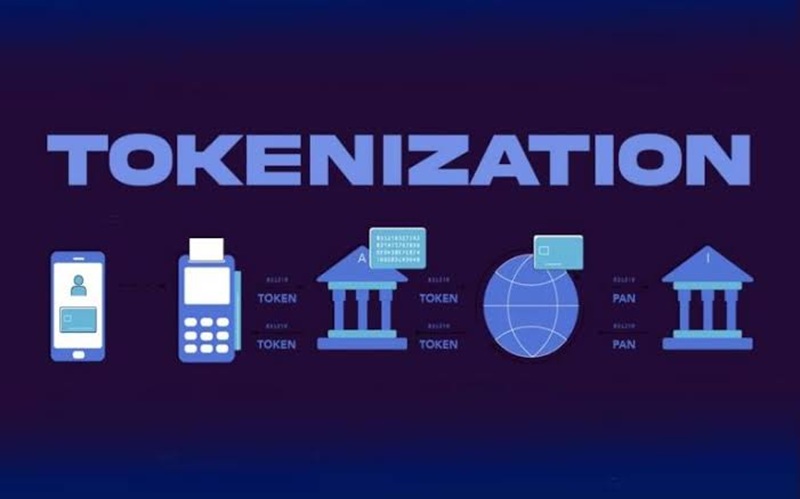
The financial industry is moving steadily toward a future in which traditional securities and blockchain infrastructure operate together, and two recent developments involving Solana and Ondo Finance highlight how quickly that transition is taking place.
Solana has launched an open-source delivery-versus-payment (DvP) program designed for institutional trade settlement, while Ondo Finance has introduced tokenized notes linked to private technology companies, beginning with a pre-IPO artificial intelligence firm.
The initiatives show how blockchain networks are increasingly being positioned as infrastructure for regulated financial markets rather than simply platforms for cryptocurrencies.
Register for the next Tekedia Mini-MBA.
Register for Tekedia AI in Business Masterclass.
Join Tekedia Capital Syndicate and co-invest in great global startups.
Solana’s DvP program is particularly significant because settlement is one of the most important areas where blockchain technology could improve traditional finance. Delivery-versus-payment means that the transfer of an asset and the corresponding payment occur simultaneously.
Reducing the risk that one party delivers an asset without receiving payment. In conventional markets, settlement can involve multiple intermediaries, reconciliation processes and delays. A blockchain-based system can potentially automate these steps through programmable transactions.
The involvement of J.P. Morgan adds further weight to the initiative. The bank’s input suggests that institutional financial requirements are becoming an important part of blockchain infrastructure development.

Large financial institutions need systems that can handle compliance, security, transaction privacy and operational reliability. Open-source technology can also allow market participants to examine and adapt the underlying infrastructure rather than relying entirely on a closed system controlled by one provider.
The initiative represents an attempt to expand the blockchain’s role beyond trading and decentralized finance. Institutional settlement could become an important use case as banks, asset managers and other financial companies explore tokenized securities and digital forms of traditional assets.
If successful, such infrastructure could make blockchain-based settlement a more practical component of global capital markets. Ondo Finance is approaching the transformation from another direction.

The company has launched tokenized notes tied to private technology companies, starting with a pre-IPO AI firm. This development addresses one of the biggest limitations of traditional investing: access to private companies before they become publicly traded.
By creating tokenized financial products connected to private-market exposure, Ondo is attempting to bring greater flexibility and accessibility to an asset class historically dominated by institutional investors and wealthy individuals.
The rapid growth of the artificial intelligence industry makes this particularly notable. Some private AI companies have achieved enormous valuations before reaching public markets, leaving investors searching for ways to gain exposure to their growth earlier.
Tokenized notes could potentially create a more flexible market for such exposure, although investors still face risks involving valuation, liquidity, regulation and the underlying company’s eventual performance.
Solana and Ondo Finance demonstrate two complementary sides of financial tokenization. Solana is focused on the infrastructure needed to settle institutional transactions, while Ondo is focused on creating digital investment products connected to traditionally difficult-to-access assets.
Both developments point toward a financial system where blockchain technology operates behind the scenes, supporting transactions, ownership records and investment products.
The larger significance is that blockchain adoption is increasingly shifting from experimentation toward practical financial infrastructure. The success of these projects will depend on regulation, institutional participation, security and investor demand.
If those challenges can be addressed, tokenization could gradually reshape how securities are issued, traded and settled, bringing traditional finance closer to a blockchain-powered market structure.