

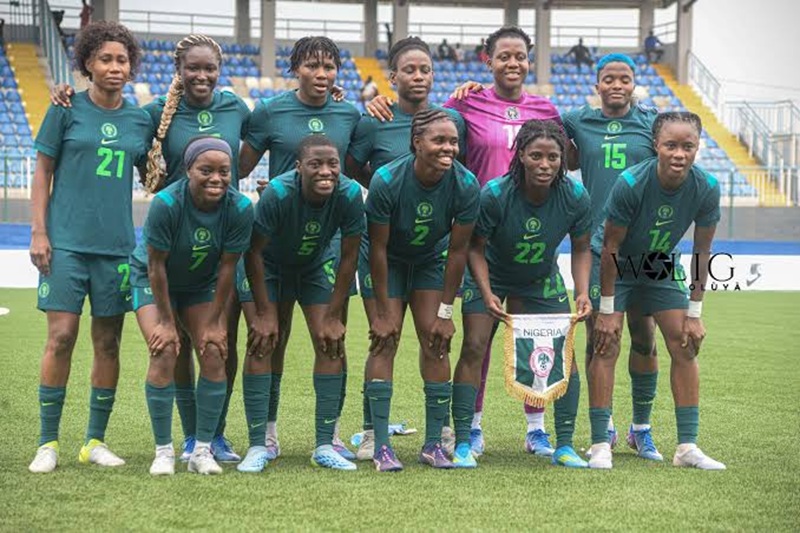
While salaries, visibility, and investment in Women’s Football have risen significantly in nearly a decade since 2017, it is rather regrettable that much of the professional game still operates in a state of precarity.
That is the core warning from FIFPRO’s latest global survey of women players. For Dr Alex Culvin, Head of Strategy and Research for Women’s Football at FIFPRO, commercial growth is still unmatched by safeguards for the players driving it. She opines that ‘The economic case for women’s football has been made.’ Taking things further she is reported as having said “I think the institutional regulatory and policy case needs to catch up quickly to protect and enhance our women’s players and enable them to perform maximally.”
This is primarily due to a range of factors – from, the professional identity gap; to the ‘Hidden salary increases,’ to the ‘Seven-month seasons across twelve-month lives;’ and the ‘policy fix’ that might have just worked. Let us consider these in turn before suggesting what needs to stop and/or start now. Surely, enough is enough.
The professional identity gap
First up is the identity gap, one of the most striking findings is how players see themselves. Under FIFA’s definition, a professional has a written contract and is paid more than the expenses of playing. FIFPRO surveyed players who are all playing in the top tier in their country.
However, these numbers can be rather troubling. Think about it, only 62% described themselves as professional, as 27% perceived themselves to be semi-professional, and 12% considered themselves as amateur. Only 78% had a written contract, 82% said they were paid by their club, but just 57% said that payment covered the costs of playing football. As Culvin revealed, “Players who are professional but don’t see or feel themselves as professional are not receiving the full benefits of being an employee.”
What tripling salaries still hides
Next up is the leakage question in the hidden tripling of salaries, as the report shows, the mean monthly earnings have tripled since 2017 to $2,601 (£1,970). The median tells a different story: $1,669 (£1,250). Regional averages show how uneven that growth is: North America: $6,450 (£4,886); Central / Western Europe: US$3,982 (£3,016); Eastern Europe: US$878 (£664); Africa: US$480 (£363) – pay attention to this latter subregion, Africa.
In ten (10) Eastern European countries, the average pay remains below national minimum wage. In Western Europe and Asia/Oceania – regions that include some of the biggest football markets – the average pay is not significantly higher than minimum wage.
Seven-month seasons, twelve-month lives
Thirdly, consider that the average contract length has increased from around 12 months in 2017 to 19 months today, but security has not followed. As the report shows yet again, “Only two-thirds of players are paid for the whole 12 months […] There’s a lot of players who are on seven-month contracts, nine-month contracts, which means that they’ve got to work to make up the rest of the calendar year”.
A major culprit here is the overdue payment, which is arguably a routine feature where about 24% of players experienced delinquent payments in the past two seasons as about 42% are not provided with a pension. Culvin believes the success at the very top can obscure this reality. Even with the rapid growth of England’s Women’s Super League, for example, she warns the boom can “mask some of the realities that players face and actually endure on a day-to-day basis.”
The policy fix that did work
Going for Mr/Mrs fix it, not all trends are negative. In 2017, for example, nearly half of players considering leaving early said wanting a family could drive them out. FIFPRO attributes it to FIFA’s maternity regulations introduced in 2021 and updated in 2024 – 14 weeks minimum paid leave, protection against dismissal for pregnancy, medical support, breastfeeding rights, and the ability to re-register outside the transfer window, now extended to coaches and adoptive parents.
The report is explicit on this, as captured in the following statement, “What we’ve concluded, which I think is incredibly important, is that targeted regulatory intervention works.” This leads to the call to action as to what needs to stop, as we consider what needs restarting. Indeed, enough of the business as usual on matters of this significance.
Enough is enough
From the foregoing it is evident that the picture is now two-tiered characterised by a situation where the top 5% of clubs and players have captured most of the investment and visibility as the other 95% remain vulnerable. Again, and echoing Culvin, “You’ve got an industry that’s very focused on the top 5% of players, but then what you’ve got is the rest, which is 95% of the industry who are not paid on time, who have short contracts. They don’t get paid for 12 months, they are in incredibly vulnerable and precarious environments.”
FIFPRO’s position is not to slow growth, but to tie it to protection, “There doesn’t need to be a choice between commercial growth and player protection. Those two things need to go hand in hand and work in tandem.” Her final message to the ecosystem is blunt – “What we’re saying is enough is enough and the industry needs to react to the players’ needs and centralise the players’ voice, ensure that players have a seat at the table when decisions that affect them are being made about them.”