

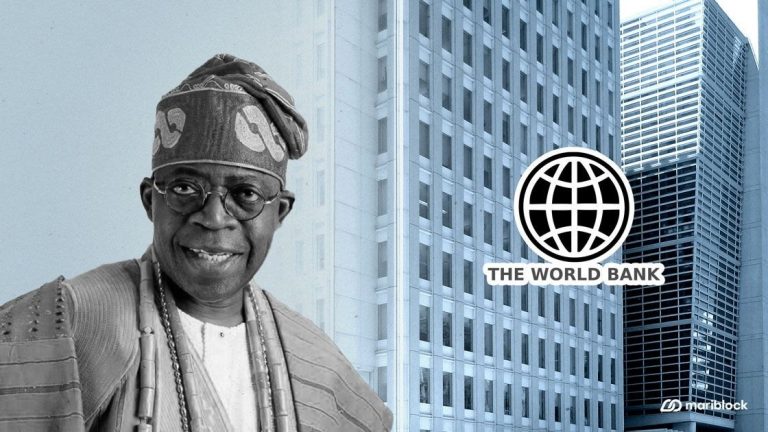
The World Bank has projected that Nigeria’s economy will grow by 3.6 percent in 2025, a slight increase from the estimated 3.4 percent in 2024, citing stabilizing reforms and improved performance in key non-oil sectors.
The projection, contained in the Spring 2025 edition of Africa’s Pulse, signals cautious optimism about the country’s economic prospects, even as the International Monetary Fund (IMF) maintains a more subdued outlook. The IMF recently revised Nigeria’s 2025 growth forecast downward to 3.0 percent and expects a further slowdown to 2.7 percent in 2026, citing weaker oil revenues and persistent structural issues.
According to the World Bank, Nigeria’s projected growth will be driven mainly by expansion in the services sector, specifically financial services, telecommunications, and information technology, along with easing inflationary pressures and improved business sentiment. The Bank expects growth to reach 3.8 percent by 2027, contingent on the continued implementation of reforms.
Register for Tekedia Mini-MBA edition 20 (June 8 – Sept 5, 2026).
Register for Tekedia AI in Business Masterclass.
Join Tekedia Capital Syndicate and co-invest in great global startups.
Register for Tekedia AI Lab.
“Economic growth is expected to remain moderate in Nigeria. It is expected to increase from 3.4 percent in 2024 to 3.6 percent in 2025, and slightly increase to 3.8 percent in 2026–27,” the World Bank report stated.
It added that the recovery is expected to be led by the services sector and, to a lesser extent, a rebound in oil production, assuming Nigeria’s output gradually aligns with its OPEC+ quota.
Diverging Inflation Projections
The World Bank and IMF also diverge significantly on Nigeria’s inflation outlook.

The Bretton Wood institute estimates inflation will ease to 22.1 percent in 2025, down from 26.6 percent in 2024, and further decline to 15.9 percent by 2027. These projections are based on revised calculations following the January 2025 rebasing of the Consumer Price Index (CPI) by the National Bureau of Statistics (NBS).
In contrast, the IMF projects that inflation will average 26.5 percent in 2025 and rise sharply to 37.0 percent in 2026, citing lingering cost pressures, high exchange rate pass-through, and structural inefficiencies that continue to undermine price stability. The IMF warned that these factors could blunt the impact of ongoing reforms.
The NBS reported that Nigeria’s headline inflation dropped from 34.80 percent in December 2024 to 24.48 percent in January following the rebasing exercise but ticked up again to 24.23 percent by March, underscoring the volatility in food prices and other essentials.

Naira Among Africa’s Worst-Performing Currencies
The World Bank identified the Naira as one of the weakest African currencies in 2024, having depreciated by over 40 percent alongside the South Sudanese pound and Ethiopian birr. The steep depreciation followed Nigeria’s adoption of a market-driven exchange rate regime aimed at unifying the country’s multiple foreign exchange windows.
Although painful in the short term, the Bank noted that the policy shift has improved foreign exchange liquidity and reduced volatility in the currency market, laying the groundwork for more predictable macroeconomic conditions.
The Bank also projects Nigeria’s current account surplus will rise slightly from 9.2 percent of GDP in 2024 to 9.4 percent by 2026. This optimism is based on expectations of reduced imports, higher remittances, and an uptick in oil exports.
However, the IMF sees a different trend, forecasting that the surplus will narrow to 6.9 percent in 2025 and drop further to 5.2 percent in 2026, largely due to uncertainties around global oil prices and external demand.
Adding to the caution, JP Morgan warned that a decline in oil prices below Nigeria’s fiscal breakeven of $60 per barrel could reverse the surplus into a deficit. Fitch Ratings remains moderately optimistic, projecting a smaller average surplus of 3.3 percent of GDP for 2025–2026, supported by domestic refinery projects and energy sector reforms.
Data from the Central Bank of Nigeria (CBN) showed that the country recorded a Balance of Payments surplus of $6.83 billion in 2024—the first in three years—boosted by a goods trade surplus of $13.17 billion.
Return to Eurobond Market Highlights Fiscal Pressures
In December 2024, Nigeria re-entered the Eurobond market for the first time since 2022, raising $2.2 billion at a yield of 10.0 percent. This compares to the 8.54 percent yield Nigeria secured in its 2018 issuance.
The higher borrowing cost reflects investor concerns over macroeconomic risks and the global trend of elevated interest rates. The World Bank noted that other African countries, including Cameroon, have also issued debt at double-digit yields, indicating a broader regional trend of costlier external borrowing.
While Nigeria’s return to international capital markets points to renewed investor interest, it also underscores rising debt-servicing costs amid tightening fiscal conditions.
The World Bank and IMF have both welcomed Nigeria’s recent macroeconomic reforms, including the removal of fuel subsidies, cessation of CBN deficit financing, and exchange rate unification. These steps are seen as critical to restoring fiscal discipline and rebuilding investor confidence.
However, the IMF cautioned that inflation remains entrenched, and gains in overall GDP growth have not yet translated into meaningful improvements in living standards.
According to the Fund, real income per capita is projected to grow by just 0.6 percent in 2025, indicating that while macroeconomic indicators may be improving, the average Nigerian could continue to face economic hardship.
The World Bank echoed similar sentiments, noting that while reforms are essential, Nigeria’s economic recovery remains fragile and dependent on sustained policy implementation, particularly in boosting non-oil revenues and addressing structural weaknesses in the economy.