

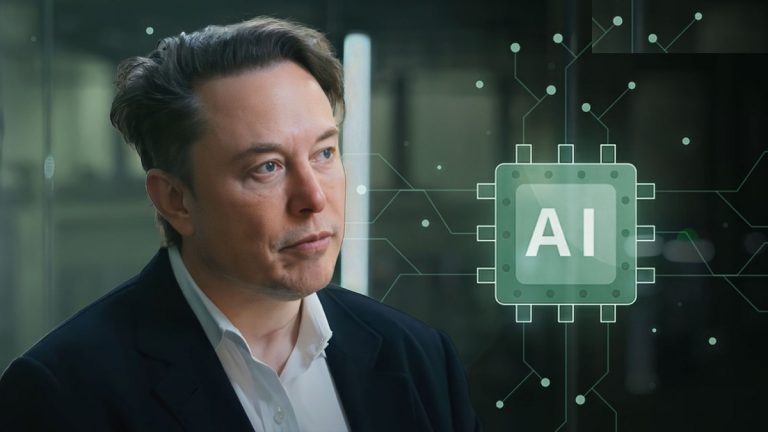
Elon Musk’s xAI has secured $15 billion in new capital, sources close to the deal confirmed to CNBC’s David Faber on Thursday, pushing the two-year-old startup’s post-money valuation to $200 billion and intensifying the GPU-fueled arms race among frontier AI labs.
The round comprises a $10 billion tranche first reported by CNBC in September and an additional $5 billion closed this week. Insiders described the bulk of the proceeds as earmarked for “a massive build-out” of graphic processing units—the silicon backbone of large language models like xAI’s Grok series. While the company declined to specify vendors, the allocation aligns with industry patterns: Nvidia’s H100 and next-generation Blackwell GPUs remain the gold standard, though AMD, Intel, and custom silicon from Google and Amazon are gaining traction.
The $200 billion valuation catapults xAI past Anthropic ($61 billion after a $13 billion raise in September) and into rarefied air behind only Sam Altman’s OpenAI, which closed a $6.6 billion secondary sale last month at $500 billion. Reuters reported in October that OpenAI is laying the groundwork for an IPO that could value the ChatGPT maker at $1 trillion as early as 2027.xAI’s fundraising velocity—$15 billion in under 60 days—mirrors a broader frenzy in artificial intelligence.
Register for Tekedia Mini-MBA edition 20 (June 8 – Sept 5, 2026).
Register for Tekedia AI in Business Masterclass.
Join Tekedia Capital Syndicate and co-invest in great global startups.
Register for Tekedia AI Lab.
Venture firms, sovereign funds, and corporate strategics are pouring unprecedented sums into a handful of labs believed capable of training models at the scale required for general intelligence. Training a single frontier system now routinely exceeds $1 billion in compute alone, and xAI is reportedly negotiating for tens of thousands of GPUs across multiple U.S. data centers.
Tesla Shareholder Vote Adds Intrigue
The xAI raise landed days after Tesla shareholders approved Musk’s $1 trillion compensation package—which cast a non-binding but symbolically significant vote on a proposal for Tesla to invest directly in xAI. Tesla general counsel Brandon Ehrhart said that the xAI investment resolution received more “for” than “against” votes but noted “meaningful abstentions.” He declined to release precise tallies, citing ongoing review by the board’s special committee.
Any transaction would require approval from the Delaware Chancery Court, which voided the original pay package in 2024. Musk has publicly framed xAI and Tesla as complementary rather than competitive, with xAI focused on foundational reasoning models and Tesla applying AI to Full Self-Driving software and humanoid robotics. A direct Tesla investment could provide xAI with both capital and access to proprietary sensor data from the Tesla fleet—estimated at over 6 billion miles of real-world driving—but would also invite scrutiny over conflicts of interest.

Investor Syndicate and Capital Intensity
Sources said the $15 billion round drew from a mix of returning September backers and new entrants, though participant names remain under wraps. The syndicate is believed to include at least one Middle Eastern sovereign fund, a major U.S. public pension, and strategic limited partners with data-center or chip expertise. xAI has now raised at least $25 billion in equity since its March 2023 founding, excluding any debt or convertible notes.
The capital burn is equally eye-watering. Industry estimates peg xAI’s annual run rate above $1.5 billion, driven by GPU leases, power contracts, and a growing engineering roster that topped 400 last quarter. Musk told investors in a September memo that the company will require “hundreds of thousands” of Nvidia GPUs by mid-2026 to keep pace with OpenAI and Anthropic, according to a document seen by CNBC.
Navigating Competitive Market Dynamics
The valuation surge reflects a market consensus that a small cohort of labs—xAI, OpenAI, Anthropic, and Google DeepMind—will dominate the economics of artificial general intelligence. McKinsey projects the generative AI infrastructure market alone will exceed $200 billion annually by 2030, with training compute growing at a 70% CAGR.

However, the numbers are brewing concerns. xAI remains pre-revenue, with Grok accessible primarily through a freemium tier on X (formerly Twitter) and limited enterprise pilots. Monetization pathways—API access, enterprise licensing, and potential government contracts—are still nascent. Meanwhile, GPU supply constraints persist despite Nvidia’s record capex, and power availability is emerging as the next bottleneck, with xAI reportedly negotiating 500-megawatt deals in Texas and Nevada.
For Musk, the $15 billion war chest buys time and leverage. It funds the GPU clusters needed to train Grok-3, due for release in Q1 2026, and positions xAI to bid for top talent amid a tightening labor market—OpenAI poached xAI’s former safety lead last month, and Anthropic has doubled its compensation bands. For the broader AI ecosystem, xAI’s raise signals that the bar for entry has risen irreversibly. Startups without nine-figure compute budgets are increasingly relegated to fine-tuning open-source models or niche applications.
Looking ahead, xAI has no public timeline for profitability or an IPO. Musk has said the company will remain private “as long as it takes to solve AGI safely,” a stance that echoes OpenAI’s pre-2023 nonprofit roots but sits uneasily with a $200 billion price tag. Investors, for now, are betting on Musk’s track record of turning capital-intensive bets—SpaceX, Tesla—into multi-trillion-dollar outcomes.