

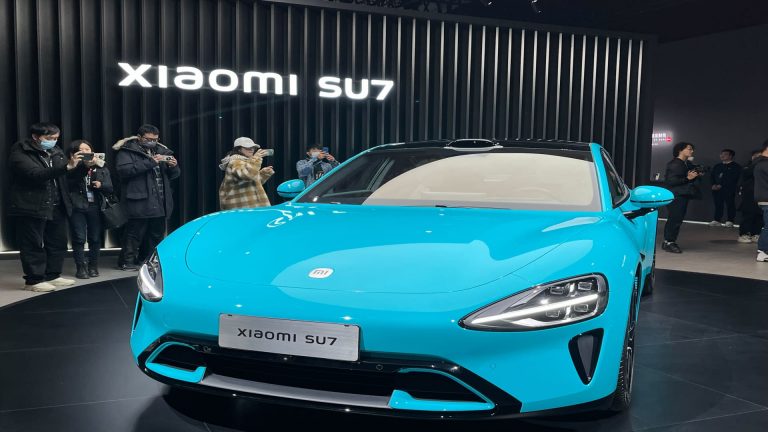
Chinese technology giant Xiaomi moved to shore up investor confidence on Friday, unveiling a stock buyback programme of up to HK$2.5 billion ($321 million) that pushed its shares more than 2% higher in Hong Kong trading.
The move comes at a sensitive moment for the Beijing-based group, which straddles smartphones, electric vehicles and smart home devices, and is facing a convergence of pressures ranging from intensifying competition and rising component costs to lingering concerns about product safety in its young EV business.
While the market welcomed the announcement, the rally only partly reversed a tougher start to the year. Xiaomi’s shares remain down more than 8% year to date, underscoring the depth of investor unease around its near- to medium-term earnings outlook.
Register for Tekedia Mini-MBA edition 20 (June 8 – Sept 5, 2026).
Register for Tekedia AI in Business Masterclass.
Join Tekedia Capital Syndicate and co-invest in great global startups.
Register for Tekedia AI Lab.
In a filing with the Hong Kong Stock Exchange late Thursday, Xiaomi said the buyback would begin on Jan. 23 and be carried out on the open market, subject to prevailing market conditions and regulatory approvals. The company has been an active buyer of its own stock in recent years, including the repurchase of 4 million shares for HK$152 million earlier this month, signaling a consistent effort to provide downside support to its valuation.
Buybacks are often interpreted as a signal that management believes a stock is undervalued or that the balance sheet is strong enough to return capital to shareholders. At the same time, the practice remains controversial. Many believe that repurchases can offer a short-term lift to share prices without addressing underlying operational challenges, while diverting cash that could otherwise be used for investment, hiring or innovation.
For Xiaomi, the buyback appears aimed at reassuring investors as external headwinds mount. Analysts point to a looming memory chip shortage as one of the most immediate risks. As manufacturers prioritize high-margin demand from the artificial intelligence sector, capacity is being diverted away from consumer electronics, pushing up costs for smartphone makers.

“The shortage has caused margin compression for smartphone manufacturers and a number of independent industry forecasters have lowered their outlook for smartphones,” said Dan Baker, a senior equity analyst at Morningstar.
He added that higher component prices are likely to remain a drag on profitability across the sector.
Industry watchers expect the situation to worsen through the year. Ivan Lam, senior analyst at Counterpoint Research, said Chinese original equipment manufacturers are particularly exposed. “2026 is going to be challenging not just for Xiaomi but for many Chinese OEMs as domestic Android players remain most vulnerable to chip shortages,” he said, noting that competition limits their ability to pass higher costs on to consumers.

Beyond smartphones, Xiaomi’s push into electric vehicles has added both opportunity and risk to its investment case. The company’s shares came under pressure last year after reports of accidents involving its vehicles circulated widely on social media, drawing scrutiny to safety standards at a time when the brand is still establishing credibility in the automotive space.
More broadly, Xiaomi is operating in the midst of an aggressive price war in China’s EV market, where established automakers and well-funded startups are slashing prices to defend market share. The resulting margin squeeze has weighed on sentiment across the sector.
Investor disappointment has also centered on the company’s growth targets. Kyna Wong, a China technology analyst at Citi Research, said markets had reacted coolly to Xiaomi’s 550,000-unit vehicle delivery goal for 2026, which some see as conservative given the scale of investment and hype surrounding its automotive ambitions. She added that profitability in the EV unit is likely to face additional pressure as Beijing adjusts subsidy policies in 2026, reducing state support that has helped underpin demand.
Against this backdrop, Xiaomi has been doubling down on longer-term bets designed to reduce its reliance on external suppliers and strengthen its competitive position. A key pillar of that strategy is semiconductors.
Last year, the company committed at least 50 billion yuan over a decade, starting in 2025, to build out an internal chip development capability. The move mirrors efforts by other Chinese tech firms to secure supply chains amid geopolitical tensions and global chip constraints.
Xiaomi is also laying the groundwork for an international expansion of its EV business, following the launch of its premium SU7 Ultra. While overseas growth could diversify revenue and elevate the brand, it also exposes the company to new regulatory regimes, entrenched competitors and higher execution risk.
However, the buyback announcement highlights the delicate balancing act Xiaomi faces. In the short term, it is using financial tools to stabilize its share price and signal confidence. In the longer term, its performance will hinge on how effectively it navigates component shortages, sustains margins in fiercely competitive markets and delivers on ambitious investments in chips and electric vehicles.
What the buyback has done for now is buy Xiaomi some breathing room, but it has not erased the structural challenges clouding its outlook.