DD
MM
YYYY

PAGES

DD
MM
YYYY

spot_img

PAGES

Home Blog

The Equation That Makes Your Startup’s Growth Compound

0

There is a sentence I hear weekly from founders between seed and Series A:

“We had a great quarter. Then it just stopped. I have no idea why it worked.” 

That is not bad luck. That is a streak ending.

A streak is when something worked once and nobody can tell you why. A system is when the next customer is cheaper, faster, or more trusted to acquire than the last, by design. 

There are seven confusions between *PMF and *DMF. Streak vs system is the diagnosis running underneath the other six. This piece is about where the streak shows up first, and the equation that turns it into a system.

The equation that builds your growth system

How big your startup grows is a function of how many people you can reach. The general belief is that reach is a volume problem, so louder wins. So, when growth stops the instinct is to post more. Send more cold emails. Buy more ads.

Almost every time this is wrong.

Reach is an equation.

Reach = Surface × Repetition × Trust.

Let’s break down the equation:

  • Surface is where your buyer already gathers and trusts information, not where you wish they were.
  • Repetition is showing up on that surface often enough to become familiar.
  • Trust is the borrowed credibility of whoever carries your signal.

Prof. Ndubuisi Ekekwe made an adjacent point in Waiting for Pinduoduo of Nigeria. Pinduoduo digitised behaviour that already existed in Chinese physical markets. It did not teach the behaviour. It rode the surface.

Know the part of the “Reach” equation that fixes your growth

Most founders discover their broken term is Surface. Their content is on LinkedIn while the buyer decides on WhatsApp. Their outreach is by email while the buyer converts through referral.

Others discover it is Trust. No anchor logo, no industry endorsement, no reputable partner integration. The product may be excellent, but the buyer has no reason to believe it yet. Almost none discover it is Repetition.

Yet Repetition is what the dashboard measures, so it is what teams keep spending on. 

What to do this next

A good place to start is pulling your last ten paying customers. 

For each, list where they first heard about you, whose signal made them convert, and how many times they saw you before buying. Cross-reference against the top five surfaces you spend time or money on. To help you do this, I create a simple resource I am I am giving away to Tekedia readers called  The Post-PMF Handbook.  You can access it immediately, no email signup.

Kylie Jenner Debuts Meta Smart Glasses Amid Growing Privacy Concerns

0

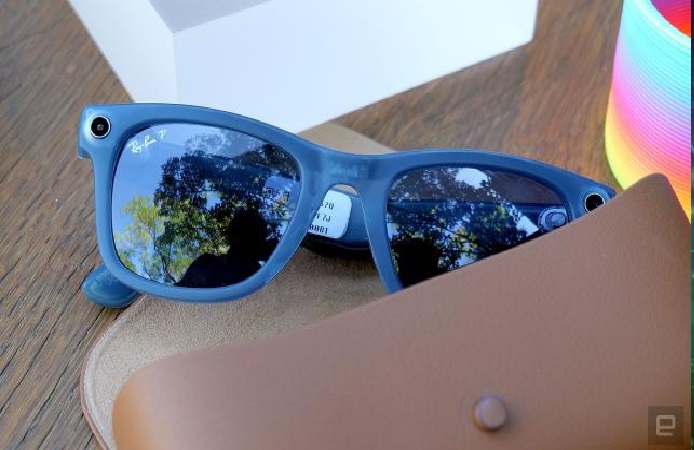
Before Kylie Jenner even finished showing off her new Meta smart glasses, the internet had already split into two camps.

To some, the glasses represent the next leap in wearable technology, blending artificial intelligence, cameras, and voice assistance into an accessory that looks increasingly like ordinary eyewear.

To others, they symbolize a future where privacy is constantly at risk and surveillance becomes embedded in everyday life.

The backlash surrounding Jenner’s debut illustrates that the biggest challenge facing smart glasses is not the technology itself, but public trust. Meta has spent years refining its wearable ambitions.

Unlike earlier generations of bulky smart glasses, the latest models are designed to resemble fashionable eyewear while quietly integrating cameras, microphones, speakers, and AI-powered assistants.

Users can capture photos, record videos, answer calls, translate languages, receive navigation guidance, and interact with AI without ever reaching for a smartphone. From a technological standpoint, the devices represent significant progress toward hands-free computing.

Celebrity endorsements are central to Meta’s strategy. Kylie Jenner, with hundreds of millions of followers across social media platforms, offers the company unparalleled visibility among younger consumers.

By placing the glasses on one of the world’s most influential fashion icons, Meta hopes to reposition smart glasses from niche gadgets into mainstream lifestyle products.

Yet the reaction online revealed just how uneasy many people remain.

Critics quickly questioned whether those around the wearer would always know when they were being recorded. Although Meta includes an LED indicator that lights up during recording, skeptics argue that the signal can easily go unnoticed or be ignored in crowded environments.

For many observers, the concern is not simply whether the glasses comply with privacy standards but whether they normalize constant recording in public spaces. Others viewed the promotion through a broader cultural lens.

Jenner’s influence has long shaped fashion and consumer trends, meaning her endorsement could accelerate adoption among millions who may pay little attention to the ethical debates surrounding wearable AI.

Critics worry that normalizing camera-equipped glasses through celebrity culture may outpace society’s ability to establish clear social norms about consent, data collection, and digital privacy. The controversy also reflects growing skepticism toward Meta itself.

The company continues to carry the legacy of past privacy controversies involving user data and targeted advertising. As a result, every new hardware product faces heightened scrutiny.

Even if the technology functions exactly as advertised, many consumers remain reluctant to trust a company whose reputation has been shaped by years of debates over data protection and transparency.

Supporters, argue that the criticism overlooks the broader evolution of consumer technology. Smartphones initially faced similar concerns when cameras became ubiquitous.

Today, nearly everyone carries a device capable of recording high-quality video, yet society has largely adapted through evolving etiquette and legal frameworks. From this perspective, smart glasses may simply represent the next stage of personal computing, eventually becoming as common as wireless earbuds or smartwatches.

The debate extends beyond Meta. Apple, Google, Samsung, and numerous startups continue investing heavily in augmented reality and AI-powered wearables, convinced that glasses will eventually replace smartphones as the primary interface for digital interaction.

Success, will depend not only on engineering breakthroughs but also on convincing the public that these devices enhance daily life without compromising personal privacy.

Kylie Jenner’s Meta glasses debut therefore became more than a celebrity product showcase. It exposed the unresolved tension between technological innovation and public confidence. The future of wearable AI will not be determined solely by better cameras or smarter assistants.

Future of Safe-Haven Assets in an Uncertain Global Economy

0

The world’s largest financial institutions are making increasingly bold calls on precious metals, signaling that gold and silver may be entering a new era of strategic importance.

Forecasts that once appeared unrealistic are now being openly discussed by major banks amid rising geopolitical tensions, persistent fiscal deficits, monetary uncertainty, and growing concerns over the long-term stability of fiat currencies.

Among the most striking projections comes from Deutsche Bank, which outlined a scenario in which gold could eventually surge to $8,000 per ounce. JPMorgan has also issued an exceptionally bullish outlook, suggesting that gold could reach $6,300 under favorable macroeconomic conditions.

Bank of America has captured headlines with its prediction that silver could climb to an astonishing $309 per ounce before the end of 2026.

While these figures represent optimistic scenarios rather than base-case forecasts, they reflect a profound shift in how global financial institutions are viewing precious metals. Gold has traditionally served as a store of value during periods of economic stress.

Throughout history, investors have turned to the yellow metal during inflationary periods, sovereign debt crises, currency debasement, and geopolitical conflicts. Today’s environment contains elements of all four.

Governments across the developed world continue to accumulate record levels of debt. The United States alone faces mounting fiscal deficits, while central banks globally are navigating the delicate balance between controlling inflation and supporting economic growth.

Such conditions often weaken confidence in fiat currencies and increase demand for hard assets.

Another major driver behind these bullish forecasts is central bank buying. Over the last several years, central banks have accumulated gold at one of the fastest rates in modern history. Countries seeking to diversify away from excessive dependence on the US dollar have increasingly added gold to their reserves, reinforcing the metal’s status as a neutral reserve asset.

The rise of geopolitical fragmentation has further strengthened the investment case for precious metals. Trade disputes, sanctions, military conflicts, and growing competition between major powers have encouraged both governments and investors to seek assets that can preserve purchasing power regardless of political developments.

Silver’s outlook is arguably even more intriguing. Unlike gold, silver benefits from both monetary and industrial demand. The global transition toward renewable energy, electric vehicles, artificial intelligence infrastructure, and advanced electronics is significantly increasing the need for silver due to its superior conductive properties.

If industrial demand continues accelerating while investment demand simultaneously rises, silver could face severe supply constraints. This is the backdrop behind Bank of America’s extraordinary $309 target.

Although such a move would require unprecedented market conditions, the possibility highlights concerns about long-term supply shortages and the strategic importance of critical commodities.

Precious metals are notoriously volatile and have experienced extended periods of underperformance in the past. Achieving prices of $6,300 or $8,000 for gold would likely require major disruptions to the current financial system, a sharp decline in confidence in sovereign currencies, or an aggressive expansion of global liquidity.

The fact that institutions such as Deutsche Bank, JPMorgan, and Bank of America are discussing these possibilities illustrates how dramatically market sentiment has shifted. Whether these ambitious price targets materialize remains uncertain.

The message from Wall Street is becoming increasingly clear: in a world defined by debt accumulation, geopolitical uncertainty, and monetary experimentation, precious metals are once again being viewed not merely as commodities, but as strategic assets capable of playing a central role in preserving wealth during an era of profound economic transformation.

Travis Kalanick’s Atoms Raises $1.7bn As Uber Rejoins Founder in Robotics And AI Bet

0

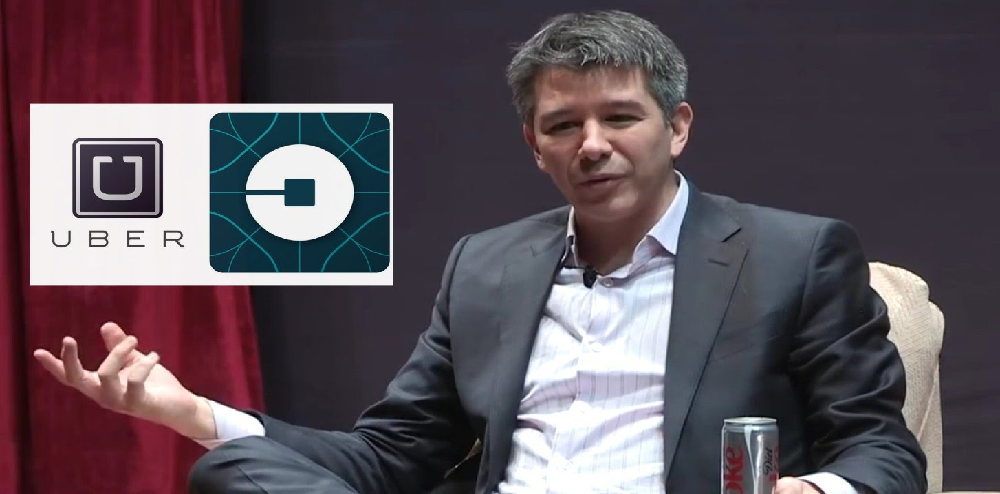
Travis Kalanick has secured $1.7 billion for his robotics and industrial automation startup Atoms, marking one of the largest funding rounds for an AI-driven robotics company this year.

The move also signals renewed confidence in the former Uber chief executive’s ambitions to reshape the physical economy through software, artificial intelligence and autonomous machines.

The funding round was led by venture capital firm Andreessen Horowitz, with participation from Bain Capital, Fifth Wall and several other investors. As part of the investment, Andreessen Horowitz co-founder Ben Horowitz will join Atoms’ board of directors.

Perhaps the most striking aspect of the financing was the participation of Uber, reconnecting Kalanick with the ride-hailing company he co-founded and led until his resignation in 2017 following shareholder pressure amid allegations of sexual harassment, workplace discrimination and a toxic corporate culture.

The investment represents a notable thaw in relations between Kalanick and Uber nearly a decade after one of Silicon Valley’s most public leadership battles. While the companies have not disclosed the size of Uber’s investment, its participation suggests the transportation giant sees strategic value in maintaining ties with one of its founders as robotics and AI begin transforming logistics, industrial automation and mobility.

The capital injection positions Atoms among the best-funded startups pursuing what many investors believe will be the next major phase of artificial intelligence: applying AI beyond digital applications into factories, warehouses, construction sites, mines and other industrial environments where autonomous machines can perform physical work.

Atoms is effectively a rebranded holding company built around CloudKitchens, the ghost kitchen business Kalanick established after leaving Uber. The company adopted the Atoms name in March as part of a broader strategic shift beyond food infrastructure into robotics and industrial technology.

Acquisition of Pronto

At the same time, Kalanick announced the acquisition of Pronto, an autonomous vehicle software company founded by former Uber executive Anthony Levandowski. Pronto specializes in self-driving systems for heavy industrial vehicles operating in sectors such as mining, where automation can improve safety, productivity, and operating efficiency.

The acquisition expanded Atoms’ technological capabilities beyond logistics, providing autonomous driving software for off-road industrial equipment, an area viewed as commercially attractive because vehicles operate in controlled environments rather than on public roads.

Kalanick has made clear that his ambitions extend well beyond autonomous trucks. He has said Atoms intends to develop technologies for mining and other industrial sectors, building on Pronto’s autonomous vehicle expertise to create broader robotic systems capable of transforming heavy industry.

His long-term vision appears to center on developing a common robotics platform that can serve multiple industries.

Kalanick has previously described the goal as creating a “wheelbase for robots,” suggesting Atoms aims to build foundational hardware and software that can be adapted for a wide range of autonomous industrial machines rather than focusing on a single application.

The strategy aligns with growing investor interest in what many call “physical AI,” where advances in foundation models are combined with robotics, computer vision and autonomous systems to automate tasks in manufacturing, transportation, construction, mining and logistics.

In a post on X following the fundraising announcement, Kalanick characterized the investment as the continuation of a mission he began at Uber more than a decade ago.

“On many levels, this round is a bit of unfinished business. Fuel to complete the bits-to-atoms story arc we started at Uber, continued at CloudKitchens and will now finish at Atoms,” he wrote.

“Sixteen years ago, I started a journey to digitize the physical world. Understand, predict and control the physical world with software. Building ‘atoms-based’ computers where CPU is manufacturing, storage is real estate, and network is transportation.”

The comments suggest Kalanick views robotics as the natural extension of software’s transformation of digital services. Instead of optimizing information flows, he envisions AI coordinating physical assets including factories, buildings, transportation networks and industrial equipment.

Andreessen Horowitz’s support highlights the venture firm’s conviction that robotics will become one of artificial intelligence’s largest commercial opportunities. Investors believe AI’s next wave of value creation will come not only from chatbots and software assistants but from intelligent machines capable of performing physical labor.

“Travis is Back,” Horowitz wrote in a separate post announcing the investment.

“It takes a rare kind of entrepreneur to change these old-school, heavy parts of our economy. They need a gritty work ethic, drive, and range that spans across domains, from software architecture to mechanical engineering. Travis is that guy.”

Horowitz said Atoms’ mission is to improve productivity across the physical economy by combining AI with robotics.

“I think the most valuable thing someone could do with AI and robotics is to repeat the same thing Uber did for transportation, or that computers did for the digital world: to make everything and everyone more productive,” he wrote.

This supports a growing investment thesis across Silicon Valley that productivity gains from AI will increasingly depend on integrating software intelligence with physical machines. While generative AI has transformed knowledge work, robotics promises similar efficiency gains in industries facing labor shortages, rising operating costs and increasing demand for automation.

Kalanick provided few details about how Atoms plans to deploy the new capital, though his comments suggested hiring will be a major priority as the company expands engineering and product development.

“Changemakers, the builders of tomorrow’s progress machines, will inevitably go up against the final boss, Nature and its fierce resistance to change,” he wrote.

“Nature is going to throw everything it has at the builders in this new industrial age and it’s going to take humanity’s strongest to stay the course and get these complex systems and industries over the finish line.”

The financing comes as investment in AI-powered robotics accelerates globally. Advances in large language models, computer vision and autonomous navigation have renewed investor optimism that robots are approaching commercial viability across sectors including manufacturing, warehousing, healthcare, agriculture and mining.

The fundraising marks Kalanick’s most significant return to the technology industry’s center stage since leaving Uber and provides the financial resources to pursue a vision that extends beyond software platforms into the automation of the physical economy. If successful, Atoms could place Kalanick once again at the forefront of a technological shift, this time focused on bringing AI-driven robotics into industries that have historically been among the hardest to digitize.

Amazon’s Leo Satellite Ambitions Gain Financial Firepower with First Finance VP Appointment

0

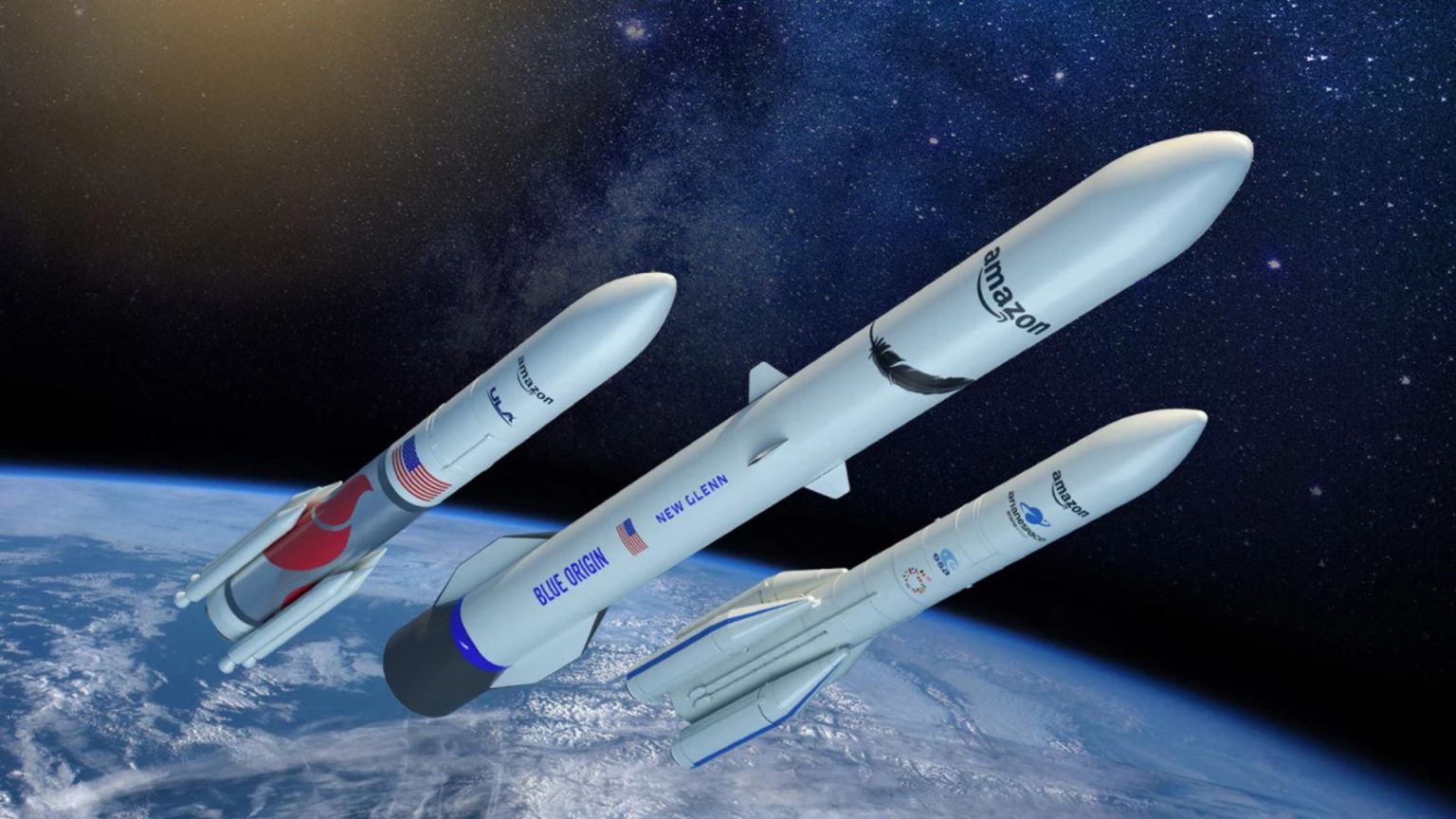
Amazon has taken another significant step toward strengthening its space ambitions by appointing the first vice president of finance for Project Kuiper’s Leo satellite business.

The company selected a veteran executive from its Alexa division, signaling that the satellite internet initiative is transitioning from an engineering-heavy phase into one focused on financial discipline, commercial expansion, and long-term profitability.


Project Kuiper is Amazon’s answer to the rapidly growing low Earth orbit (LEO) satellite broadband market.

Designed to deploy more than 3,200 satellites, the constellation aims to provide high-speed internet access to underserved communities, remote businesses, and government agencies around the world. While the project has long been viewed as one of Amazon’s most ambitious infrastructure investments.

The appointment of a dedicated finance chief underscores that the company is preparing for the next stage of execution. Unlike traditional corporate appointments, this move carries strategic significance. Building and operating a global satellite network requires enormous capital expenditures.

Satellites must be designed, manufactured, launched, and continuously replaced as they reach the end of their operational lives. Ground infrastructure, customer terminals, regulatory compliance, and international market expansion all add to the financial complexity.

Managing these investments efficiently will be essential if Project Kuiper is to compete effectively against established rivals. The decision to recruit an executive from Alexa is also notable. Although Alexa and Project Kuiper operate in different industries, both businesses involve large-scale hardware ecosystems, cloud integration, consumer products, and recurring service models.

Experience overseeing financial operations in one of Amazon’s largest technology divisions could prove valuable as Kuiper scales production and prepares for broader commercial deployment.

Competition in the LEO satellite industry has intensified dramatically over the past few years.

SpaceX’s Starlink currently dominates the market, having launched thousands of operational satellites while attracting millions of subscribers globally. Other competitors, including Eutelsat OneWeb and several emerging regional operators, are also investing heavily to secure market share.

Amazon therefore faces the dual challenge of accelerating deployment while ensuring that every dollar invested delivers measurable long-term value. Financial leadership becomes especially important in this environment because investors increasingly scrutinize capital-intensive technology projects.

While Amazon possesses substantial financial resources, shareholders still expect disciplined spending, realistic revenue projections, and a clear roadmap toward sustainable returns. A dedicated finance vice president can help balance aggressive expansion with prudent capital allocation, ensuring that the project remains financially viable even amid changing market conditions.

Beyond commercial broadband, Project Kuiper represents a broader strategic opportunity for Amazon. Satellite connectivity could strengthen the company’s cloud computing business through AWS, support logistics operations in remote regions, enable enterprise networking solutions, and expand digital services into areas with limited terrestrial infrastructure.

These synergies could create new revenue streams that extend far beyond internet subscriptions alone. The appointment also reflects a broader trend within the space economy. As satellite constellations mature, operational excellence is becoming just as important as technological innovation.

Early industry attention focused on launch capabilities and satellite engineering, but the next phase will depend increasingly on financial management, efficient supply chains, customer acquisition, and sustainable business models.

Amazon’s latest executive hire therefore represents more than an internal personnel change. It signals that Project Kuiper is evolving into a fully commercial enterprise with growing operational complexity. As launches accelerate and services expand globally, disciplined financial oversight will play a critical role in determining whether Amazon can establish itself as a credible long-term competitor in the rapidly evolving satellite internet industry.

The creation of the Leo satellite business’s first finance vice president position highlights Amazon’s commitment to transforming Project Kuiper from an ambitious vision into a scalable, revenue-generating global communications platform capable of competing in one of the world’s fastest-growing technology sectors.