
DD
MM
YYYY

PAGES

DD
MM
YYYY

spot_img

PAGES

Home Blog

Cloud IPTV Infrastructure: Optimizing Edge CDN Delivery

0
Kwame Adeyemi

Video now accounts for the largest share of internet traffic, and a growing part of it reaches viewers through IPTV, which is television delivered over IP networks rather than terrestrial broadcast, cable or satellite. For operators and platform builders across emerging markets, the interesting question is no longer whether audiences want streamed video. It is how a single live channel or on-demand title travels from a data center to millions of screens without stalling, and what that journey costs to run at scale.

The answer sits in the delivery architecture, specifically the path a stream takes from its origin, through a content delivery network, to the device in a viewer’s hand. Buyer-facing resources that track this market, for instance a directory of best IPTV providers published by The IPTV Guide, catalog services for readers but say little about the machinery underneath them. This article looks at that machinery: edge caching, points of presence, Anycast routing and origin offload, and why the cloud model has become the default way to assemble them. IPTV here is treated strictly as a delivery technology; a legitimate service depends on the provider holding the rights to the content it carries, and nothing in the engineering changes that.

To keep the discussion concrete, follow one stream along its route. It starts at an origin, is copied outward to caches near the audience, is steered to the closest of those caches by the network, and finally crosses the last mile to a player that reassembles it into moving pictures. Each stage has its own failure modes and its own optimizations.

Where the stream begins: the origin

The origin is the authoritative source. It is the server, or increasingly the cloud storage bucket and packaging service, that holds the master copy of every segment of video. Modern IPTV does not send one continuous file. Adaptive bitrate streaming, delivered through HTTP-based protocols such as HLS and MPEG-DASH, encodes each title at several quality levels and cuts each level into short segments of a few seconds. The origin stores this bitrate ladder and the playlists that describe it.

If every viewer pulled every segment directly from the origin, the origin would buckle under load and distant viewers would suffer long round trips. That single fact is the reason the rest of the architecture exists. The design goal from this point forward is to answer as few requests as possible at the origin, and to answer as many as possible somewhere closer to the viewer.

The edge layer: points of presence and caching

A content delivery network is a fleet of servers positioned in many locations, each location called a point of presence, or PoP. A PoP sits inside or near the networks where audiences actually connect, often at the internet exchange points where local providers meet. When a viewer requests a segment, an edge server at the nearest PoP checks whether it already holds a cached copy. On a cache hit, it serves the segment immediately without troubling the origin. On a cache miss, it fetches the segment once from the origin or an intermediate cache, stores it, and serves every later request for that segment locally.

For live IPTV this caching is unusually effective, because thousands of viewers watching the same channel want the same segment within the same few seconds. One fetch to the origin can satisfy an entire city. The payoff is lower latency, since bits travel a shorter distance, and fewer stalls, since a nearby edge is less likely to be a congestion point than a faraway origin.

Finding the nearest edge: Anycast routing

Placing caches near viewers only helps if requests actually reach the closest one. This is the job of Anycast routing. With Anycast, the same IP address is advertised from many PoPs at once, and the internet’s own routing decides which PoP is nearest, in network terms, for any given user. A viewer in Lagos and a viewer in Nairobi can use the same address and be answered by different edge servers, each local to them, with no special configuration on the device.

Anycast also helps with resilience. If a PoP goes offline, routing converges on the next nearest one automatically, so traffic shifts without the viewer doing anything. Combined with DNS-based steering, which many CDNs layer on top to account for real-time load and performance, Anycast is the mechanism that quietly assigns each of millions of concurrent streams to a sensible edge.

Origin offload: the economics of the edge

Origin offload is the share of traffic the edge serves without contacting the origin, and it is the number operators watch most closely. A high offload ratio means the origin handles a small, stable trickle of requests while the edge absorbs the surging, unpredictable bulk. This matters for three reasons.

Cost: egress bandwidth from a central origin, especially a cloud origin, is expensive, and every cache hit at the edge is traffic the origin does not pay to send. Resilience: an origin shielded behind well-populated caches is far harder to overwhelm during a popular live event. Reach: audiences far from the origin get acceptable performance because their experience is governed by the nearby edge, not the distant source. Tuning cache behavior, segment lifetimes and shield layers to raise that offload ratio is much of what optimizing edge delivery means in practice.

Cloud IPTV: elastic capacity instead of fixed hardware

The word cloud in cloud IPTV points to how this capacity is provisioned. A traditional operator bought and racked its own encoders, origins and cache servers, sizing them for peak demand and paying for that peak all year. A cloud-built platform rents origin storage, packaging and edge capacity as services, and scales them up or down with demand.

The practical difference shows during spikes. A national match or a season finale can multiply concurrent viewers within minutes. Elastic cloud capacity, often spread across more than one CDN for redundancy and performance, a pattern known as multi-CDN, can grow to meet that surge and shrink afterward. This turns a large fixed capital outlay into a variable operating cost that tracks actual audience, which lowers the barrier for newer platforms to launch without owning heavy infrastructure.

The African context: reach over long and uneven links

Nowhere does the edge model matter more than in markets where connectivity is uneven. Reporting on the continent’s connectivity gap, including coverage of how satellite services are extending reach into underserved regions, such as Tekedia’s account of Starlink’s expansion across Africa, describes strong urban broadband sitting alongside thin rural links and a meaningful share of the population still offline.

For a streaming platform, that unevenness is an argument for pushing content as close to viewers as the network allows. A PoP inside a national internet exchange keeps popular segments local instead of hauling them across a submarine cable for every request, which cuts both cost and the latency that long international paths add. As local data center capacity and exchange points grow, the edge layer has more places to live, and the gap between a viewer in a well-served city and one on a weaker link narrows. Architecture, not just subscriber growth, is what lets a regional platform serve a continental audience.

The last mile and the device

The final stage is the last mile, the access link between the local network and the viewer, whether fiber, mobile data, fixed wireless or satellite. This segment usually sits outside the operator’s control and is where variability is highest. Adaptive bitrate streaming is the defense: because the origin published several quality levels, the player measures its own throughput and switches segment by segment, stepping down to a lower bitrate when the connection weakens and back up when it recovers. The result is graceful degradation rather than a hard stall.

Codec choice shapes how demanding each level is. H.264 is the baseline, while H.265 and newer codecs such as AV1 are generally cited as delivering similar quality at lower bitrates, which stretches limited bandwidth further. As a rough guide, smooth 4K streaming is often quoted as needing a stable connection of roughly 25 Mbps, with efficient codecs pushing that lower, though real figures vary by content and encoder. On the device, a media player buffers a few seconds ahead and reassembles the segments in order; the reference documentation on how browsers handle streaming media and HLS sets out how that playback layer fits together.

The path of a stream, at a glance

Read from top to bottom, the table below traces one segment of video from the master copy to the screen, and names the goal each layer is tuned toward.

Stage What happens Optimization goal
Origin Stores the master bitrate ladder and playlists Answer as few requests as possible
Shield / mid-tier cache Consolidates misses before they reach the origin Raise the origin offload ratio
Edge PoP Caches segments close to the audience Cut latency, absorb concurrent load
Anycast and DNS steering Routes each viewer to a near, healthy edge Nearest reachable PoP
Last mile Access link to the home or handset Adaptive bitrate to avoid stalls
Device player Buffers ahead and reassembles segments Smooth, continuous playback

Frequently asked questions

What is the difference between an origin and an edge server?

The origin holds the master copy of the content and is the authoritative source. An edge server, located at a point of presence near viewers, keeps cached copies of recently requested segments so it can serve them locally. The origin answers as few requests as possible, while the edge answers as many as it can.

Why does edge caching reduce buffering?

Buffering happens when the player cannot pull data fast or steadily enough to stay ahead of playback. An edge cache shortens the distance and the number of network hops between the viewer and the content, which lowers latency and reduces the chance of a congestion point, so the player is more likely to keep its buffer filled.

What does Anycast routing actually do?

Anycast advertises one IP address from many locations at once and lets the internet’s routing deliver each user to the nearest one. It is how a CDN assigns viewers to a close edge server automatically and reroutes them if a location fails, without any change on the viewer’s device.

What is origin offload and why does it matter?

Origin offload is the proportion of requests served by the edge without contacting the origin. A higher ratio cuts the bandwidth cost carried by the origin, protects it from overload during demand spikes, and gives distant viewers better performance because a nearby edge governs their experience.

Does this architecture make an IPTV service legal or reliable by itself?

No. Delivery architecture affects performance and cost, not rights. A legitimate service still depends on the provider holding proper licenses for the content it carries, and reliability also depends on encoding quality, capacity planning and the viewer’s own connection.

Rethinking Political Polarisation in Nigeria

0
Map of Nigeria (source: World Map)

Political polarisation is often portrayed as one of Nigeria’s greatest contemporary challenges. Public debates, election campaigns, ethnic tensions, religious disagreements, and increasingly confrontational conversations on social media have created the impression that the country is becoming more divided with each passing year. While these concerns are not unfounded, a century of evidence from the V-Dem Political Polarisation Index tells a more complex story. Rather than following a steady upward or downward path, Nigeria’s political polarisation has fluctuated over time, reflecting the country’s changing political institutions, democratic transitions, military interventions, and national crises. The historical trend suggests that political polarisation in Nigeria is less a permanent condition than a reflection of the strength or weakness of its governing institutions.

The earliest years of the Nigerian state, following the 1914 amalgamation, recorded the lowest scores on the index, remaining around -1.81 until the late 1920s. These figures should not be interpreted as evidence of political harmony. Instead, they reflected the realities of colonial administration, where political participation was highly restricted, opposition was limited, and democratic competition was virtually absent. With little opportunity for citizens to openly contest political power, political divisions rarely emerged through formal political institutions.

As constitutional reforms gradually expanded political participation during the 1930s, 1940s, and 1950s, the index steadily improved. The rise of nationalist movements, regional political organisations, and negotiations over self-government created more opportunities for political engagement. By the years leading to independence, Nigeria had moved from approximately -1.54 to about -0.99, indicating a changing political landscape characterised by increasing participation and institutional development.

The First Republic represented one of the country’s strongest periods in the historical record. Between 1960 and 1966, political polarisation reached approximately -0.54, the highest point observed across the entire series. This period demonstrated that democratic competition does not necessarily produce destructive political divisions. On the contrary, competitive politics can coexist with institutional stability when political actors operate within accepted democratic rules.

That progress was interrupted by the military coups of 1966 and the Nigerian Civil War. The following decade witnessed a significant decline in the index as military rule centralised authority and weakened democratic institutions. Throughout much of the 1970s and 1980s, political polarisation remained relatively low according to the index, reflecting prolonged periods of authoritarian governance, repeated regime changes, and limited political competition. Rather than resolving political differences, military rule largely suppressed their democratic expression.

The transition to civilian government during the late 1990s marked another turning point. Despite the political crisis surrounding the annulled June 12 election, Nigeria’s return to democracy improved the country’s long-term trajectory. By 1999, the index had recovered to approximately -0.69, suggesting renewed institutional openness and greater opportunities for political participation.

Perhaps the most revealing finding emerges from Nigeria’s democratic era. Contrary to popular assumptions, political polarisation has not consistently worsened since the return to civilian rule. Instead, the data show periods of both deterioration and recovery. Democratic governance created space for political competition, but it also exposed institutional weaknesses that became more visible during periods of economic hardship, insecurity, and intense electoral rivalry.

The most significant deterioration occurred between 2015 and 2017, when the index declined sharply to approximately -1.43. This period coincided with heightened political competition, increasing identity politics, economic pressures, growing insecurity, and more confrontational political communication. Traditional media and digital platforms amplified partisan narratives, while public confidence in political institutions came under increasing pressure.

Importantly, this decline did not become permanent. Since 2018, Nigeria has experienced a gradual improvement, reaching approximately -0.59 by 2022 and remaining at that level through 2026. Although political disagreements continue to dominate public discourse, the long-term evidence suggests that the country has recovered considerably from one of the most politically challenging periods in its recent democratic history.

The broader lesson from more than one hundred years of evidence is that political polarisation in Nigeria is closely tied to institutional development. Constitutional reforms, democratic transitions, and stronger political institutions have consistently been associated with improvements, while military interventions, democratic interruptions, and national crises have repeatedly reversed progress. The findings also challenge the widespread assumption that democracy itself creates polarisation. Instead, the evidence suggests that democracy provides a framework for managing political disagreements, while the quality of institutions determines whether those disagreements strengthen or weaken national cohesion.

Nigeria’s political history therefore offers a cautious but important message. The country’s experience demonstrates that political polarisation is neither inevitable nor irreversible. Periods of division have repeatedly been followed by recovery whenever democratic institutions have become stronger and more inclusive. The challenge facing today’s political leaders, policymakers, media organisations, and civil society is not to eliminate disagreement but to strengthen the institutions capable of managing disagreement peacefully.

Trump Administration Bans New Chinese Robots, Power Inverters in Bid To Secure U.S. AI Supply Chain

0

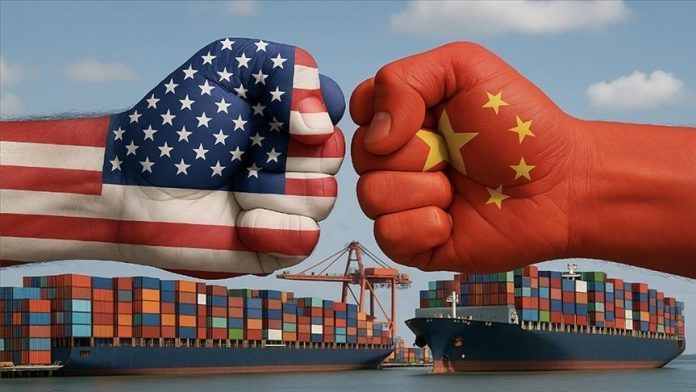
The Trump administration has moved to tighten restrictions on Chinese technology entering the United States, announcing new bans on imports of certain Chinese-made robots and power inverters as Washington seeks to protect the country’s artificial intelligence infrastructure, strengthen domestic manufacturing and reduce reliance on Chinese supply chains.

The new measures, announced Tuesday by the Federal Communications Commission (FCC), prohibit the import and authorization of new models of Chinese humanoid robots, quadruped robots and connected power inverters, citing national security, cybersecurity and supply chain concerns.

The restrictions, reported first by Reuters, took effect immediately upon publication and apply to products that have not yet been approved for sale in the United States. The FCC also retains the authority to revoke authorizations for products that have already been cleared if it determines they pose national security risks.

The move marks another escalation in the technology rivalry between the United States and China as Washington broadens its efforts beyond semiconductors to include emerging AI hardware and critical infrastructure equipment.

In a statement, the FCC said the targeted devices could expose the United States to supply chain disruptions and cyber threats.

“These devices could create supply chain vulnerabilities that could disrupt U.S. economic and national security and could create a cybersecurity risk that threatened American critical infrastructure,” the agency said.

FCC Chairman Brendan Carr added: “The FCC will continue to do our part to secure America’s critical supply chains.”

The restrictions are aimed at sectors expected to play central roles in the next phase of artificial intelligence development.

Humanoid and quadruped robots are seen as major growth markets as companies integrate AI models into industrial automation, logistics, manufacturing and consumer applications. Power inverters, meanwhile, are critical components that allow renewable energy systems and battery storage to connect to electricity grids while also supplying reliable power to the rapidly expanding network of AI data centers.

By restricting Chinese suppliers, the administration hopes to reduce the risk that critical AI infrastructure could be disrupted through cyberattacks, espionage or supply chain manipulation.

The policy also aligns with broader efforts to encourage companies to manufacture strategic technologies within the United States. Treasury Secretary Scott Bessent has previously warned that Chinese AI firms could face U.S. sanctions over alleged theft of American intellectual property, while administration officials have repeatedly argued that reducing dependence on Chinese technology is essential to long-term economic and national security.

Officials have also pointed to China’s dominance in rare earth minerals as an example of the risks associated with concentrated supply chains, after Beijing used export controls on critical minerals as leverage during recent trade disputes.

China Condemns Restrictions

China criticized the latest measures, urging Washington to stop targeting Chinese companies.

The Chinese embassy in Washington said Beijing “urges the United States to heed the objective and rational voices of the business communities in both countries” and “stop smearing Chinese companies and threatening them with sanctions.”

The embassy added that China would “take all necessary measures in response to any action that causes material harm to its interests.”

The latest restrictions are likely to add further strain to already tense U.S.-China technology relations, which have increasingly focused on AI, semiconductors, telecommunications and advanced manufacturing.

One of the companies expected to be most affected is Unitree Robotics, one of China’s leading humanoid robot manufacturers.

According to Counterpoint Research, Unitree controls nearly one-fifth of the global humanoid robot market. The company was recently added to the Pentagon’s list of companies alleged to have links to China’s military, a designation that often precedes additional U.S. restrictions.

Unitree recently announced a partnership with Nvidia to use Nvidia’s Blackwell AI chips as the computing platform for its robots. Nvidia has said data generated by the robots will remain in the United States and noted that many of Unitree’s customers are American universities and research institutions.

Nevertheless, U.S. officials remain concerned that connected robots could potentially collect sensitive information or be remotely compromised.

The FCC warned that advanced robots “collect data that could be leveraged by malign actors to surveil Americans, enhance the capabilities of foreign intelligence services, or to remotely commandeer the robots.”

Representative John Moolenaar, chairman of the House Select Committee on China, welcomed the FCC’s action.

“The FCC move protects our country and strengthens our nation’s robotics industry,” he said.

Inverters Also Under Scrutiny

The administration’s restrictions also target Chinese-made connected power inverters, another area where China has become the dominant global supplier. Companies including Sungrow Power Supply and Huawei Technologies have expanded rapidly by offering lower-priced equipment to international markets.

Washington has become increasingly concerned that internet-connected energy equipment could be exploited to disrupt electricity grids or critical infrastructure.

The latest action follows similar concerns raised in Europe and builds on earlier U.S. cybersecurity investigations involving Chinese-made networking equipment. Officials have cited the Volt Typhoon cyber campaign, uncovered in 2023, in which hackers linked by U.S. authorities to China allegedly compromised privately owned routers to conceal subsequent attacks targeting American critical infrastructure.

The Department of Defense already prohibits procurement of solar photovoltaic cells, modules and inverters manufactured by entities designated as foreign adversaries, including Chinese firms.

Non-Chinese Suppliers Expected To Benefit

According to Reuters, the FCC is expected to exempt many non-Chinese manufacturers from the new restrictions, following a similar approach used in recent rules affecting foreign drones and networking equipment. That could provide opportunities for manufacturers based in the United States, Europe, Japan and South Korea as demand grows for AI infrastructure, industrial robotics and power management systems.

The latest measures demonstrate that the Trump administration is expanding its technology security strategy beyond chips to encompass the broader ecosystem needed to support artificial intelligence.

By targeting robotics and power infrastructure alongside semiconductors, Washington is seeking to secure every layer of the AI supply chain while encouraging domestic production in industries expected to experience rapid growth over the coming decade.

FIFA Announces Plan to Create $20bn Commercial Unit and Sell Stakes to Investors, Faces UEFA Backlash

0

FIFA has unveiled plans to create a new commercial subsidiary valued at about $20 billion to oversee the World Cup and its other major competitions, marking one of the most significant restructurings in the organization’s history and triggering a fierce backlash from UEFA, which accused world football’s governing body of attempting to “sell the soul” of the sport.

The proposal would see FIFA establish FIFA Forward Enterprise (FFE), a standalone commercial entity responsible for managing the governing body’s commercial rights and event operations. While FIFA would retain full control over governance, competitions and regulatory matters, it plans to sell minority stakes of up to 20% in the subsidiary to external investors, potentially raising about $4.2 billion to fund football development worldwide.

The move signals FIFA’s ambition to unlock the growing commercial value of global football while tapping private capital to accelerate investment in infrastructure, grassroots development and women’s football. It also represents another step in FIFA President Gianni Infantino’s plan to expand the commercial reach of the sport beyond its traditional European power base.

According to Reuters, a vehicle established by Joshua Kushner, the brother of Jared Kushner, U.S. President Donald Trump’s son-in-law, is expected to lead the proposed investor consortium. FIFA said investment bank JPMorgan is advising on bringing in outside investors, while former Liberty Media CEO Greg Maffei has served as a commercial adviser on the transaction.

The proposal comes after FIFA staged its biggest-ever World Cup across the United States, Canada and Mexico, a tournament that further demonstrated the immense commercial appeal of the competition through record sponsorship, broadcasting and hospitality revenues.

Unlike a sale of FIFA itself, the governing body stressed that investors would only acquire minority interests in the commercial subsidiary and would have no operational authority over football governance.

“Football is the world’s most popular sport and an extraordinary engine of human and social development,” FIFA President Gianni Infantino said.

“Parts of the game have turned that popularity into remarkable commercial value, and we celebrate that success and want it to continue, because it lifts the whole game.

“Our job is to make sure the rest of football grows with it: FIFA exists to support sustainable, inclusive development in every corner of the world.”

FIFA emphasized that it would retain exclusive authority over the Laws of the Game, international competitions, the match calendar and all sporting and regulatory decisions.

The organization said proceeds from the capital raise would fund an optional development program under which each of FIFA’s 211 member associations could receive up to $20 million in one-time funding for projects including football infrastructure, coaching, youth development, national teams, grassroots football and the women’s game. That amount would increase to $24 million during the 2035-2038 funding cycle.

Infantino, who is seeking another term as FIFA president next year, said the initiative is intended to spread football’s financial success more evenly across the world.

“This is about the democratization of football worldwide,” he said.

UEFA Attacks Proposal

The announcement immediately deepened long-running tensions between FIFA and UEFA, whose relationship has deteriorated over disagreements over tournament expansion, governance, scheduling and commercial strategy.

UEFA issued an unusually strong rebuke, warning that football’s governing institutions should never monetize ownership of the sport’s flagship competitions.

“UEFA takes it extremely seriously,” the European governing body said.

“So should every National Football Association. So should every stakeholder: leagues, clubs, players, supporters, governments and everyone who cares about the future of the game.

“The soul and governance of football are not assets to trade, especially with zero transparency as to who gains financially. None of us are the owners of football. It is not FIFA’s to sell.”

The criticism is born out of concerns within European football that increasing reliance on private capital could reshape how major tournaments are managed and monetized, even if FIFA retains formal control over governance. Relations between the two organizations have become increasingly strained in recent years. UEFA President Aleksander Ceferin notably skipped the most recent World Cup final following disagreements over disciplinary matters, refereeing logistics and tournament operations.

Political and Academic Criticism

The proposal also attracted criticism outside football. British Prime Minister Andy Burnham warned that the World Cup should not become an investment asset.

“The World Cup is not a product. It is the greatest competition in world sport, and it was never anyone’s to sell,” Burnham wrote on X.

“Dress the deal up however you like. Once you have sold a piece of it, you have sold out.”

According to Reuters, Richard Sheehan, a finance professor at the University of Notre Dame who specializes in sports economics, described the proposal as inconsistent with FIFA’s status as a not-for-profit governing body.

“From the perspective of a not-for-profit organization, theoretically raising money to make soccer available to everyone, this move is a farce,” Sheehan said.

A Broader Shift in Sports Finance

In recent years, investment firms have deployed billions of dollars into sports assets ranging from Formula One and Major League Baseball franchises to European football clubs and media rights businesses, attracted by predictable long-term cash flows and growing global audiences.

Should the transaction proceed, FIFA would become one of the largest international sporting organizations to carve out its commercial operations into a separate investment vehicle while maintaining regulatory control, potentially creating a model that other sports governing bodies could examine.

Supporters believe the structure would unlock billions of dollars for football development without surrendering sporting authority. Critics, however, contend it risks increasing financial influence over one of the world’s most important sporting institutions and raises questions about transparency, accountability and the long-term commercialization of the World Cup.

The proposal will now be presented to FIFA’s 211 member associations and the FIFA Council, which will have the final authority to approve or reject the plan. Approval would mark a historic shift in how football’s richest governing body finances its future and could reshape the commercial aspect of the global game for decades.

Zuckerberg Pushes Open AI Vision, Rejects Job Loss Fears and Warns Against Concentrating Power

0

Mark Zuckerberg has laid out fresh ideas as he pushes to shape the debate over artificial intelligence, noting this time that the technology should be open, broadly accessible and designed to empower individuals rather than concentrate power in the hands of a few companies.

Over the past week, the Meta Platforms chief executive laid out his vision for AI through an open letter, an opinion piece in The Wall Street Journal and a rare interview with The New York Times, presenting a consistent message that contrasts with the more cautious approach adopted by several leading AI developers.

His remarks come as competition among major technology companies intensifies over the development of increasingly powerful AI models, with policymakers also debating how the technology should be governed and who should control access to it.

AI Should Remain Open and Decentralized

A central theme of Zuckerberg’s recent public appearances was his opposition to concentrating advanced AI capabilities within a small number of companies. He argued that the United States’ technological leadership has historically been driven by open innovation rather than centralized control and warned that restricting access to advanced AI models could ultimately weaken America’s competitive position.

In his open letter, Zuckerberg wrote that America’s “advantage is decentralized and open innovation,” adding that limiting access to AI models in an effort to prevent China from benefiting would “only disadvantage the U.S. and its allies.”

Meta, Zuckerberg’s social media conglomerate, has a long-standing strategy of making many of its AI models openly available, a position that differs from companies that keep their most advanced systems proprietary.

During his interview with The New York Times, Zuckerberg also challenged what he described as overly pessimistic narratives surrounding artificial intelligence.

“So much of the discourse from a lot of the other labs that are developing this is overwhelmingly filled with doom,” he said.

“There needs to be a voice or several voices that are bringing realism to this debate.”

He also questioned whether a single AI system could ever fairly represent the interests of billions of people.

“I think it is literally impossible to have a single benevolent superintelligence that is simultaneously aligned with everyone at once,” Zuckerberg said.

Meta has for long held a broader argument that allowing multiple organizations to develop AI systems could produce greater diversity, competition and innovation than concentrating the technology under a handful of developers.

Rejecting Predictions of Widespread Job Losses

Zuckerberg also dismissed concerns that AI will eliminate large numbers of jobs, taking a more optimistic stance than some economists and technology executives who have warned of significant labor market disruption.

“I don’t understand why anyone who believes that AI will eliminate most jobs and much of humanity’s relevance would rush to build that future,” he wrote in his Wall Street Journal essay.

Instead, Zuckerberg argued that widely available AI will lower barriers to entrepreneurship, enable more people to build businesses and ultimately create new employment opportunities. He said the technology would expand economic activity by making sophisticated capabilities accessible to individuals and smaller companies that previously lacked the necessary resources.

The comments stand in contrast to growing concerns across industries that generative AI could automate administrative work, software development, customer service, content creation and other white-collar occupations.

While many economists expect AI to reshape labor markets, there remains considerable debate over whether the technology will primarily displace existing jobs or create new categories of work over the longer term.

AI’s Greatest Value Lies In Enabling Invention

Rather than viewing artificial intelligence primarily as a tool for replacing human labor, Zuckerberg noted that its most significant contribution will be helping people create products, solve scientific challenges and accelerate innovation.

“Invention, not automation, will be the greatest contribution of superintelligence,” he wrote in The Wall Street Journal.

According to Zuckerberg, AI could help accelerate breakthroughs ranging from new medicines and scientific discoveries to technologies that make it easier for entrepreneurs to develop businesses and tackle complex problems.

He also emphasized that individuals should retain the freedom to determine how they use increasingly capable AI systems.

“The history of democracy and economics has shown that there is no single objective answer to how people define the best life,” Zuckerberg wrote.

“And therefore the best approach is letting people decide what matters to them.”

Zuckerberg’s latest assertions underpin an increasingly clear philosophical divide within the AI industry.

While several leading AI companies have emphasized the need for tighter safeguards, centralized oversight and careful deployment of increasingly powerful models, Meta continues to advocate for broader access and open development, betting that innovation is more likely to flourish when advanced AI tools are widely distributed.