

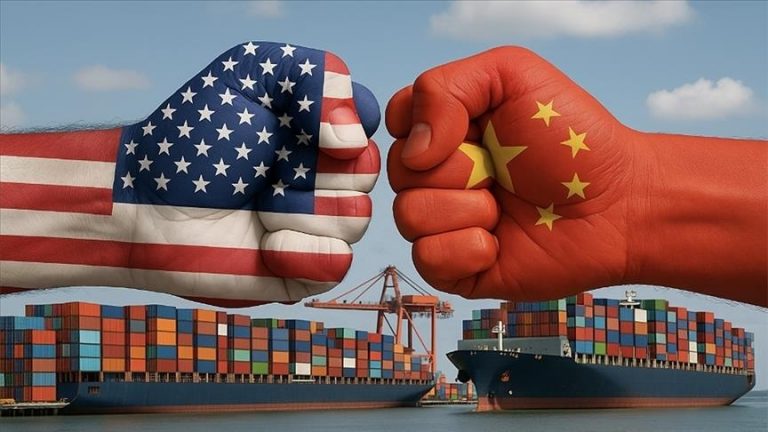
The Trump administration has moved to tighten restrictions on Chinese technology entering the United States, announcing new bans on imports of certain Chinese-made robots and power inverters as Washington seeks to protect the country’s artificial intelligence infrastructure, strengthen domestic manufacturing and reduce reliance on Chinese supply chains.
The new measures, announced Tuesday by the Federal Communications Commission (FCC), prohibit the import and authorization of new models of Chinese humanoid robots, quadruped robots and connected power inverters, citing national security, cybersecurity and supply chain concerns.
The restrictions, reported first by Reuters, took effect immediately upon publication and apply to products that have not yet been approved for sale in the United States. The FCC also retains the authority to revoke authorizations for products that have already been cleared if it determines they pose national security risks.
Register for the next Tekedia Mini-MBA.
Register for Tekedia AI in Business Masterclass.
Join Tekedia Capital Syndicate and co-invest in great global startups.
The move marks another escalation in the technology rivalry between the United States and China as Washington broadens its efforts beyond semiconductors to include emerging AI hardware and critical infrastructure equipment.
In a statement, the FCC said the targeted devices could expose the United States to supply chain disruptions and cyber threats.
“These devices could create supply chain vulnerabilities that could disrupt U.S. economic and national security and could create a cybersecurity risk that threatened American critical infrastructure,” the agency said.

FCC Chairman Brendan Carr added: “The FCC will continue to do our part to secure America’s critical supply chains.”
The restrictions are aimed at sectors expected to play central roles in the next phase of artificial intelligence development.
Humanoid and quadruped robots are seen as major growth markets as companies integrate AI models into industrial automation, logistics, manufacturing and consumer applications. Power inverters, meanwhile, are critical components that allow renewable energy systems and battery storage to connect to electricity grids while also supplying reliable power to the rapidly expanding network of AI data centers.

By restricting Chinese suppliers, the administration hopes to reduce the risk that critical AI infrastructure could be disrupted through cyberattacks, espionage or supply chain manipulation.
The policy also aligns with broader efforts to encourage companies to manufacture strategic technologies within the United States. Treasury Secretary Scott Bessent has previously warned that Chinese AI firms could face U.S. sanctions over alleged theft of American intellectual property, while administration officials have repeatedly argued that reducing dependence on Chinese technology is essential to long-term economic and national security.
Officials have also pointed to China’s dominance in rare earth minerals as an example of the risks associated with concentrated supply chains, after Beijing used export controls on critical minerals as leverage during recent trade disputes.
China Condemns Restrictions
China criticized the latest measures, urging Washington to stop targeting Chinese companies.
The Chinese embassy in Washington said Beijing “urges the United States to heed the objective and rational voices of the business communities in both countries” and “stop smearing Chinese companies and threatening them with sanctions.”
The embassy added that China would “take all necessary measures in response to any action that causes material harm to its interests.”
The latest restrictions are likely to add further strain to already tense U.S.-China technology relations, which have increasingly focused on AI, semiconductors, telecommunications and advanced manufacturing.
One of the companies expected to be most affected is Unitree Robotics, one of China’s leading humanoid robot manufacturers.
According to Counterpoint Research, Unitree controls nearly one-fifth of the global humanoid robot market. The company was recently added to the Pentagon’s list of companies alleged to have links to China’s military, a designation that often precedes additional U.S. restrictions.
Unitree recently announced a partnership with Nvidia to use Nvidia’s Blackwell AI chips as the computing platform for its robots. Nvidia has said data generated by the robots will remain in the United States and noted that many of Unitree’s customers are American universities and research institutions.
Nevertheless, U.S. officials remain concerned that connected robots could potentially collect sensitive information or be remotely compromised.
The FCC warned that advanced robots “collect data that could be leveraged by malign actors to surveil Americans, enhance the capabilities of foreign intelligence services, or to remotely commandeer the robots.”
Representative John Moolenaar, chairman of the House Select Committee on China, welcomed the FCC’s action.
“The FCC move protects our country and strengthens our nation’s robotics industry,” he said.
Inverters Also Under Scrutiny
The administration’s restrictions also target Chinese-made connected power inverters, another area where China has become the dominant global supplier. Companies including Sungrow Power Supply and Huawei Technologies have expanded rapidly by offering lower-priced equipment to international markets.
Washington has become increasingly concerned that internet-connected energy equipment could be exploited to disrupt electricity grids or critical infrastructure.
The latest action follows similar concerns raised in Europe and builds on earlier U.S. cybersecurity investigations involving Chinese-made networking equipment. Officials have cited the Volt Typhoon cyber campaign, uncovered in 2023, in which hackers linked by U.S. authorities to China allegedly compromised privately owned routers to conceal subsequent attacks targeting American critical infrastructure.
The Department of Defense already prohibits procurement of solar photovoltaic cells, modules and inverters manufactured by entities designated as foreign adversaries, including Chinese firms.
Non-Chinese Suppliers Expected To Benefit
According to Reuters, the FCC is expected to exempt many non-Chinese manufacturers from the new restrictions, following a similar approach used in recent rules affecting foreign drones and networking equipment. That could provide opportunities for manufacturers based in the United States, Europe, Japan and South Korea as demand grows for AI infrastructure, industrial robotics and power management systems.
The latest measures demonstrate that the Trump administration is expanding its technology security strategy beyond chips to encompass the broader ecosystem needed to support artificial intelligence.
By targeting robotics and power infrastructure alongside semiconductors, Washington is seeking to secure every layer of the AI supply chain while encouraging domestic production in industries expected to experience rapid growth over the coming decade.