

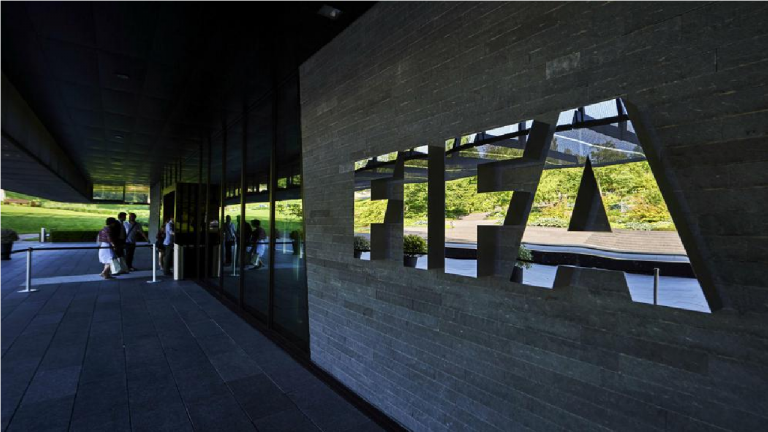
FIFA has unveiled plans to create a new commercial subsidiary valued at about $20 billion to oversee the World Cup and its other major competitions, marking one of the most significant restructurings in the organization’s history and triggering a fierce backlash from UEFA, which accused world football’s governing body of attempting to “sell the soul” of the sport.
The proposal would see FIFA establish FIFA Forward Enterprise (FFE), a standalone commercial entity responsible for managing the governing body’s commercial rights and event operations. While FIFA would retain full control over governance, competitions and regulatory matters, it plans to sell minority stakes of up to 20% in the subsidiary to external investors, potentially raising about $4.2 billion to fund football development worldwide.
The move signals FIFA’s ambition to unlock the growing commercial value of global football while tapping private capital to accelerate investment in infrastructure, grassroots development and women’s football. It also represents another step in FIFA President Gianni Infantino’s plan to expand the commercial reach of the sport beyond its traditional European power base.
Register for the next Tekedia Mini-MBA.
Register for Tekedia AI in Business Masterclass.
Join Tekedia Capital Syndicate and co-invest in great global startups.
According to Reuters, a vehicle established by Joshua Kushner, the brother of Jared Kushner, U.S. President Donald Trump’s son-in-law, is expected to lead the proposed investor consortium. FIFA said investment bank JPMorgan is advising on bringing in outside investors, while former Liberty Media CEO Greg Maffei has served as a commercial adviser on the transaction.
The proposal comes after FIFA staged its biggest-ever World Cup across the United States, Canada and Mexico, a tournament that further demonstrated the immense commercial appeal of the competition through record sponsorship, broadcasting and hospitality revenues.
Unlike a sale of FIFA itself, the governing body stressed that investors would only acquire minority interests in the commercial subsidiary and would have no operational authority over football governance.

“Football is the world’s most popular sport and an extraordinary engine of human and social development,” FIFA President Gianni Infantino said.
“Parts of the game have turned that popularity into remarkable commercial value, and we celebrate that success and want it to continue, because it lifts the whole game.
“Our job is to make sure the rest of football grows with it: FIFA exists to support sustainable, inclusive development in every corner of the world.”

FIFA emphasized that it would retain exclusive authority over the Laws of the Game, international competitions, the match calendar and all sporting and regulatory decisions.
The organization said proceeds from the capital raise would fund an optional development program under which each of FIFA’s 211 member associations could receive up to $20 million in one-time funding for projects including football infrastructure, coaching, youth development, national teams, grassroots football and the women’s game. That amount would increase to $24 million during the 2035-2038 funding cycle.
Infantino, who is seeking another term as FIFA president next year, said the initiative is intended to spread football’s financial success more evenly across the world.
“This is about the democratization of football worldwide,” he said.
UEFA Attacks Proposal
The announcement immediately deepened long-running tensions between FIFA and UEFA, whose relationship has deteriorated over disagreements over tournament expansion, governance, scheduling and commercial strategy.
UEFA issued an unusually strong rebuke, warning that football’s governing institutions should never monetize ownership of the sport’s flagship competitions.
“UEFA takes it extremely seriously,” the European governing body said.
“So should every National Football Association. So should every stakeholder: leagues, clubs, players, supporters, governments and everyone who cares about the future of the game.
“The soul and governance of football are not assets to trade, especially with zero transparency as to who gains financially. None of us are the owners of football. It is not FIFA’s to sell.”
The criticism is born out of concerns within European football that increasing reliance on private capital could reshape how major tournaments are managed and monetized, even if FIFA retains formal control over governance. Relations between the two organizations have become increasingly strained in recent years. UEFA President Aleksander Ceferin notably skipped the most recent World Cup final following disagreements over disciplinary matters, refereeing logistics and tournament operations.
Political and Academic Criticism
The proposal also attracted criticism outside football. British Prime Minister Andy Burnham warned that the World Cup should not become an investment asset.
“The World Cup is not a product. It is the greatest competition in world sport, and it was never anyone’s to sell,” Burnham wrote on X.
“Dress the deal up however you like. Once you have sold a piece of it, you have sold out.”
According to Reuters, Richard Sheehan, a finance professor at the University of Notre Dame who specializes in sports economics, described the proposal as inconsistent with FIFA’s status as a not-for-profit governing body.
“From the perspective of a not-for-profit organization, theoretically raising money to make soccer available to everyone, this move is a farce,” Sheehan said.
A Broader Shift in Sports Finance
In recent years, investment firms have deployed billions of dollars into sports assets ranging from Formula One and Major League Baseball franchises to European football clubs and media rights businesses, attracted by predictable long-term cash flows and growing global audiences.
Should the transaction proceed, FIFA would become one of the largest international sporting organizations to carve out its commercial operations into a separate investment vehicle while maintaining regulatory control, potentially creating a model that other sports governing bodies could examine.
Supporters believe the structure would unlock billions of dollars for football development without surrendering sporting authority. Critics, however, contend it risks increasing financial influence over one of the world’s most important sporting institutions and raises questions about transparency, accountability and the long-term commercialization of the World Cup.
The proposal will now be presented to FIFA’s 211 member associations and the FIFA Council, which will have the final authority to approve or reject the plan. Approval would mark a historic shift in how football’s richest governing body finances its future and could reshape the commercial aspect of the global game for decades.