DD
MM
YYYY

PAGES

DD
MM
YYYY

spot_img

PAGES

Home Blog

Tekedia Capital Celebrates Unicorns In Its Portfolio

0

At Tekedia Capital, we recently celebrated our first official unicorn. We invested in this company at launch in Q4 2024, and just last week, it raised an additional $160 million, crossing the billion-dollar valuation mark.

Within this quarter, we expect another unicorn milestone as one of our portfolio companies completes its latest fundraising. This one is particularly remarkable; we invested at a $5 million valuation, and it is now worth $1 billion with minimal dilution.

Good People, there is abundance in the future. Beginning Monday, as the next Tekedia Capital cycle opens, we will be deploying capital into 18 global startups.

AI Boom Drives Record-Breaking $300 Billion Venture Capital Investment in Q1 2026

0

The first quarter (Q1) of 2026 marked an unprecedented moment in global venture capital, fueled largely by massive investments in artificial intelligence infrastructure and frontier technology labs.

According to Crunchbase data, investors deployed approximately $300 billion across 6,000 startups worldwide, representing a surge of over 150% both quarter over quarter and year over year.

This figure stands as the highest quarterly venture investment ever recorded, surpassing all previous benchmarks. Notably, the total investment in Q1 2026 alone accounted for nearly 70% of the entire venture capital deployed throughout 2025 and exceeded every full-year total prior to 2018.

A significant portion of this capital flowed into artificial intelligence companies, particularly a select group of U.S.-based firms executing record-breaking funding rounds. Among the largest beneficiaries were OpenAI, which raised $122 billion, Anthropic with $30 billion, xAI securing $20 billion, and Waymo raising $16 billion. Together, these four companies accounted for $188 billion, approximately 65% of total global venture investment during the quarter.

Overall, AI companies attracted $242 billion in funding, representing 80% of total global venture capital in Q1. This significantly surpassed the previous record set in Q1 2025, when AI accounted for 55% of total funding. U.S.-based startups dominated the landscape, raising $250 billion, or 83% of global venture investment, up from an already elevated 71% in the same period last year.

Outside the United States, China emerged as the second-largest market, attracting $16.1 billion in venture funding, followed by the United Kingdom with $7.4 billion. Both regions recorded strong growth both quarter over quarter and year over year.

The surge in funding was heavily concentrated in late-stage deals, which totaled $246.6 billion across 584 transactions, an increase of 205% compared to the previous year. Notably, $235 billion was invested in just 158 companies that each raised $100 million or more.

Early-stage funding reached $41.3 billion across 1,800 deals, reflecting modest quarter-over-quarter growth but a 41% increase year over year, largely driven by Series A rounds. Seed-stage funding totaled $12 billion, up 31% year over year; however, the number of deals declined by 30% to 3,800, indicating a trend toward larger but fewer early-stage investments.

Despite the surge in venture funding, the IPO market remained relatively subdued, particularly in the United States, where new listings slowed amid a broader downturn in software stocks. In contrast, China’s IPO market gained momentum during the quarter.

Globally, 21 venture-backed companies achieved exits exceeding $1 billion, with the majority concentrated in Asia. Thirteen of these exits occurred in China, four in other parts of Asia, and only four in the United States.

The largest IPO of quarter one (Q1), was PayPay, a Japan-based fintech firm that debuted with a valuation of $10 billion. Additionally, Chinese AI companies Z.ai and MiniMax went public on the Hong Kong Stock Exchange, each achieving valuations exceeding $6 billion.

While IPO activity lagged, mergers and acquisitions remained robust. Startup M&A transactions reached a combined value of over $56.6 billion, marking the third-strongest quarter since the market downturn in 2022.

Among the largest deals were Savvy Games Group’s planned $6 billion acquisition of Moonton from ByteDance, and Capital One’s $5.15 billion acquisition of fintech startup Brex. In summary, Q1 2026 redefined the venture capital landscape, with artificial intelligence at the center of an extraordinary surge in global investment activity.

Analyst Bernstein Warns of ‘Lost Decade’ for S&P 500 as Inflation Fears, Fiscal Expansion, and Tech Valuations Raise Red Flags

0

The long-running strategy of simply putting money into the S&P 500 and leaving it untouched may no longer offer the easy returns investors have grown accustomed to, according to veteran market strategist Richard Bernstein.

He warns that U.S. equities could be entering a prolonged stretch of weak performance reminiscent of the years that followed the dot-com crash.

Bernstein, chief investment officer of Richard Bernstein Advisors, said he is increasingly concerned that the benchmark index, now heavily concentrated in technology and growth stocks, may be headed for what he describes as a “lost decade.” The warning is especially pointed because it comes at a time when the S&P 500’s leadership has become more narrowly concentrated around a handful of mega-cap technology names riding the artificial intelligence boom.

Speaking to Business Insider this week, Bernstein said the investment environment is becoming materially more difficult for passive index strategies.

“The days of socking your money into the S&P 500 and forgetting about it might be in the rearview mirror,” he said, warning that the most crowded parts of the market, particularly tech-heavy growth stocks, are likely to underperform in the years ahead.

His central argument is that the U.S. economy is beginning to resemble the “guns and butter” era of the 1960s, when heavy fiscal spending and deficit concerns laid the foundation for the inflation surge and stagflation that defined much of the 1970s.

“The U.S. economy looks like it’s entering an inflationary regime similar to what transpired in the 1960s,” Bernstein said, describing the period as a modern-day replay of the policy mix that once combined strong government spending with rising economic imbalances.

He pointed directly to the current fiscal backdrop, including tax cuts and stimulus spending under President Donald Trump’s economic programme, as a source of inflationary pressure.

“You can’t say it’s not going to affect the deficit,” Bernstein said. “I find it curious that we’re getting a sort of modern day ‘guns and butter.’”

This warning comes as oil prices have surged amid geopolitical tensions in the Middle East, adding to concerns that the U.S. economy may be moving toward a period of slower real growth and higher inflation. That combination raises the specter of stagflation, a scenario in which prices remain elevated while economic growth slows or stagnates.

Bernstein’s market concern is not merely macroeconomic. It is also deeply tied to valuation risk. He said the technology sector has become a vulnerability for the broader market, especially with the Magnificent Seven now accounting for roughly a third of the S&P 500.

Much of the rally in recent years has been driven by aggressive investor enthusiasm around AI and the billions of dollars being deployed by major technology companies. However, Bernstein questions whether the monetization case is strong enough to justify current valuations.

This is where he draws one of his most forceful historical comparisons.

“Remember, there was a lost decade after the tech bubble in 2000. The S&P did nothing,” Bernstein said, recalling the period when the index delivered meager returns after the market trough in the early 2000s.

That analogy is resonating more widely across Wall Street. Several strategists, including analysts at major banks and asset managers, have recently warned that U.S. equities may face a decade of lower returns because of elevated valuations and excessive concentration in a narrow group of expensive stocks.

Bernstein believes investors need to reposition for an inflation-heavy regime rather than remain overexposed to growth.

“We know that investors are massively overweight growth relative to value right now,” he said, arguing that value stocks should outperform if inflation proves more persistent.

He also highlighted small-cap stocks as another area of opportunity, noting that investor flows into the segment have been “insignificant” in recent years, suggesting widespread underexposure. That matters because smaller companies historically performed better during inflationary cycles such as the 1960s and 1970s.

On the fixed-income side, Bernstein strongly favors liquidity and shorter duration. He said cash and short-duration instruments tend to outperform when inflation is high because investors place greater value on capital that is immediately accessible.

“I’ve got a 20-year investment or a 10-year investment, but that doesn’t do me any good today when I need to buy groceries,” he said, explaining why his firm has increased its cash allocation since the start of the Iran war.

He also made the case for dividend-paying stocks, stressing the importance of near-term cash flows.

“In the equity market, you want dividends because you want as much cash flow upfront as you can possibly get,” Bernstein said.

Gold also features in his defensive allocation framework. While he noted that the metal did not dramatically outperform during earlier inflationary periods, he argued that it remains an important hedge.

His firm currently holds about 5% in gold, reflecting a view that the metal can help preserve value during periods of macroeconomic instability. Bernstein even outlined a model portfolio that sharply contrasts with the passive index-heavy strategies that have dominated recent years. He suggested a mix where 60% is allocated to value, dividend, and non-U.S. stocks, with the remaining 40% in short-term bonds.

“You might do very well over the next five to ten years,” he said.

Bernstein is not necessarily predicting an imminent crash. Rather, he is warning that the next decade may not resemble the easy gains of the post-2009 bull market.

If inflation, fiscal deficits, and valuation compression persist, passive exposure to the S&P 500 may no longer be sufficient. In that environment, portfolio resilience, cash-flow strength, and valuation discipline may matter far more than momentum and technology-led market leadership.

IMF Endorses Further BOJ Rate Hikes as Oil Shock and Yen Weakness Test Japan’s Economic Resilience

0

The International Monetary Fund has given strong backing to the Bank of Japan’s tightening path, urging policymakers to continue raising interest rates even as the Middle East war introduces fresh downside risks to growth and new inflationary pressures for the world’s fourth-largest economy.

The recommendation, issued after the IMF’s latest policy consultation with Japan, comes at a critical moment for financial markets, where expectations are rapidly building for another rate increase as early as this month. Investors are increasingly betting that the BOJ will be forced to respond to a fresh spike in imported inflation driven by surging oil prices and the yen’s persistent weakness.

In its statement from Washington on Friday, the IMF said Japan’s growth is likely to moderate, with the Iran war adding “significant new risks” to the outlook. Yet the Fund maintained that gradual wage growth should continue to support private consumption, allowing the central bank to stay on course with its carefully calibrated normalization process.

The IMF said risks to both growth and inflation were “broadly balanced,” while reaffirming that inflation is expected to converge toward the BOJ’s 2% target by 2027.

“They noted that as underlying inflation converges toward the BOJ’s target, gradual rate hikes toward neutral should continue” in a flexible, well-communicated and data-dependent approach, the statement said.

“Directors stressed the importance of maintaining a flexible exchange rate as a credible shock absorber,” it added.

That view effectively validates the BOJ’s recent hawkish communication. The central bank ended its decade-long ultra-loose monetary regime in 2024 and has since raised rates several times, including a move in December that took short-term rates to 0.75%, the highest level in roughly three decades.

The IMF’s executive board went further by explicitly endorsing continued tightening, stating that as underlying inflation moves closer to target, “gradual rate hikes toward neutral should continue” in a flexible, data-dependent, and well-communicated manner.

That language is important for markets as it suggests that policymakers in Tokyo now have institutional support to continue lifting rates even as geopolitical tensions complicate the economic picture. Money markets are already pricing in about a 70% chance of an April hike, reflecting investor belief that the BOJ is more concerned about entrenched inflation risks than a short-term growth slowdown.

The inflation case has strengthened materially in recent days. Japan, as a heavily oil-import-dependent economy, is acutely exposed to the rise in global crude prices following the disruption in Middle East energy flows. Higher oil prices feed quickly into domestic costs through fuel, transport, electricity, and industrial inputs.

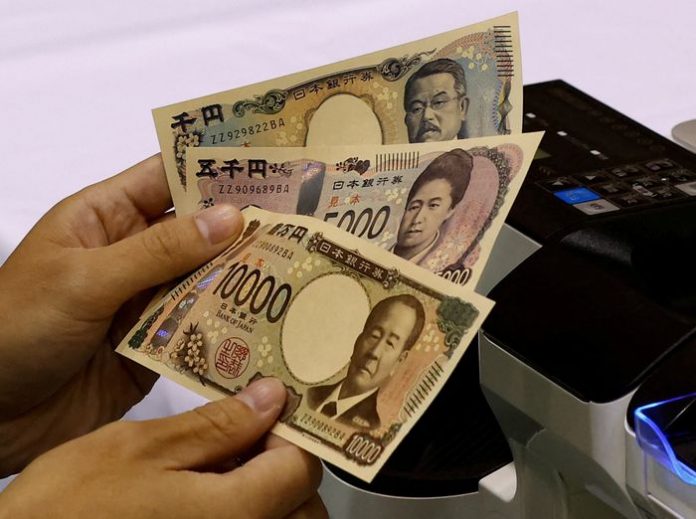
This effect is being amplified by the weakening yen. The Japanese currency has slipped dangerously close to the ¥160-per-dollar threshold, a level widely regarded by traders as politically sensitive and historically associated with heightened intervention risks.

The weaker yen increases the local-currency cost of imports, worsening inflationary pressure just as wage-led price growth is already taking hold. That has kept traders alert to the possibility of direct market action by Japanese authorities.

Finance Minister Satsuki Katayama on Friday issued a fresh warning to speculators betting against the yen, saying Tokyo stood ready to use all legally feasible tools, including non-conventional measures, to counter disorderly moves in the currency market.

“We’re ready to take all available means that are legally feasible, be it conventional or non-conventional,” she told an online programme on Friday evening.

Such language has often preceded intervention in the past, particularly when currency weakness threatens to undermine economic stability.

But the same oil shock that lifts inflation also threatens to slow growth. Higher energy costs raise operating expenses for manufacturers, transport firms, and service-sector businesses, while also eroding household purchasing power.

Recent business surveys cited by BOJ officials show deteriorating corporate confidence across multiple sectors, with firms increasingly concerned about the impact of rising fuel costs on margins and demand.

This is what makes the current moment especially delicate. Japan is confronting the classic risk of stagflation: a combination of slowing growth and persistent inflation. That concern has been raised not only by outside economists but also by BOJ insiders.

New board member Toichiro Asada, this week, warned that the Iran war could create stagflationary conditions that monetary policy alone may not be able to solve. Former BOJ official Nobuyasu Atago has also cautioned that the central bank may be underestimating the risk of supply-chain disruption, particularly through energy-linked inputs such as petrochemicals and industrial feedstocks.

This has created a delicate challenge for the BOJ. If the central bank tightens too aggressively, it risks worsening a slowdown in production and investment – and if it moves too slowly, inflation expectations could become entrenched, especially given the steady rise in wages and growing willingness among firms to pass on costs.

However, policymakers appear to believe the second risk is more pressing for now. BOJ Executive Director Koji Nakamura has already signaled that higher fuel costs may have a larger pass-through effect than in previous cycles because companies are now more prepared to raise both prices and wages. That marks a notable shift from Japan’s long deflationary era, when firms were reluctant to pass on cost increases for fear of losing market share.

But analysts have warned that another BOJ hike would further narrow the interest-rate differential between Japan and the United States, potentially affecting global carry trades and cross-border capital flows. For years, the yen has been a preferred funding currency for global investors because of Japan’s near-zero rates.

A sustained tightening cycle threatens to unwind part of that structure. The IMF’s endorsement, therefore, goes beyond domestic monetary policy, reinforcing the view that Japan is steadily moving away from the extraordinary stimulus era that defined its post-crisis economy for more than a decade.

In effect, the Fund is telling markets that war-driven uncertainty is not yet enough to derail Japan’s path toward policy normalization. The April meeting is now shaping up as one of the most consequential BOJ decisions in recent years.

Pixie Chess Launches on Base Following $5.2M Seed Round from Paradigm 

0

Pixie Chess often stylized as Pixiechess, a Web3 magical chess platform, has launched on Base following a $5.2 million seed round led by Paradigm.

The project, incubated through Paradigm’s Entrepreneur-in-Residence (EIR) program by founder Josh Harris, blends classic chess with trading card game (TCG)-style mechanics, NFTs, and crypto-native economics inspired in part by structures like NounsDAO. It positions itself as both a skill-based game and a financial experiment where players wager real money in ETH on matches.

Standard chess pieces get unique abilities that change gameplay; a Bouncer bishop that bounces off board edges once per move, a “Golden Pawn” that auto-wins on promotion, charged pieces that electrocute on capture, or pieces that pass through allies. Players collect, trade, auction, or buy them via mystery packs on the marketplace. Pieces can be burned post-tournaments to create scarcity.

New pieces drop daily via auctions; revenue from sales and spending directly funds tournament prize pools in ETH. There’s also a secondary marketplace for trading existing NFTs. Players build decks and collections of pieces for matches. It supports skill-based wagering, quickplay for practice including weekly free pieces, leaderboards, and tournaments with entry fees contributing to pots.

The game runs on Base, using ETH for transactions, ownership of pieces as NFTs, and transparent prize distribution. It emphasizes verifiable onchain elements while keeping chess core gameplay familiar but enhanced. The $5.2M seed with participation from SEED Club and angels was announced around the launch. It provides runway for development in the growing web3 gaming space.

The team has highlighted ongoing tournaments with ETH prize pools and active player activity like piece purchases and sign-ups. There’s mention of free-to-play options for quickplay and practice, though core competitive modes involve wagering and entries. Some access may use invitation codes initially, and an airdrop has been speculated in community discussions.

It tries to create a sustainable loop: collectibles drive revenue, funds prize, attracts competitive players, more spending and scarcity via burns. The magical twist aims to refresh chess while adding ownership, strategy depth, and onchain financial upside. Pixiechess piece synergies revolve around combining the unique magical abilities of NFT pieces; replacing or augmenting standard chess pieces in your army to create non-standard tactical advantages, emergent board control, and win conditions that go far beyond classic chess.

Since the game launched, the meta is brand new—players are still discovering deep interactions in quickplay, ranked, and tournaments. There are already ~58 magical variants across piece types; pawns, rooks, bishops, knights, queens, kings, each with one crazy ability that alters movement, capture, promotion, or special effects. You build a deck or collection by owning and trading these NFTs, then deploy selected variants in matches.

For tournaments, some modes let you burn pieces to activate and enter, tying ownership directly to high-stakes play. Abilities are designed like TCG cards meeting chess: they create synergies through positioning multipliers, resource loops, path-clearing combos, and alternate win paths. Revenue from piece sales funds prize pools, so strong synergy decks naturally attract players chasing ETH pots.

Bouncer (Bishop variant): Can bounce off the edge of the board once per move. This extends its diagonal range dramatically—think ricochet shots that reach unexpected squares or snipe from the perimeter after reflecting. Golden Pawn: Promoting it instantly wins the game; no need for the usual queen and choice promotion. It turns a single pawn into a nuclear win condition.

Electroknight (Knight variant; also called Charged Piece): After the knight itself makes 5 consecutive moves without the charge resetting, it becomes charged. On its next capture, it electrocut es an additional adjacent piece. Charge resets after capturing or if you move a different piece. Ramp-up risk and reward.

Phase Rook: Can pass through allied pieces but cannot capture through them. It ignores your own blockers for repositioning or long-range strikes while still obeying rook movement otherwise. Aristocrat likely royalty-themed buffs or restrictions, War Automaton; heavy mechanical power, perhaps tanky or multi-attack, and at least one Bishop that accumulates travel distance.