DD
MM
YYYY

PAGES

DD
MM
YYYY

spot_img

PAGES

Home Blog

XLM Targets $0.55, ADA Drops 10%, But Traders Are Flocking to BlockDAG’s $0.001 Buyback for Explosive Gains

0

The crypto market is showing two very opposite stories right now. Stellar just got a massive nod from a huge financial institution, while Cardano is facing a tough governance problem that caused its price to drop by another 10% in just one day. While other networks deal with big changes or structural issues, BlockDAG is moving forward with a completely different plan.

It has a live online casino, a big legacy sale, and an official buyback program with clear rules. This means it does not need to wait for community votes or big corporate partnerships to bring value. Here is a look at three popular alternative coins that everyone is watching closely right now.

Inside BlockDAG’s Legacy Sale and Buyback Opportunity!

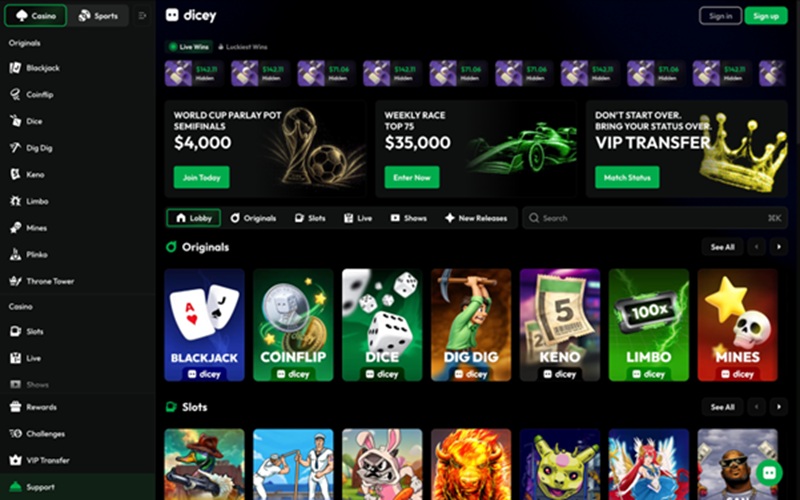
Right now, the strength of a project’s real-world use is what separates the winners from the losers. BlockDAG just launched two major features at the same time. The BlockDAG Casino opened on May 14, 2026, featuring a sportsbook with over 30 sports. It accepts 25 different ways to pay, including crypto and normal options like Visa, Mastercard, Google Pay, and Apple Pay.

The way the coin works is very simple. Players buy BDAG to play games, and they get their winnings back in BDAG. This constant loop creates a steady demand for the token as more people use the site. With expectations to reach over $5 million in daily activity, this gaming setup helps BDAG grow no matter how the rest of the market feels.

At the same time, the special Legacy Sale is active right now. You can buy BDAG for just $0.00000044. There is also a great Buyback Program where you can sell at $0.001 per BDAG. New buyers can register their eligible coins easily from their own dashboard without needing to transfer anything, and there are no daily limits on how much you can sell. If you already hold BDAG, you can still join the fun.

You can use the BDAG Swap to buy tokens at 30% below the current market price and join the Buyback Program. For current holders, the buyback price is set at $0.00025 per BDAG, with a maximum limit of 250 million tokens per wallet each day. All of these buyback payouts will be sent out on October 1, 2026.

This is a massive chance to be part of the project’s growth as it adds new tools, brings in more users, expands its casino, rolls out more miners, and plans for future updates. Additionally, the Stablecoin Beta is up and running, and 4 million people are using the X1 mobile app to keep the network busy every day.

If you are looking for top coins with clear reward setups instead of just hype, BlockDAG is a fantastic choice. Its mix of a working casino and excellent sales terms makes it one of the brightest options available today.

XLM Surges on Major Financial Partnership

A massive financial clearing organization that handles over $114 trillion in assets every year just made a huge announcement on June 1. They plan to connect their new digital asset platform to the Stellar network, aiming for a full launch in 2027.

This big news caused the price of XLM to jump by more than 80% in a single week. The price moved up from around $0.15 to almost $0.30, which was much better than most other cryptos. Looking ahead, experts think the price could head toward $0.55.

By June 3, XLM was trading at $0.21 with a total market value of $10.59 billion, marking a 27.35% increase over the week. The network is also getting ready to launch Protocol 24 later this year.

This update will bring private transactions that still follow financial rules, which is exactly what big businesses need. Because of this, XLM is becoming a top choice for connecting traditional finance with blockchain technology.

Cardano Faces Governance and Price Pressure

On June 3, Cardano creator Charles Hoskinson left a short message on social media saying he was taking a break, which caused the price of ADA to fall by 10%. This happened right after he warned about upcoming problems in the network following the shutdown of TapTools.

TapTools served over a million users on Cardano but had to close down due to losing its leaders and facing high costs. Hoskinson pointed to internal disagreements as the main cause. Right now, ADA is trading around $0.198, and its average price charts are pointing downward, creating a tough barrier for growth.

On the positive side, Cardano is working on a new test network this month that aims to handle 1,000 transactions per second. They hope to bring this upgrade to the main network before the year ends. The contrast between a dropping price and these big technical upgrades has rarely been this obvious.

Final Thoughts

Stellar’s new financial partnership is a massive deal for the crypto world this week, but the quick 80% price jump means a lot of that excitement is already baked into the current price, and the actual launch is still a year away.

Cardano could have great value if its new upgrade works perfectly, but internal drama and closing projects are creating tough challenges that tech updates cannot fix right away. BlockDAG does not have these internal arguments or long wait times. Its casino is open right now, the Legacy Sale is running today, and the Buyback Program has a set payout date on October 1, 2026.

When looking for the top crypto to buy right now, BlockDAG stands out. Its mix of a live product, clear financial rewards, and solid plans gives it an advantage that other moving projects simply cannot match at this moment.

Presale: https://purchase.blockdag.network

Website: https://blockdag.network

Telegram: https://t.me/blockDAGnetworkOfficial

Discord: https://discord.gg/Q7BxghMVyu

Meta’s AI Ambitions Face Scrutiny as Muse Spark Delays Persist

0

Meta is accelerating its push into enterprise artificial intelligence even as questions linger over delays to one of its most closely watched AI products, highlighting the challenges facing the social media giant as it attempts to catch up with rivals in the rapidly evolving AI race.

The company is reportedly facing setbacks in releasing the application programming interface (API) for Muse Spark, its flagship reasoning model unveiled earlier this year. According to the Wall Street Journal, Meta has repeatedly delayed plans to make the model available to developers and had no confirmed launch date as of Tuesday.

Meta, however, disputes suggestions of a major setback. A company spokesperson told Reuters that the API is already being tested with selected partners and remains on track for release this month.

“The muse spark API will be coming soon,” Meta’s Chief AI Officer, Alexandr Wang, said in an earlier post on X.

The delay comes at a critical moment for Meta’s AI strategy. Muse Spark was introduced in April as the first major model developed under Meta’s Superintelligence Labs initiative, a division established to narrow the gap with industry leaders such as OpenAI, Anthropic, and Alphabet.

The API rollout is particularly important because developer access is often what transforms an AI model from a research project into a commercial platform. Meta hopes to create an ecosystem that can compete with the growing enterprise adoption enjoyed by rivals by allowing software developers and businesses to integrate Muse Spark into applications and workflows.

The apparent delays, however, underscore a broader challenge confronting the AI industry. As models become more powerful, companies are increasingly prioritizing reliability, safety, and performance testing before broad public releases. The pressure to avoid errors, security vulnerabilities, and reputational damage has led many AI developers to take a more cautious approach to deployment.

At the same time, Meta is moving aggressively to expand its presence in the enterprise AI market.

During its Conversations conference in London, the company unveiled a new AI agent designed to help businesses automate routine operations. The system builds upon Meta’s existing business messaging tools on WhatsApp and Messenger by introducing more advanced “agentic” capabilities that allow AI assistants to perform tasks rather than simply answer questions.

The new agents can handle functions such as scheduling appointments, managing customer interactions, and assisting with sales activities. Meta said more than one million businesses are already using earlier versions of its AI chatbots across WhatsApp and Messenger.

The upgraded service will also be integrated into Instagram, creating a unified AI platform across Meta’s major applications.

“This is definitely an enterprise play,” Naomi Gleit, Meta’s head of product, told Reuters.

For years, Meta focused primarily on consumer-facing AI features integrated into social media platforms. Now it is increasingly targeting the lucrative enterprise software market, where businesses are spending billions of dollars to deploy AI tools that can improve productivity, automate workflows, and enhance customer service.

The opportunity is substantial. Enterprise AI has emerged as one of the fastest-growing segments of the technology industry, with companies seeking ways to integrate generative AI into daily operations. OpenAI has gained traction through ChatGPT Enterprise, Anthropic has expanded its Claude offerings for businesses, while Google and Microsoft continue embedding AI across their productivity software suites.

Meta’s competitive advantage lies in its vast communications ecosystem. With billions of users across WhatsApp, Facebook, Messenger, and Instagram, the company is uniquely positioned to offer AI-powered customer engagement tools directly within platforms that businesses already use to communicate with consumers.

The broader strategy also creates new revenue opportunities beyond advertising, which remains Meta’s dominant business. As AI agents become more capable of handling customer interactions, transactions, and operational tasks, businesses may be willing to pay for premium automation services integrated into Meta’s platforms.

However, the delayed rollout of Muse Spark highlights the challenge of executing on those ambitions. While Meta has invested heavily in AI infrastructure, talent, and model development, competitors continue to move quickly. OpenAI, Anthropic, and Google have all released increasingly advanced models and enterprise products over the past year, intensifying pressure on Meta to demonstrate that its technology can compete at the highest level.

Investors will likely view the enterprise agent launch as a positive sign that Meta is translating its AI investments into commercial products. But the success of the company’s broader AI strategy may ultimately depend on whether Muse Spark can deliver the performance and developer adoption needed to establish Meta as a serious platform provider rather than merely an AI-enabled social media company.

Fidelity Says It Will Lower Eligibility Requirement To Make SpaceX Stock Available To More Retail Investors

0

As anticipation builds around what could become the largest public offering in history, SpaceX is taking an unusually aggressive step to bring ordinary investors into a process that has traditionally been dominated by institutions and wealthy clients.

The Elon Musk-led rocket and satellite company is allocating a significantly larger portion of its initial public offering to retail investors, prompting major brokerage firms such as Fidelity to dramatically lower eligibility requirements for customers seeking access to shares at the IPO price.

The move marks a notable departure from standard Wall Street practice and could reshape how future high-profile listings approach retail participation.

Under Fidelity’s updated guidelines, investors may be eligible to participate in the SpaceX offering with as little as $2,000 in a retail brokerage account. The threshold is substantially lower than the requirements that have accompanied many previous IPOs, where investors often needed hundreds of thousands of dollars in assets or extensive trading relationships to gain access to newly issued shares.

“The SpaceX IPO may be available to Fidelity customers with as little as $2,000 in a retail brokerage account, lower than typical IPO requirements due to increased share availability,” Fidelity said.

The reduction reflects a deliberate decision by SpaceX to reserve a far larger allocation of shares for individual investors than is typically seen in major public offerings.

In most IPOs, retail investors receive between 5% and 10% of available shares, with the vast majority going to institutional buyers such as mutual funds, pension funds, and hedge funds. SpaceX, however, is making up to 30% of shares available at the IPO price to retail participants, a move that significantly expands access to one of the world’s most sought-after private companies.

The strategy aligns with efforts by CEO Elon Musk to cultivate a broader shareholder base and capitalize on intense public interest in the company.

SpaceX’s IPO has generated extraordinary attention because of the company’s dominant position in commercial space launch services, satellite communications, and national security contracts. The company is targeting a valuation of approximately $1.75 trillion, placing it among the most valuable corporations in the world from the moment it begins trading.

Fidelity said customers who meet eligibility requirements can submit an indication of interest, or IOI, requesting anywhere from one share to as many as one million shares. Given the anticipated demand, however, allocations are expected to be determined through a lottery system rather than on a first-come, first-served basis.

That underpins a broader reality facing retail investors: demand is likely to far exceed supply.

Brokerages expect intense competition for shares, particularly because access to IPO pricing has historically been one of the most difficult opportunities for ordinary investors to obtain. In many cases, retail buyers only gain access after shares begin trading publicly, often after substantial price increases have already occurred.

SpaceX has made clear that broad retail participation is a priority.

“Retail investor participation is important to SpaceX,” the company states in the FAQ section of its IPO materials.

Yet the effort to democratize access is also generating debate across Wall Street.

Analysts warn that a larger retail presence could contribute to increased volatility once trading begins. Retail investors tend to trade more actively than institutional shareholders, particularly when investing in highly publicized companies with strong brand recognition.

There are also concerns that some investors could be taking on excessive exposure to the stock.

Market observers expect SpaceX to be added to major stock indexes relatively quickly because of its enormous size and market capitalization. Such inclusion would compel index funds and exchange-traded funds to purchase shares, potentially adding further demand pressure and amplifying price movements.

The company and participating brokerages are attempting to discourage short-term speculation. Fidelity noted that customers who rapidly sell, or “flip,” their IPO shares within the first 15 days after trading begins could face restrictions on participation in future IPO offerings.

Nevertheless, critics argue that the structure still disproportionately benefits existing shareholders and insiders.

“This rules are being rewritten to benefit IPO issuers and early-stage insiders,” said George Noble, Fidelity fund manager.

Over the past decade, many high-growth technology firms have remained private for longer periods, allowing venture capital firms and private investors to capture much of the value creation before ordinary investors gain access. SpaceX seems to be positioning itself as an exception to that trend by opening a larger share allocation to retail investors.

AI Power Rush Propels Innio’s $2.43bn IPO as Data Center Boom Reshapes Global Energy Markets

0

Gas engine manufacturer Innio has raised $2.43 billion in one of the year’s largest industrial and energy-related U.S. public offerings, underscoring how the artificial intelligence boom is creating winners far beyond the semiconductor industry.

The Munich-based company priced its Nasdaq listing at $27 per share, the top end of its marketed range, reflecting strong investor appetite for businesses positioned to benefit from the rapid expansion of AI infrastructure. The offering was sold entirely by existing shareholder AI Alpine, which is jointly owned by funds managed by Advent International and the Abu Dhabi Investment Authority.

While much of the attention surrounding AI has focused on chipmakers such as Nvidia and cloud providers, Innio’s successful flotation highlights a growing realization on Wall Street that the next phase of the AI race may be constrained less by computing power than by electricity.

The company manufactures gas-powered engines under its Jenbacher and Waukesha brands, supplying power generation systems for data centers, microgrids, industrial facilities, and energy infrastructure. As hyperscale AI facilities consume unprecedented amounts of electricity, operators are increasingly turning to distributed power generation rather than relying solely on strained utility grids.

That trend has transformed Innio’s business. The company disclosed that annual data-center equipment order intake surged to $2.28 billion in 2025 from just $27 million in 2023, illustrating the extraordinary speed at which AI-related energy demand is reshaping industrial supply chains.

The figures provide another indication that the AI investment cycle is broadening beyond chips and software into what many investors now describe as the “physical layer” of artificial intelligence: power generation, transmission infrastructure, cooling systems, backup power, and energy storage.

Industry analysts view electricity as one of the most critical bottlenecks facing AI deployment. The latest generation of AI data centers can require as much power as a medium-sized city, prompting technology companies and infrastructure investors to pour hundreds of billions of dollars into securing reliable energy supplies.

That has created a favorable backdrop for companies such as Innio. Data-center developers are adopting on-site generation solutions to avoid delays associated with connecting to overloaded power grids. In several major markets, including parts of the United States and Europe, grid connection timelines can stretch for years, making distributed generation an attractive alternative.

The company’s growth trajectory also mirrors a broader shift in energy markets. While renewable energy remains a long-term priority for many operators, the urgency of AI deployment has renewed interest in natural gas-powered generation because of its reliability and ability to be deployed relatively quickly.

Investors appear to be betting that this trend will persist. Innio’s public debut arrives amid a wave of AI infrastructure spending that has fueled strong performances for companies involved in power equipment, electrical systems, cooling technologies, and data-center construction.

The listing also represents a significant milestone for private-equity firm Advent International. Since acquiring General Electric’s distributed power business for $3.25 billion in 2018 and transforming it into Innio, Advent has focused on expanding the company’s North American presence and positioning it to capitalize on growing energy demand from digital infrastructure.

The IPO comes when capital markets that were largely closed to new listings during periods of higher interest rates have reopened as investors aggressively seek exposure to AI-related growth stories. Recent offerings from companies tied to defense technology, energy infrastructure, and industrial manufacturing have all benefited from enthusiasm surrounding the AI buildout.

For Innio, the challenge now will be sustaining growth as competition intensifies. Major energy equipment manufacturers, turbine suppliers, and power-generation firms are all racing to capture a share of what many analysts expect to become a multi-trillion-dollar global investment cycle in AI infrastructure.

However, the company’s recent order growth suggests that demand remains robust. The disclosure that it has secured agreements tied to multi-gigawatt data-center projects indicates that AI infrastructure spending is moving from planning stages into large-scale deployment.

However, the IPO’s success sends a broader signal to markets that investors are no longer viewing AI as merely a software or semiconductor story. Increasingly, they are treating it as an industrial revolution requiring enormous investments in energy, power systems, and physical infrastructure.

This means companies supplying the electricity, as technology giants race to build the computing capacity needed for increasingly advanced AI models, may emerge as some of the biggest beneficiaries of the next stage of the AI boom.

Zcash Network Briefly Stops Producing Blocks as Emergency Update Fixes Critical Bug

0

The cryptocurrency industry was reminded of the importance of network resilience and rapid response when the Zcash network briefly stopped producing blocks due to a software bug. The incident, while relatively short-lived, raised concerns among users, miners, exchanges, and developers about the stability of one of the industry’s leading privacy-focused blockchain networks.

Fortunately, the Zcash development team acted quickly, releasing an emergency update that restored normal operations and prevented what could have become a much larger disruption. Zcash, launched in 2016, is known for its advanced privacy technology that allows users to shield transaction details while still maintaining blockchain security. Over the years, it has established itself as one of the most recognized privacy-oriented cryptocurrencies.

Because blockchain networks rely on continuous block production to validate transactions and maintain consensus, any interruption can significantly impact network functionality and user confidence.

The issue emerged when a software bug caused the network to stop generating new blocks. Without block production, transactions could not be confirmed, effectively freezing activity across the blockchain. Such events are rare in mature cryptocurrency networks, making the incident particularly noteworthy. Although no evidence suggested that user funds were at risk, the inability to process transactions highlighted the critical role of software reliability in decentralized systems.

As reports of the disruption spread, developers quickly investigated the root cause. The Zcash engineering team identified the bug and worked on an emergency patch designed to restore consensus and resume normal network operations. Their response demonstrated the importance of active maintenance and robust monitoring systems within blockchain ecosystems.

In decentralized networks, rapid coordination among developers, node operators, miners, and infrastructure providers can mean the difference between a minor interruption and a prolonged outage. The release of the emergency update allowed affected participants to upgrade their software and rejoin the network. Once a sufficient number of nodes adopted the fix, block production resumed, and transaction processing returned to normal.

The swift recovery helped limit the broader impact on users and exchanges, many of which closely monitor blockchain health to ensure secure deposits and withdrawals. Incidents like this serve as valuable reminders that blockchain technology, despite its decentralized nature, remains dependent on software created and maintained by humans. Even highly tested systems can encounter unexpected bugs when operating in complex environments.

As blockchain networks continue to evolve, upgrades and new features can introduce unforeseen technical challenges that require immediate attention. The Zcash outage also underscores the broader importance of security audits, stress testing, and continuous development. While decentralized networks eliminate many traditional points of failure, they are not immune to software vulnerabilities. Successful blockchain projects often distinguish themselves not by avoiding every issue but by how effectively they respond when problems arise.

For investors and users, the event highlights the importance of staying informed about network upgrades and maintenance announcements. Temporary disruptions can affect transaction timing, exchange operations, and overall market sentiment. However, a strong and transparent response can help preserve trust and demonstrate the maturity of a project’s development team.

The brief halt in Zcash block production was a significant but manageable event. The successful deployment of an emergency update restored network functionality and reinforced confidence in the project’s ability to address technical challenges. As the cryptocurrency industry continues to grow, resilience, transparency, and rapid problem-solving will remain essential qualities for maintaining secure and reliable blockchain networks.