DD
MM
YYYY

PAGES

DD
MM
YYYY

spot_img

PAGES

Home Blog

EU Orders Google To Open Android And Search To AI Rivals, Reshaping Competition With Gemini

0
The US is after Google also

Alphabet’s Google will be required to give artificial intelligence rivals, including OpenAI, and competing search providers greater access to key Android and Search services under new European Union rules designed to curb the market power of Big Tech and foster greater competition in the AI era.

The European Commission on Thursday detailed the obligations Google must meet under the Digital Markets Act (DMA), six months after launching specification proceedings to clarify how the company should comply with the landmark legislation.

The measures represent one of the EU’s most significant regulatory interventions in the rapidly evolving AI market, extending the Digital Markets Act beyond traditional internet search into generative AI and digital assistants. The decision could reshape how AI developers compete on Android devices and how search-based AI services access information currently controlled by Google.

Under the ruling, Google will be required to open 11 Android operating system features to competing AI developers, enabling rival digital assistants to integrate more deeply with Android devices and compete directly with Google’s Gemini AI.

Among the most significant changes, users will be able to activate third-party AI assistants through voice commands in much the same way they currently invoke Google Assistant or Gemini. Those assistants will be able to perform tasks such as searching for local information, booking transportation, and executing other system-level functions without relying on Google’s own AI services.

The changes are scheduled to become available with the Android release planned for July 2027.

The Commission said access will not be unrestricted. Google will be allowed to provide the new capabilities only to developers that satisfy specific privacy and cybersecurity requirements designed to protect users and maintain device security.

Beyond Android, the Commission also ordered Google to share certain search-related data that it uses to improve its own search engine with competitors, including AI companies that offer search functionality.

The measure could benefit OpenAI and other developers building AI-powered search products by giving them access to anonymized data that would otherwise remain exclusive to Google’s search ecosystem. The Commission said the information-sharing framework includes anonymization requirements and a pricing mechanism governing commercial access.

Google will retain the ability to assess whether companies requesting access pose cybersecurity or data protection risks before sharing data.

The search data provisions are scheduled to take effect from January next year.

The decision is borne out of growing concern among European regulators that Google’s dominance in internet search could be reinforced by artificial intelligence unless competing AI developers receive broader access to critical infrastructure and datasets. Rather than waiting for competition concerns to emerge after markets consolidate around AI services, the EU is using the Digital Markets Act to impose interoperability requirements intended to lower barriers to entry before dominant positions become entrenched.

Google criticized the Commission’s decision, arguing that the mandated changes could compromise user protections.

“Today’s decisions risk undermining vital privacy and security guardrails for millions of Europeans,” Kent Walker, Google’s president of global affairs and chief legal officer, said in a statement.

“We have repeatedly offered solutions to safeguard users while satisfying the DMA’s goals, but these rulings discount extensive evidence of user harm,” he added.

The European Commission rejected those concerns, saying the measures include robust safeguards designed to balance competition with security and privacy.

EU Executive Vice President for Tech Sovereignty, Security and Democracy, Henna Virkkunen, said the objective is to give European consumers more meaningful alternatives.

“Thanks to these measures we hope to see emerging alternatives to Google Search and Google’s AI services, such as Gemini, and that users in the EU can enjoy greater choice of services,” Virkkunen said.

For OpenAI and other AI developers, the decision could significantly improve their ability to compete within Google’s ecosystem. Access to deeper Android functionality would allow rival AI assistants to offer experiences much closer to Google’s own services, while shared search data could help improve the quality and relevance of AI-generated answers.

The ruling also highlights how AI has become the next major battleground for digital regulation. Whereas earlier antitrust cases focused on web browsers, search rankings and mobile app stores, regulators are now extending competition policy to AI assistants, foundation models and the data that powers them.

Against this backdrop, Google’s compliance with the Digital Markets Act is likely to become more complex as AI becomes integrated across Search, Android, Chrome and other products. The company must now balance regulatory obligations in Europe with maintaining product security, protecting proprietary technology, and preserving the competitive advantages that have underpinned its search business for more than two decades.

More broadly, the Commission’s decision signals that Europe intends to ensure the AI market develops with multiple competing platforms rather than allowing existing technology giants to leverage their established ecosystems into long-term dominance of generative AI. The measures, if successfully implemented, are expected to lower switching costs for consumers, accelerate innovation among AI developers and reshape competition across both mobile operating systems and AI-powered search services.
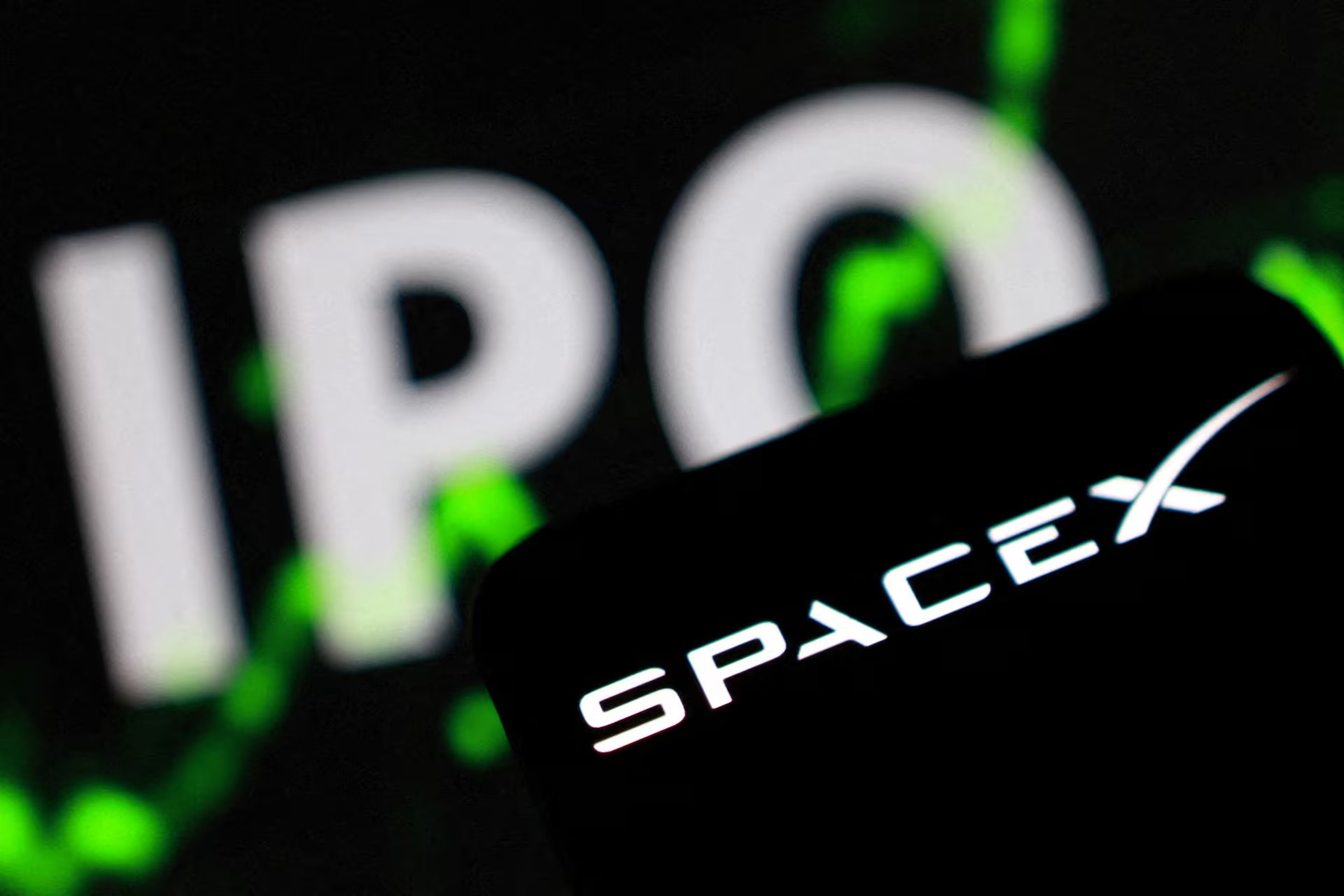

SpaceX Shares Close Below IPO Price For the First Time

0

Space Exploration Technologies, also known as SpaceX, has seen its shares slip below the initial public offering (IPO) price for the first time since its debut.

The stock finished Thursday’s session at $130.67, slipping under the $135 IPO price amid ongoing volatility that has erased much of the post-listing gains.

Shares of the Elon Musk-led company have declined in four consecutive trading sessions, plunging to a level 40% below a peak attained in the frenzied aftermath of an initial public offering (IPO) last month.

The decline underscores growing investor concerns over valuation, broader market pressures, and uncertainty surrounding the company’s near-term growth prospects.

Some analysts attribute the dropoff to sputtering demand as investors move past the company’s splashy public listing and take a closer look at its bottom line. Volatility often follows an IPO, they acknowledged, while differing in their assessments of the firm.

The retreat in the company’s stock prices came before the firm’s 13th Starship test flight, scheduled for Thursday, but ultimately scrubbed due to engine issues.

During the countdown, several of the Super Heavy booster’s 33 Raptor engines failed to ignite as expected, prompting the rocket’s onboard safety system to halt the launch sequence before the vehicle left the pad.

The mission was expected to be a major milestone for the Starship program, marking the first time the rocket would deploy 20 next-generation Starlink V3 satellites into space while also testing an in-space engine relight and other key flight objectives.

Following the scrub, SpaceX CEO Elon Musk said two engines would be replaced before the next launch attempt, which he expects could take place early next week.

While SpaceX remains a leader in satellite launches and space exploration, the move below its IPO price highlights the challenges even high-profile technology firms face in maintaining investor confidence amid shifting market conditions.

How SpaceX’s Historic IPO Sparked a Buying Frenzy

SpaceX’s stock market debut was one of the most anticipated public offerings in financial history, attracting overwhelming demand from institutional and retail investors eager to own a stake in Elon Musk’s space and satellite empire.

The company priced its initial public offering (IPO) at $135 per share, raising $75 billion in what became the largest IPO ever completed in the United States.

The record-breaking listing valued the company at more than $2 trillion, reflecting investor confidence in the long-term potential of its space launch business, Starlink satellite internet network, and artificial intelligence ambitions.

Investor enthusiasm was immediate. When trading began on the Nasdaq on June 12, SpaceX shares opened at $150, roughly 11% above the IPO price, before climbing as much as 31% intraday.

The stock eventually closed its first trading session at $160.95, representing a gain of about 19% from the offering price.

The strong debut was fueled by overwhelming demand, with reports indicating the IPO was oversubscribed several times, leaving many investors who failed to secure allocations scrambling to buy shares in the open market. The rally gathered further momentum in the days that followed as investors continued to pour money into the stock.

SpaceX shares surged to an all-time high of more than $225, driven by optimism surrounding the company’s dominance in commercial space launches, the rapid expansion of the Starlink satellite network, and expectations that the company would become a leading force in both aerospace and artificial intelligence.

The limited number of shares available for public trading also intensified buying pressure, amplifying the stock’s early gains.

However, the initial excitement gradually gave way to caution. Concerns over the company’s lofty valuation, heavy investment spending, broader weakness in technology stocks, and the prospect of insider share sales after lock-up restrictions expire triggered a sharp reversal.

Within weeks of its blockbuster debut, SpaceX shares erased much of their post-IPO gains, eventually slipping below the $135 offering price for the first time.

The decline underscored the volatility that often follows high-profile IPOs, as early optimism gives way to closer scrutiny of fundamentals and future growth prospects.

This marks a notable shift for a company that generated significant attention as it transitioned from private to public markets after 24 years under Elon Musk’s leadership.

Analysts note that the rapid rise and fall reflect typical post-IPO behavior for highly anticipated tech listings, where initial hype often gives way to profit-taking and more realistic valuations.

Some market watchers view the current levels as potentially attractive for long-term investors, while others caution that upcoming share lockup expirations and execution risks could add further pressure in the months ahead.

SpaceX remains one of the most valuable publicly traded companies, but the recent decline of it shares, underscores how quickly sentiment can shift even for a business with groundbreaking achievements in reusable rockets and satellite internet.

Trump Media Launches Premium Truth Social Data Service, Raising New Ethics Questions Over Presidential Posts

0

Trump Media & Technology Group on Thursday unveiled a premium data service that will provide paying customers with licensed, real-time access to content posted on Truth Social, a move aimed at Wall Street firms and other professional users seeking immediate access to market-moving information from the platform.

The new offering, delivered through an Application Programming Interface (API), will allow subscribers to receive real-time posts and historical data from selected Truth Social accounts. While the company did not specifically mention President Donald Trump’s account in its announcement, the service is widely expected to derive much of its value from the president’s frequent use of the platform for official statements on economic policy, tariffs, geopolitics and financial markets.

“Markets already move on Truth Social posts,” Trump Media interim Chief Executive Kevin McGurn said in announcing the service.

The launch represents Trump’s social media company’s latest effort to diversify beyond advertising and subscriptions by monetizing the unique influence of its platform, particularly as institutional investors, trading firms and news organizations increasingly monitor presidential communications for market-sensitive developments.

President Trump’s @realDonaldTrump account is the largest on Truth Social, with approximately 12.9 million followers as of Thursday, according to the company and third-party estimates. The president has routinely used the platform as his primary channel for announcing policy decisions, including tariffs, military actions, executive orders, and other government initiatives before they appear elsewhere.

That practice has effectively turned Truth Social into a critical source of information for financial markets, where investors increasingly rely on automated systems capable of reacting to headlines within milliseconds.

The new API is designed to serve precisely that audience.

Institutional investors, hedge funds, algorithmic traders, and financial data providers commonly purchase low-latency feeds from social media platforms to capture breaking information before it becomes widely disseminated. Such services are also used to build sentiment analysis models that scan posts for market signals and adjust trading strategies accordingly.

Unlike comparable products offered by other social media companies, however, Truth Social occupies a unique position because it hosts the primary communications channel of a sitting U.S. president.

That distinction has prompted renewed scrutiny from ethics experts, who believe the arrangement creates potential conflicts between public office and private financial interests.

Virginia Canter, an ethics attorney with Democracy Defenders Fund, said the arrangement raises significant concerns because President Trump continues to communicate official government decisions through a platform tied to his family’s financial interests.

“It’s a huge conflict of interest,” Canter said.

“He has an obligation to the American people to convey information to them publicly, and he’s now funneling it through a private channel in which he has a private interest as one of its largest shareholders.”

Canter added that Truth Social has effectively “become the de facto presidential press room.”

The White House referred questions to the Trump Organization, which declined to comment. Trump Media did not immediately respond to follow-up questions.

Although President Trump transferred his holdings in Trump Media to a revocable trust managed by his son, Donald Trump Jr., after returning to office, the Trump family remains the company’s largest shareholder.

According to Securities and Exchange Commission filings, approximately 114 million shares, representing about 42% of Trump Media, were transferred into the trust following Trump’s election victory.

The API launch also highlights how social media has become an important source of market-moving information. Financial firms have long subscribed to premium data products from platforms such as X and other networks to obtain faster access to breaking news and public sentiment.

Truth Social is now seeking to compete in that market by capitalizing on its role as the first destination for many presidential announcements.

The initiative could create a new recurring revenue stream for Trump Media at a time when the company continues to search for sustainable business growth. Since going public through a special purpose acquisition company merger in March 2024 under the ticker DJT, the company’s shares have fallen about 84%, according to FactSet data.

For investors, the premium data service underpins an effort to reposition Truth Social as more than a consumer social network by targeting institutional clients willing to pay for faster access to information capable of influencing financial markets.

However, analysts believe the service gaining broad adoption will likely depend on the extent to which Wall Street firms view Truth Social as indispensable for monitoring presidential communications, as well as whether ongoing ethical and political scrutiny affects institutional demand.

“Bitcoin Protects Against Inflation” – Binance Founder Changpeng Zhao Says

0

Binance founder Changpeng Zhao, widely known as CZ, recently drew a clear distinction between emerging technologies and sound money.

In a post on X, he stated, “AI is great, but it does not protect you against inflation. Bitcoin does.”

According to Zhao, Bitcoin offers protection against the erosion of purchasing power caused by inflation, reinforcing its appeal as a scarce digital asset amid ongoing global economic uncertainty.

His comment comes amid ongoing discussions about inflation’s impact on purchasing power and investor strategies in 2026. Many observers note that official consumer price inflation figures often understate the real erosion of money’s value through expansive monetary policies.

Bitcoin, with its hard-capped supply of 21 million coins, offers a decentralized alternative that cannot be inflated at will by governments or central banks.

CZ’s perspective aligns with the crypto asset foundational design as digital scarcity. Proponents view it as “digital gold,” capable of preserving wealth over time regardless of fiat currency debasement.

This thesis has gained traction during periods of monetary expansion, though Bitcoin’s price remains volatile in the short term.

However, the market has challenged the notion that Bitcoin always protects against inflation. During the global inflation surge of 2022, Bitcoin fell sharply alongside technology stocks despite inflation reaching multi-decade highs.

More recently, Bitcoin has often rallied following softer-than-expected U.S. inflation data because lower inflation increases expectations of interest-rate cuts, improving investor appetite for risk assets.

This suggests Bitcoin is currently influenced as much by monetary policy expectations and broader market sentiment as by inflation itself.

As of mid-2026, the asset has faced downward pressure amid broader market cycles, capital rotation into AI-related investments, and macroeconomic uncertainties.

On the other hand, Artificial intelligence while transformative for productivity and economic growth, does not function as a monetary asset. AI companies and tools can generate value and returns, but they do not serve as a hedge against currency dilution in the same way Bitcoin’s protocol does.

CZ’s remark separates the two: innovation drives progress, but sound money protects the fruits of that progress. The statement quickly circulated in crypto communities, echoing long-standing arguments from Bitcoin advocates.

Critics point to Bitcoin’s price swings as evidence against its reliability as an inflation shield in any given year. Supporters counter that true long-term protection comes from its immutable supply schedule and growing adoption as a global reserve asset, independent of any single government’s policies.

CZ, who stepped back from day-to-day Binance operations but remains influential in the space, has frequently shared views on market cycles and Bitcoin’s role.

His comments often move sentiment and highlight fundamental differences between technology sectors and monetary instruments.

As inflation concerns persist into 2026, CZ’s comparison underscores a key choice for investors: tools for growth versus assets designed to maintain purchasing power. Bitcoin continues to attract those seeking the latter in an era of unprecedented monetary experimentation.

Looking ahead, Bitcoin’s role as an inflation hedge is likely to remain a subject of debate.

As institutional participation continues to grow through exchange-traded funds (ETFs), corporate treasury adoption, and broader integration into the global financial system, Bitcoin may become less driven by its scarcity narrative alone and more influenced by macroeconomic factors such as interest rates, liquidity, and investor risk appetite.

Ultimately, Bitcoin’s outlook as an inflation hedge will depend on how it evolves within the global financial system. 

HSBC Upgrades India to ‘Neutral’ As Lower Oil Prices Revive Earnings Outlook, But AI Capital Shift Remains A Risk

0

HSBC has upgraded Indian equities to “Neutral” from “Underweight,” becoming the latest global investment bank to turn more constructive on the country’s stock market after easing oil prices reduced pressure on corporate earnings and government measures to stabilize the rupee helped bring foreign investors back.

The brokerage also raised its end-2026 target for the BSE Sensex to 84,000 from 80,500, implying an 8.6% upside from current levels. The move marks a reversal from HSBC’s bearish stance in April, when surging crude prices and geopolitical tensions prompted it to downgrade Indian equities in favor of North East Asian markets.

The upgrade indicates that India’s investment outlook has improved as one of the world’s largest oil importers. Lower energy prices are easing inflationary pressures, reducing input costs for businesses and improving macroeconomic stability after months of uncertainty triggered by the U.S.-Israel conflict with Iran.

“The oil shock has eased, taking some pressure off margins and lowering the risk of significant earnings downgrades,” HSBC said in a research note.

The bank’s more optimistic view follows a sharp retreat in global oil prices. Brent crude has fallen 33% from its April peak of $126.41 per barrel after the United States and Iran reached an interim agreement that eased fears of prolonged supply disruptions in the Middle East.

The decline brings good news for India because the country imports roughly 85% of its crude oil requirements, making energy prices one of the biggest determinants of inflation, corporate profitability, fiscal balances and the current account deficit.

Lower crude prices reduce transportation and manufacturing costs, ease pressure on consumer inflation, and lessen the government’s fuel subsidy burden. For listed companies, especially those in manufacturing, transportation, aviation, consumer goods, and chemicals, cheaper energy improves operating margins and lowers the likelihood of earnings downgrades.

The improved energy backdrop also gives the Reserve Bank of India greater flexibility on monetary policy while supporting domestic consumption.

Foreign Investors Begin Returning

Another factor behind HSBC’s upgrade is the return of overseas capital. Foreign portfolio investors have purchased approximately $1.6 billion worth of Indian equities so far in July, reversing four consecutive months of heavy selling.

The rebound is notable given the scale of capital that exited earlier this year. Foreign investors have withdrawn $27.7 billion from Indian stocks in 2026, already exceeding the previous annual record outflow of $18.9 billion recorded last year.

Much of that selling reflected a global rotation into technology and semiconductor stocks benefiting from the artificial intelligence boom. Investors shifted capital toward markets with greater exposure to AI leaders, including the United States, Taiwan and South Korea, while reducing positions in markets such as India that have relatively limited participation in the AI supply chain.

The stabilization of the rupee, helped by policy measures and improving external conditions, has also made Indian assets more attractive by reducing currency risk for overseas investors.

While HSBC’s outlook has improved, the bank cautioned that India’s recovery in foreign inflows may prove difficult to sustain as investors continue chasing opportunities tied to artificial intelligence.

The AI investment cycle has fundamentally altered global capital allocation.

Technology companies involved in advanced semiconductors, AI infrastructure, cloud computing and memory chips have attracted enormous investment as spending on AI accelerates worldwide. Markets with heavy exposure to companies such as Nvidia, TSMC, SK Hynix, Samsung Electronics and AI infrastructure suppliers have significantly outperformed broader emerging markets.

India has benefited from AI through software services and digital adoption but lacks a large domestic ecosystem of listed companies manufacturing advanced chips, AI hardware, or data center infrastructure. That structural difference has contributed to India’s relative underperformance this year.

HSBC noted that concerns remain over whether foreign investors will continue allocating funds to India once attention shifts back toward AI-related investment opportunities.

India Still Trails Regional Markets

Despite the recent improvement in sentiment, Indian equities remain behind their regional peers. The benchmark Sensex is down 7.7% so far this year, while the MSCI Asia-Pacific Index excluding Japan has gained 21%, driven largely by strong performances in technology-heavy markets.

HSBC continues to view South Korea as the strongest growth story in Asia, reflecting its central role in the AI semiconductor supply chain through companies such as SK Hynix and Samsung Electronics. However, the bank warned that concentrated investor positioning and leverage in Korean equities could continue generating elevated volatility.

Within India, HSBC favors sectors positioned to benefit from improving domestic economic conditions rather than export-driven technology industries.

The brokerage identified several preferred sectors:

  • Private sector banks are supported by healthy credit growth and improving asset quality.
  • Consumer discretionary companies that stand to benefit from easing inflation and stronger household spending.
  • Real estate developers, as lower financing costs and improving consumer confidence support housing demand.
  • Commodities companies, which could benefit from recovering industrial activity.
  • Select industrial firms positioned to capitalize on infrastructure investment and manufacturing expansion.

These sectors are viewed as the primary beneficiaries of lower energy costs and improved domestic demand.

HSBC’s upgrade follows a similar move by Goldman Sachs earlier this month, suggesting global investment banks are becoming more constructive on India after the sharp correction earlier this year.

However, the report also underscores that India’s recovery remains largely cyclical rather than structural. Lower oil prices have improved corporate earnings prospects and attracted foreign capital back into the market, but the country’s limited exposure to the global AI investment boom continues to constrain relative performance.