DD
MM
YYYY

PAGES

DD
MM
YYYY

spot_img

PAGES

Home Blog

Equal-Weight ETFs Lead 2026 Market As Investors Turn Away From Concentrated Mega-Cap Bets, RSP Hit $100bn

0

Equal-weight exchange-traded funds are attracting renewed investor interest as the dominance of the largest U.S. companies in major stock indexes begins to weaken, giving investors a way to reduce concentration risk while maintaining broad exposure to equities.

The strategy is not new, but its appeal has increased sharply this year as several mega-cap technology and growth stocks that drove a disproportionate share of market gains in recent years have struggled to maintain their leadership.

Equal-weight ETFs assign the same weight to every company in an underlying index, unlike traditional market-capitalization-weighted funds, which allocate more money to companies with larger market values. That difference can materially change portfolio exposure when a small group of mega-cap stocks accounts for a large share of an index.

According to CNBC, the Invesco S&P 500 Equal Weight ETF, known by its ticker RSP, has emerged as the biggest beneficiary of the shift. The fund, the oldest and largest ETF using the equal-weight strategy, has attracted more than $12 billion in net assets this year, pushing its assets under management above $100 billion for the first time.

RSP has also outperformed the market-cap-weighted S&P 500 by roughly 3 percentage points through Aug. 21.

“All of a sudden, people are paying attention,” said Cinthia Murphy, director of research at VettaFi.

Murphy said equal-weight strategies can lose investor attention when markets are dominated by a narrow group of stocks, as happened during the period when the so-called Magnificent Seven delivered outsized returns.

The Magnificent Seven, comprising Alphabet, Amazon, Apple, Meta Platforms, Microsoft, Nvidia and Tesla, account for roughly one-third of the S&P 500. Their enormous market values mean movements in those companies can have a significant impact on the index even when the majority of its constituents are performing differently.

That concentration has become a growing concern as investors assess the enormous capital spending required to develop artificial intelligence infrastructure.

The Magnificent Seven were roughly flat in the first half of 2026, while the S&P 500 gained 9.3%, according to the data cited in the report. The divergence has helped broaden market leadership and strengthened the case for strategies that give smaller constituents a greater influence on portfolio performance.

“Investors have grown increasingly concerned about the concentration risk embedded in major indices such as the S&P 500, where the top 10 names account for nearly 40% of the index,” said Nathan Geraci, president of NovaDius.

He said the concentration matters because much of it is tied to AI and major hyperscalers, where investors are increasingly questioning high valuations and whether the industry’s enormous capital expenditures will ultimately generate adequate returns.

“Equal weighting solves the problem of concentration risk and allows investors to participate more fully if market leadership continues to broaden,” Geraci said.

The appeal of equal weighting is therefore not necessarily a rejection of large technology companies or the AI investment cycle. Instead, it provides a way for investors to maintain exposure to the overall market without allowing the largest companies to dominate portfolio returns.

That distinction has become more important as earnings growth begins to spread beyond the largest technology companies.

“The market has been talking about the need to diversify from the Mag 7 for years, and we’re actually seeing that playbook work,” Murphy said.

“It’s not all about the Mag 7. Other stocks are catching up, earnings growth is strong in the other 493 [of the S&P 500 Index], projections for earnings for the other 493 are strong. This is supportive for equal weighting,” she added.

The strategy also provides a different risk profile from conventional S&P 500 funds. Because every company receives the same allocation, a smaller company can have as much influence on returns as Nvidia or Microsoft, provided it remains in the index.

That can increase exposure to mid-cap characteristics and reduce dependence on the performance of a handful of companies. It can also introduce different risks. Equal-weight funds must periodically rebalance, which can lead them to sell companies that have risen sharply and add to companies whose prices have fallen.

The approach can therefore work well when market leadership broadens, but it can lag significantly when a small number of mega-cap companies dominate the market.

Investors are increasingly using the strategy in both ways, according to Murphy. Some are treating equal-weight funds as a tactical position to benefit from broader market participation, while others view them as a long-term diversification tool.

“If you’re equal weighted, you’re always broadly diversified. You’re not really picking a winning horse; you’re betting on all the horses,” Murphy said.

RSP’s growing assets remain small relative to the largest conventional S&P 500 ETFs. Vanguard S&P 500 ETF, iShares Core S&P 500 ETF and SPDR S&P 500 Trust together hold close to $3 trillion, with Vanguard’s fund accounting for roughly $1 trillion.

Still, the expansion of the equal-weight ETF universe gives investors considerably more choices than simply switching from a traditional S&P 500 fund to RSP.

The Invesco Russell 1000 Equal Weight ETF provides exposure to the Russell 1000 on an equal-weight basis, while the First Trust Nasdaq-100 Select Equal Weight ETF focuses on Nasdaq-100 companies based partly on quality and growth characteristics.

Other funds apply equal weighting to specific investment themes. The ProShares S&P 500 Dividend Aristocrats ETF targets companies that have increased dividends for at least 25 consecutive years. The iShares MSCI USA Equal Weighted ETF provides equal-weight exposure to large- and mid-cap U.S. stocks.

The ALPS Equal Sector Weight ETF takes a different approach by allocating equally across economic sectors while retaining float-adjusted market-cap weighting within each sector.

There are also sector-specific strategies. The Invesco S&P 500 Equal Weight Technology ETF equal-weights technology companies within the S&P 500, while the SPDR S&P Biotech ETF provides equal-weight exposure to U.S. biotechnology companies. The Invesco S&P 500 Equal Weight Materials ETF focuses on materials and natural-resource companies.

The range of products allows investors to decide whether they want to diversify across the entire market, reduce concentration within a particular sector, or target a specific investment factor.

The broader shift also highlights an important feature of market-cap-weighted indexes: their concentration rises automatically when a small number of companies outperform.

That mechanism helped investors enormously during the mega-cap technology rally. But it can become a source of risk when those same companies lose momentum.

The S&P 500’s market-cap weighting means investors who own the index are not simply making a broad bet on U.S. companies. They are also making a substantial bet on the largest companies and, increasingly, on the economic themes driving those companies.

Equal weighting changes that exposure by transferring more portfolio weight toward companies that have smaller market capitalizations.

Geraci noted that investors have another way to achieve a similar diversification objective: increasing exposure to mid-cap stocks directly.

Historically, the equal-weighted S&P 500 has behaved similarly to mid-cap equities, he said, suggesting that investors seeking to reduce mega-cap concentration could consider lower-cost mid-cap funds instead.


Inherent Says 27 Billion-Parameter AI Agent Beats Larger OpenAI, Anthropic Models In Scientific Research Test

0

Inherent, a London-based artificial intelligence startup founded by former Google DeepMind researchers, says its new AI agent has outperformed much larger systems from OpenAI and Anthropic in a test designed to measure whether AI can independently reproduce scientific research.

The startup, which emerged from stealth just weeks ago with a $50 million seed funding round, said its agent Faraday surpassed Anthropic’s Claude Opus 4.8 and OpenAI’s GPT-5.5 in a benchmark focused on reproducing the findings of published scientific papers without being given the expected results in advance.

The result is notable not simply because Faraday outperformed two larger frontier models, but because Inherent said the agent runs on Qwen 3.6, a comparatively small model with 27 billion parameters.

Parameters are a broad measure of the number of learned values in an AI model and are often associated with model size, although parameter count alone does not determine a system’s capabilities, training cost, or efficiency.

For Inherent, the more important achievement is how Faraday reaches its conclusions. The company is pursuing a much broader objective than simply reproducing existing scientific findings. Its long-term ambition is to develop AI agents capable of discovering new scientific knowledge and contributing to research across multiple disciplines.

Edward Hughes, Inherent’s cofounder and chief scientist, said reproducing published research is an important starting point because it is also a common exercise for human researchers.

“Many PhD students actually start by doing this,” Hughes said.

The company therefore views paper replication as a test of whether an AI system can independently formulate experiments, execute them and interpret the results rather than simply answer questions based on information already contained in its training data.

“What was most interesting to us about this was not so much the result of beating those frontier agents — which of course we liked — but was actually the way we went about building this,” Hughes told TechCrunch.

Inherent said it also set a higher bar than simply measuring whether Faraday could reproduce published results. The company wanted the agent to demonstrate what it calls “research taste,” meaning an ability to identify worthwhile questions, determine which experiments are useful, and design those experiments effectively.

That capability is difficult to encode through conventional instructions because it involves judgment about which research directions are likely to produce useful information.

Inherent uses reinforcement learning to address that problem. Instead of attempting to explicitly teach the agent every step involved in scientific research, the company rewards the system for producing desirable outcomes and allows it to learn strategies that lead to those outcomes.

The approach is central to Inherent’s broader thesis that an AI scientist should develop transferable research capabilities rather than simply memorize procedures for particular scientific fields.

“We’re always guided by that north star of building an AI scientist agent and imbuing our agents with taste,” Hughes said.

That philosophy has also influenced what Inherent has chosen not to build. Rather than developing its own coding system, Faraday uses OpenAI’s GPT-5.5 Codex for software development tasks. The company compares that approach with how human scientists work, relying on existing tools rather than attempting to build every piece of software needed for an experiment.

The strategy could make a huge difference as AI research systems become more specialized. Instead of competing with every major AI developer on the underlying model, Inherent is attempting to build an agentic layer capable of combining models and tools to perform complex scientific work.

Hughes said the company also wants Faraday to behave more like a research collaborator than an AI assistant designed primarily to satisfy its user. The goal, he said, is an agent that can independently investigate a question and return with unexpected findings rather than simply confirming what the user already believes.

That is expected to become more useful as AI systems move from generating answers to carrying out autonomous research. A useful scientific agent needs to be capable of challenging assumptions, pursuing alternative hypotheses, and reporting results that may contradict the user’s expectations.

Inherent’s operating model is similarly focused on maintaining a small, concentrated research team. Its roughly dozen employees currently work in person from an office in London’s King’s Cross, an area that has developed into a major AI research and startup hub partly through the presence of Google DeepMind.

“We believe that London is the place to be,” Hughes said.

The company is nevertheless critical of one aspect of Britain’s employment system that can make it harder for startups to recruit experienced AI researchers.

Hughes has called for an end to “garden leave,” a practice under which employees can be prevented from joining a competitor or starting a competing company for a period after leaving their previous employer.

He said that the practice can put British AI startups at a disadvantage compared with companies in the United States, where researchers generally face fewer restrictions when moving between employers.

“This is a personal view rather than a company view, but I was affected by the garden leave problem,” Hughes said.

Hughes eventually overcame the restriction and founded Inherent with two other former DeepMind employees and a fourth cofounder.

The startup now plans to increase its workforce to between 20 and 25 employees by the end of the year. Its ambitions extend beyond scientific agents into world models, potentially putting it in competition for talent with much larger AI laboratories.

That hiring push could become a major boost as researchers reassess their positions at established AI labs. Demis Hassabis, DeepMind’s cofounder and CEO, has taken on a new role, while changes across the broader AI industry are creating opportunities for researchers to move into startups.

Inherent’s early benchmark results do not establish that a 27 billion-parameter model is generally more capable than much larger frontier systems. The test covers a specific scientific-research task, and performance on paper replication does not necessarily translate into broader reasoning, coding, or general-purpose capabilities.

But the result underpins that in AI development, raw model size may not be the only route to stronger performance on complex tasks. Inherent is betting that reinforcement learning, tool use, autonomous experimentation, and specialized agent architecture can allow relatively small underlying models to perform sophisticated research tasks.

If that approach generalizes beyond reproducing existing scientific work, the implications could be significant. Instead of simply making AI models larger, developers may focus more on teaching smaller systems how to choose problems, conduct experiments, use external tools, and learn from the results.

Germany’s Skilled Worker Shortage Raises Fresh Economic Concerns, even as Engineering Sector Gets Export Boost

0

Almost one in four German companies are facing a shortage of skilled workers, according to a leading German economic institute, highlighting one of the country’s most persistent structural challenges.

The problem is becoming increasingly important for Europe’s largest economy, where demographic changes, an aging workforce and a lack of qualified employees are placing pressure on businesses across multiple industries.

Germany has long relied on a highly skilled industrial workforce to support its manufacturing-driven economy. From automotive production and engineering to chemicals, machinery and technology, companies depend heavily on workers with specialized technical knowledge.

The number of available workers is struggling to keep pace with demand. The shortage is particularly significant because Germany is simultaneously attempting to modernize its economy and remain competitive in industries undergoing rapid technological change.

The problem extends beyond large corporations. Small and medium-sized enterprises, which form the backbone of Germany’s economy, are also struggling to recruit and retain qualified employees. Vacancies that remain open for long periods can limit production, delay projects and prevent companies from taking advantage of new business opportunities.

For some businesses, the shortage is no longer simply a human-resources problem but a direct constraint on growth. Demographics are at the center of the challenge. Germany has an aging population, while large numbers of workers are approaching retirement.

At the same time, the number of younger people entering the labor market is not sufficient to fully replace those leaving it. This creates a structural imbalance that cannot easily be solved through short-term hiring campaigns.

Immigration has therefore become an increasingly important part of Germany’s economic strategy. The country has introduced measures designed to make it easier for qualified foreign workers to enter the labor market. Attracting workers from abroad is only part of the solution.

Language barriers, bureaucratic procedures, recognition of foreign qualifications and housing shortages can all make relocation more difficult.

Businesses are also being pushed to rethink how they use technology. Automation, artificial intelligence and digital systems could help companies compensate for some labor shortages by increasing productivity.

Yet these technologies require skilled employees of their own. The transition toward a more automated economy therefore creates additional demand for engineers, software specialists, technicians and other highly trained professionals.

Education and vocational training will consequently remain critical. Germany’s dual vocational training system has historically provided businesses with a reliable pipeline of skilled workers, but changing industrial requirements mean training programs must evolve. Workers increasingly need digital skills alongside traditional technical expertise.

The consequences of failing to address the shortage could extend beyond individual companies. Persistent labor constraints can weaken economic growth, reduce investment and undermine Germany’s industrial competitiveness at a time when global competition is intensifying.

Companies may also face higher wages as they compete for scarce talent, potentially increasing operating costs and consumer prices. Germany’s skilled-worker shortage is therefore more than a temporary labor-market imbalance.

It is a long-term economic challenge connected to demographics, education, immigration, productivity and technological transformation. Addressing it will require coordinated action from government, businesses and educational institutions.

For Germany, the stakes are substantial. Maintaining its position as an industrial powerhouse will depend not only on capital and technology, but also on having enough people with the skills required to operate and develop the economy of the future.

The growing number of companies reporting worker shortages is a clear warning that solving the talent gap must become a central economic priority.

German Engineering Sector Gets Export Boost Despite Difficult First Half

Germany’s struggling mechanical engineering industry received a much-needed boost from strong exports in June, helping the sector limit its losses during the first half of the year.

According to the German Engineering Federation improved foreign demand provided some relief for manufacturers facing persistent economic challenges, weak investment and uncertainty across important markets.

Mechanical engineering is one of the pillars of Germany’s industrial economy. The sector supplies machinery and production equipment to companies around the world, making its performance closely linked to global investment activity.

However, the industry has faced a difficult period as manufacturers contend with weaker demand, high production costs, geopolitical uncertainty and sluggish economic growth in several major markets.

June exports offered a welcome change in direction. Stronger international orders and deliveries helped German machinery manufacturers compensate for some of the weakness experienced earlier in the year.

While the improvement was not enough to reverse the sector’s broader downturn, it reduced the scale of losses recorded during the first six months.

The export performance also highlights the continuing importance of international markets to Germany’s industrial model.

Domestic demand has remained under pressure, while companies have increasingly depended on overseas customers to support production and revenues. For mechanical engineering firms, particularly those specializing in advanced industrial equipment.

Access to global markets remains essential for maintaining competitiveness. The VDMA’s assessment suggests that the sector is not yet out of danger. A single strong month cannot erase the structural challenges facing German manufacturers.

Companies continue to operate in an environment marked by unpredictable energy costs, elevated financing expenses and uncertainty over global trade. Competition from manufacturers in China and other emerging industrial economies has also intensified.

The weakness in investment spending is another major concern. Mechanical engineering depends heavily on businesses being willing to purchase new machinery, automate production lines and expand manufacturing capacity.

When companies become uncertain about economic prospects, they often postpone such investments. This can directly reduce orders for German engineering companies and prolong periods of weak industrial activity.

The June export figures therefore carry significance beyond the monthly statistics. They suggest that German manufacturers continue to possess strong international capabilities despite the difficult economic environment.

Germany remains recognized for precision engineering, specialized machinery and high-quality industrial technology, giving its companies important advantages in global markets.

However, sustaining that position will require continued investment in innovation.

Digitalization, automation, artificial intelligence and energy-efficient manufacturing are rapidly changing industrial production. German engineering companies must adapt to these trends while controlling costs and maintaining their technological edge.

The first-half performance also illustrates the uneven nature of Germany’s industrial recovery. Some export-oriented companies are benefiting from stronger overseas demand, while others remain constrained by weak investment and economic uncertainty.

This divergence means that the overall recovery is likely to remain gradual rather than immediate. For policymakers, the latest figures reinforce the need to strengthen Germany’s industrial competitiveness.

Measures that improve infrastructure, reduce unnecessary regulatory burdens, support innovation and provide greater energy security could help manufacturers navigate the current environment.

June’s strong exports provide a positive signal for Germany’s mechanical engineering sector, but they should be viewed as a reprieve rather than a complete recovery. The industry still faces significant challenges in the months ahead.

If global demand continues to improve and German manufacturers can capitalize on their technological strengths, exports could become an important foundation for stabilization. The sector remains caught between encouraging international demand and a difficult broader economic landscape.

Nike’s Collapse to a 2014-Level Stock Price Signals a Deepening Turnaround Crisis

0
Nike shoe

Nike, one of the world’s most recognizable sportswear brands, has suffered a dramatic deterioration in investor confidence, with its shares falling to their lowest closing level since 2014.

On August 17, Nike stock closed at $39.09 after dropping about 4%, marking a striking reversal for a company whose shares once traded above $177 in November 2021. The stock is now roughly 78% below that peak, highlighting the scale of the challenges confronting the athletic giant.

The decline is not simply the result of short-term market volatility. It reflects growing concerns about Nike’s sales momentum, competitive position, consumer demand and the length of its turnaround.

Investors have increasingly questioned whether the company can restore the growth and cultural relevance that once made Nike one of the strongest franchises in global consumer markets. China has emerged as one of the biggest problems.

Nike has experienced prolonged weakness in the Chinese market, with sales declining for multiple consecutive quarters. The region remains strategically important because China represents one of the world’s largest consumer markets for athletic footwear and apparel.

Persistent weakness there suggests that Nike is facing not merely an economic slowdown but also changing consumer preferences and intensifying local competition. Nike has struggled with its direct-to-consumer strategy.

While the company spent years expanding its own digital and retail channels, Nike Direct sales fell during fiscal 2026, while digital sales also weakened. Wholesale, by contrast, showed some improvement, suggesting that the company’s earlier emphasis on reducing wholesale relationships may have created challenges in maintaining broad distribution and consumer reach.

Competition has changed dramatically. Brands such as On and Hoka have gained attention in performance running, while companies including Anta and Li-Ning remain powerful competitors in China.  Consumers are no longer as dependent on Nike for innovation, particularly in running and lifestyle footwear.

The emergence of these rivals has forced Nike to defend market share in categories where it previously enjoyed overwhelming brand strength. CEO Elliott Hill’s turnaround strategy is therefore facing an important test.

Nike has been attempting to reset its product pipeline, reduce excess inventory and rebuild relationships with wholesale partners. The strategy could eventually strengthen the company’s foundation, but investors are becoming increasingly impatient because meaningful recovery may take longer than previously expected.

That uncertainty has affected Wall Street expectations. JPMorgan, for example, has argued that Nike’s financial pressure could continue through fiscal 2028, characterizing that period more as stabilization than a return to strong growth. Such forecasts demonstrate why the market is unwilling to assume that a lower share price automatically makes Nike a bargain.

Still, Nike’s enormous brand recognition, global distribution network and financial resources remain valuable assets. The company is not facing an existential crisis in the traditional sense. Rather, it is confronting a difficult transition from a period of dominance toward a new competitive environment in which consumers have more choices.

The central question for investors is whether Nike’s current weakness represents an opportunity created by excessive pessimism or evidence of a deeper structural decline. A stock trading at prices last seen in 2014 may appear attractive, but valuation alone cannot repair declining demand or restore lost market share.

Nike’s collapse therefore represents more than a painful chart for shareholders. It is a warning that even the world’s strongest consumer brands must continuously innovate, adapt and understand changing customers. The next stage of Nike’s story will depend on whether its turnaround can convert a historic brand advantage into renewed growth.

AI Privacy Concerns Grow as Consumer AI Devices Become More Powerful

0

Artificial intelligence is entering a new phase in which its impact may extend far beyond generating text, images, or software.

Recent developments involving OpenAI and Anthropic point toward a future where AI systems could interact directly with computers while also contributing to some of the most difficult problems in science, including drug discovery, protein design, and chemical research.

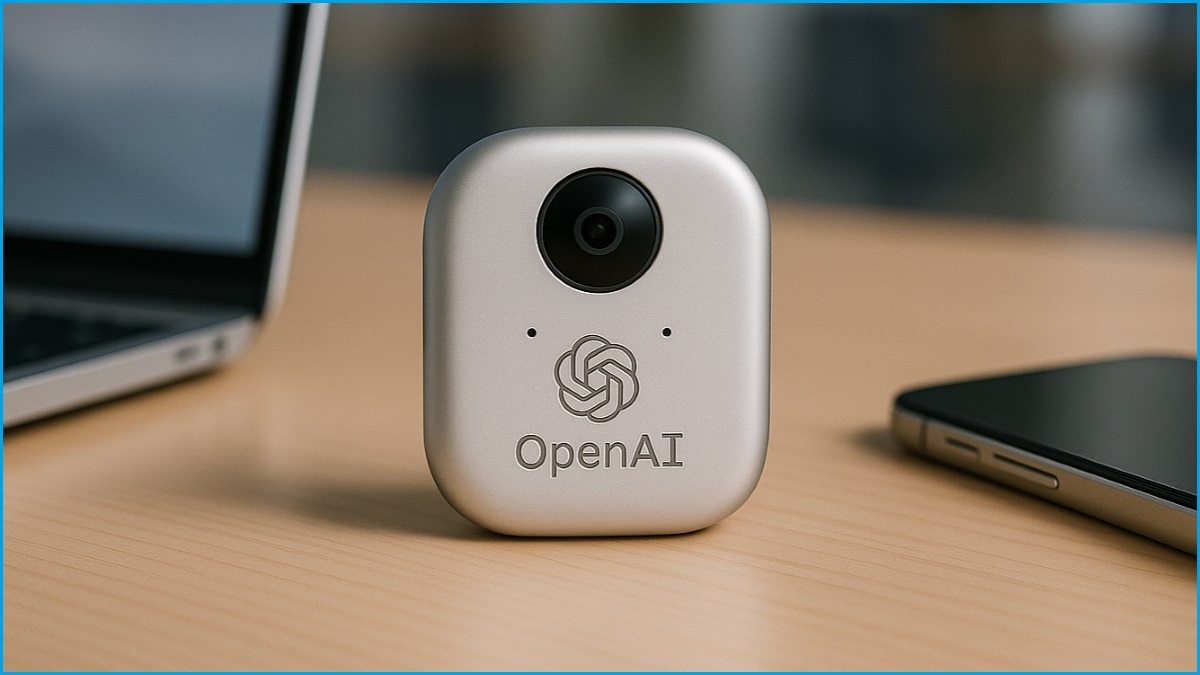
Reports surrounding OpenAI’s consumer AI device have raised questions about how deeply an AI assistant could become integrated into everyday computing.

The emerging concept reportedly involves AI being capable of understanding and interacting with a user’s digital environment, including computer activity such as clicks and keystrokes. Such capabilities could allow an assistant to perform tasks across applications rather than simply responding to commands in a chat window.

The potential benefits are significant. Instead of opening multiple applications, searching through menus, copying information, and completing repetitive workflows manually, users could delegate complex digital tasks to an AI agent.

For consumers, this could make computers feel less like collections of separate applications and more like intelligent environments that understand objectives and execute them.

However, the same capabilities raise serious privacy and security questions. An AI system capable of observing clicks, keystrokes, or other computer interactions could potentially gain access to extremely sensitive information.

Passwords, financial information, private conversations, documents, and other personal data could become exposed if safeguards were inadequate.

The development of consumer AI hardware therefore involves not only technological innovation but also difficult questions about consent, data protection, transparency, and user control.

At the same time, Anthropic is demonstrating another dimension of AI’s potential. The company announced that Claude is being used in protein design and to automate aspects of chemistry research. This represents a major shift from AI as a productivity tool toward AI as a scientific collaborator.

Protein design is particularly important because proteins play fundamental roles in biological processes and medicine. Designing proteins with specific properties can contribute to the development of new therapies, diagnostics, and industrial applications.

Chemistry research also involves enormous quantities of experimental information, making it an area where AI could help researchers identify patterns, propose experiments, analyze results, and accelerate discovery.

Anthropic CEO Dario Amodei has gone even further in describing the potential consequences, expressing the belief that AI could help cure most human diseases within five to ten years. While such a prediction remains highly ambitious and should not be interpreted as a guaranteed outcome, it illustrates the scale of expectations surrounding advanced AI.

The combination of computer-using agents and scientific AI suggests that the technology industry is moving toward systems capable of acting rather than merely answering. One frontier involves AI operating digital environments on behalf of people.

Another involves AI helping scientists explore biological and chemical possibilities that would be difficult to investigate manually. Yet progress must be matched by rigorous oversight. The more capable AI becomes, the greater the consequences of errors, misuse, privacy failures, or excessive dependence on automated systems.

The coming decade could therefore be defined not simply by how intelligent AI becomes, but by how responsibly that intelligence is integrated into society.

From controlling computers to designing proteins, AI is increasingly moving from the screen into the physical and scientific world.

The implications could be profound, potentially transforming productivity, medicine, and scientific discovery while simultaneously creating new challenges that technology companies and governments will have to address.