DD
MM
YYYY

PAGES

DD
MM
YYYY

spot_img

PAGES

Home Blog

Nvidia CEO Jensen Huang Dismisses AI Disruption Fears as “Illogical” Amid $285bn Global Software Stock Rout

0

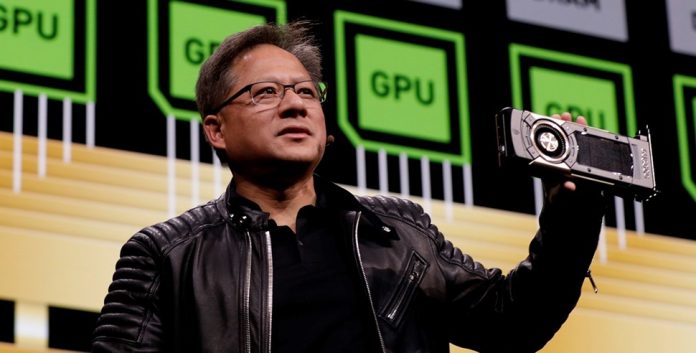
Nvidia Corp. CEO Jensen Huang robustly pushed back against escalating fears that artificial intelligence will supplant traditional software tools, labeling the notion “the most illogical thing in the world” during a keynote at Cisco Systems’ AI conference in San Francisco on Wednesday.

His remarks arrived amid a deepening global selloff in software, data analytics, and professional services stocks, triggered by Anthropic’s recent release of advanced AI plug-ins that amplified investor anxieties over potential industry-wide disruption. Huang argued that AI’s evolution hinges on leveraging existing software infrastructure rather than reinventing it from the ground up.

“There’s this notion that the tool in the software industry is in decline, and will be replaced by AI… It is the most illogical thing in the world, and time will prove itself,” he stated.

Drawing an analogy to human and robotic behavior, Huang emphasized: “If you were a human or robot, artificial general robotics, would you use tools or reinvent tools? The answer, obviously, is to use tools… That’s why the latest breakthroughs in AI are about tool use, because the tools are designed to be explicit.”

He positioned AI as an enhancer of software efficiency, not its destroyer, underscoring Nvidia’s role in powering systems that integrate with established frameworks like those from ServiceNow or SAP. The comments provided a counterpoint to the market turmoil, which began intensifying after Anthropic unveiled plug-ins for its Claude Cowork agent on Friday.

These open-source tools automate tasks across legal, sales, marketing, customer support, and data analysis—such as contract reviews, NDA triage, compliance workflows, and templated responses—prompting traders to dump shares in companies perceived as vulnerable to AI automation. Anthropic clarified that the legal plug-in is not intended to provide legal advice and requires attorney oversight, but the release nonetheless reignited debates on AI’s potential to erode pricing power in routine, high-margin services.

The fallout was swift and severe, erasing approximately $285 billion in market value from software, financial services, and asset management sectors on Tuesday alone, according to Bloomberg estimates. A Goldman Sachs basket tracking U.S. software stocks plummeted 6%—its largest single-day drop since April 2025’s tariff-induced selloff—extending a six-day losing streak with cumulative losses exceeding 14%. The iShares Expanded Tech-Software Sector ETF (IGV) hit new intraday lows, down 5.6% at one point, marking its worst monthly performance since 2008 with a 15% January decline.

The contagion spread globally. In Europe, RELX (parent of LexisNexis) tumbled 14-15%, erasing over £6 billion ($7.8 billion) in value; Thomson Reuters plunged 18-20%; Wolters Kluwer dropped 12.7-13%; and the London Stock Exchange Group (LSEG) fell 12.8%. Analytics firms like Gartner and S&P Global declined 20% and 10%, respectively, while Experian and Sage lost 6.75% and 10%. The UBS basket of European AI-exposed stocks sank nearly 7%. Asia felt the ripple effects on Wednesday. India’s NIFTY IT index slumped 6.3-7%, with Infosys plunging 7.3% amid fears AI could erode outsourcing demand. China’s CSI Software Services Index fell 3%, Hong Kong’s Kingdee International Software Group tumbled over 13%, and in Japan, Recruit Holdings and Nomura Research Institute dropped 9% and 8%.

Analysts dubbed the event a “SaaSpocalypse”—an apocalypse for software-as-a-service (SaaS) models—warning that AI agents like Claude could automate routine tasks underpinning industry margins, potentially disintermediating firms entirely. IG chief markets strategist Chris Beauchamp described trading as “‘get me out’ style selling.”

Jefferies’ Jeffrey Favuzza noted the panic stemmed from uncertainty over AI agents’ capabilities, leading investors to “shun the software market altogether.” eMarketer’s Jacob Bourne added that inflation-fatigued consumers and AI shortages would pressure hardware margins, making high-margin services vital.

The selloff dragged broader indexes: the Nasdaq 100 fell up to 2.4% before closing down 1.6%, with the S&P 500 and Dow Jones following suit. Yet Huang’s reassurance may stem the tide, as he highlighted AI’s reliance on explicit, human-designed tools, aligning with recent breakthroughs in “tool use” that integrate rather than replace software.

This episode echoes prior AI-driven market jitters, such as reactions to OpenAI’s GPT releases, but the scale—wiping billions in a day highlights growing sensitivity to disruption risks. While software giants like Salesforce, DocuSign, Atlassian, Adobe, Workday, and ServiceNow bore the brunt, the contagion to financial data (Experian, LSEG) and publishing suggests broader implications for knowledge-based industries.

Lawmakers Call for ‘Reverse Acqui-Hiring’ Probe as Big Tech AI Deals Test the Limits of Antitrust Oversight

0

Democratic lawmakers are sharpening their challenge to how the largest U.S. technology companies are consolidating power in artificial intelligence, arguing that a new class of deals risks hollowing out competition while slipping through gaps in antitrust enforcement.

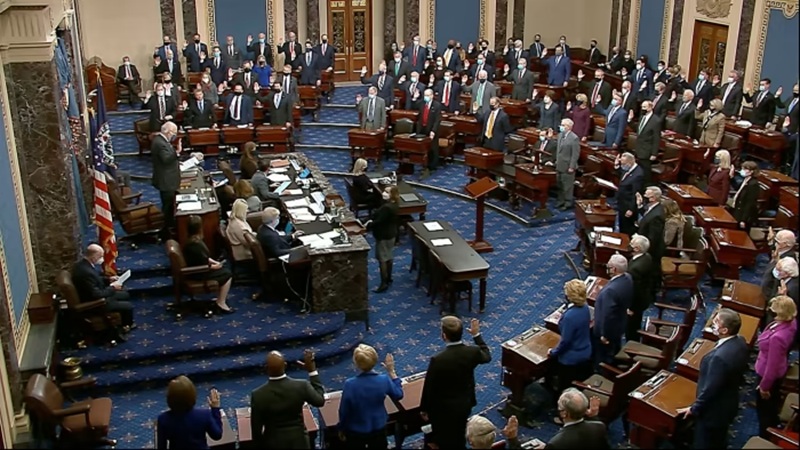
In a letter sent Wednesday to the Federal Trade Commission and the Department of Justice, Senators Elizabeth Warren, Ron Wyden, and Richard Blumenthal urged regulators to closely examine recent AI-related transactions involving Nvidia, Meta, and Google. The senators said these arrangements, which involve paying to bring top executives and engineers from startups into large companies without acquiring the startups outright, may amount to mergers in everything but name.

The lawmakers describe the practice as “reverse acqui-hiring,” a strategy they say allows dominant firms to absorb talent, institutional knowledge, and strategic advantage while avoiding the scrutiny normally triggered by acquisitions. According to the letter, these deals can weaken startups left behind, tilt emerging AI markets further toward incumbents, and narrow the path for genuine competition.

“These deals function as de facto mergers,” the senators wrote, arguing that the economic and competitive outcomes can mirror those of full acquisitions even when corporate control does not formally change hands. They called on the FTC and DOJ to block or unwind such arrangements if they violate antitrust law.

At issue is how Big Tech is adapting its deal-making playbook as regulators take a more skeptical view of large mergers. Rather than buying entire companies, firms are increasingly structuring investments, licensing agreements, or asset purchases that coincide with the recruitment of founders and senior technical leaders. The startup remains independent on paper, but its competitive core is often removed.

The senators highlighted several high-profile examples. Meta’s $14.3 billion investment in Scale AI in June brought co-founder and CEO Alexandr Wang into Meta to lead its AI strategy, giving the company access to one of the industry’s most influential figures without a traditional takeover. Google’s $2.4 billion nonexclusive licensing deal with AI coding startup Windsurf similarly resulted in key leaders joining Google. Nvidia’s $20 billion December transaction to acquire assets from AI chipmaker Groq and hire senior executives followed a comparable pattern.

In each case, the lawmakers argue, the acquiring company gained a strategic advantage while regulators were left with limited leverage to intervene. The concern is not only about market concentration today, but about how these practices could shape the next generation of AI development by starving startups of leadership and momentum.

Industry observers have raised similar alarms. Venture capital investors and startup employees have noted that reverse acqui-hiring can leave remaining teams in a weakened position, with reduced ability to execute on their original vision or attract new funding. While founders and top engineers may receive lucrative compensation packages, the broader ecosystem may see fewer viable challengers to established players.

From the perspective of Big Tech, the incentives are powerful. Competition for elite AI talent is intense, and these arrangements offer a way to secure scarce expertise quickly while minimizing regulatory risk. They also allow companies to place bets across multiple startups through investments and licenses, extracting value even if the startups themselves struggle later.

For regulators, the challenge lies in applying antitrust laws written for an earlier era to transactions that do not fit neatly into existing categories. Traditional merger reviews focus on changes in ownership and control, yet the senators argue that control over talent and knowledge can be just as consequential in AI markets, where human capital and data are central assets.

The letter follows comments in January from FTC Chairman Andrew Ferguson, who said the agency would review whether companies are using such deals to sidestep regulatory oversight. That statement suggested growing awareness within enforcement agencies that AI-driven deal structures may require closer attention.

The lawmakers’ intervention adds urgency to that review. By explicitly framing reverse acqui-hiring as a potential end run around antitrust law, Warren, Wyden, and Blumenthal are pressing regulators to expand how they assess competitive harm. The outcome could shape how aggressively the U.S. government polices AI deal-making at a moment when the technology is rapidly becoming a core driver of economic power.

If regulators move to treat these arrangements as mergers in substance rather than form, it could significantly alter how Big Tech pursues talent and partnerships in AI. If not, the senators warn, the industry may continue consolidating quietly, one executive hire at a time.

Slack Rival, Slashwork, Raises $3.5m As Former Meta Engineers Bet on an AI-First Rethink of Workplace Messaging

0

As artificial intelligence reshapes how work gets done, a group of former Meta engineers is arguing that enterprise communication tools have fallen behind the curve. Their answer is a new startup, Slashwork, which is positioning itself as a post-Slack, post-Teams collaboration platform designed from the ground up for an AI-driven workplace.

Slashwork on Wednesday announced it has raised $3.5 million in seed funding, drawing support from some of the most influential figures behind the very tools it now hopes to challenge. Backers include Slack co-founder Cal Henderson and Sandberg Bernthal Venture Partners, the investment firm of former Meta chief operating officer Sheryl Sandberg.

The London-based startup was founded by Jackson Gabbard, David Miller, and Josh Watzman, all former Facebook engineers. Their pitch is straightforward but ambitious: most enterprise communication platforms in use today were built for a pre-generative AI world and are struggling to adapt.

“We didn’t want to start with, ‘How do we add AI to Slack-like software,’” Gabbard said. “We wanted to ask what enterprise communication should look like if you assume AI is native, not an afterthought.”

A post-Workplace moment

Slashwork’s launch comes against the backdrop of Meta’s decision to shut down Facebook Workplace, the enterprise collaboration tool it introduced in 2016 and formally wound down in 2024. Workplace, which mimicked Facebook’s social feed for corporate use, once reached millions of paid users globally but ultimately failed to become a core strategic priority for Meta as the company pivoted toward AI and immersive technologies.

That closure left a vacuum — both in the market and among the engineers who had built and maintained the product. Several of them are now behind Slashwork, carrying forward lessons from Workplace’s rise and decline.

Julien Codorniou, who led Facebook Workplace from launch to roughly 11 million paid subscribers, now sits on Slashwork’s board and oversaw its incubation. He said the fundamental limitation of today’s dominant tools is that they were designed for conversations between people, not between people and intelligent systems.

“Slack, Teams, Zoom — they’re all more than a decade old,” Codorniou said. “They were optimized for human-to-human communication. With AI, you unlock people talking to systems, and that changes everything.”

AI embedded, not bolted on

Unlike incumbents that are layering AI features onto existing products, Slashwork is embedding large language models into every piece of content from the outset. Messages, posts, images, and shared files all carry LLM embeddings, enabling more sophisticated search and retrieval than traditional keyword-based systems.

Users can instruct AI agents to surface forgotten conversations, locate images that never gained traction in a channel, or summarize threads that span weeks or months. Gabbard said this approach is designed to reduce what he describes as the “invisible tax” of modern work — time lost searching across chats, emails, and documents.

“People don’t remember where something was posted, or even exactly how it was phrased,” he said. “AI can fill in those gaps in a way older systems simply can’t.”

That vision has resonated with early investors who have seen multiple generations of workplace software cycles.

AJ Tennant, a former Facebook sales executive and one of Slack’s earliest sales leaders, said AI-native communication could address long-standing inefficiencies in enterprise collaboration.

“Communication tools today are great at moving messages around,” Tennant said. “What they don’t do well is help you actually get work done. AI agents embedded into communication can close that gap.”

Other early backers include former Meta executives David Fischer, Carolyn Everson, and AJ Tennant, underscoring the extent to which Slashwork is drawing on Meta’s alumni network.

Entering a crowded battlefield

Slashwork is launching into a fiercely competitive market dominated by Salesforce’s Slack and Microsoft Teams, both of which are deeply integrated into corporate IT environments and are rapidly rolling out their own AI features. Microsoft, in particular, has tied Teams closely to its Copilot AI strategy, while Salesforce is positioning Slack as a hub for AI-powered workflows.

The challenge for Slashwork will be convincing companies to adopt a new platform at a time when collaboration fatigue is already high. Gabbard acknowledged the difficulty but said the startup is deliberately starting small.

Slashwork is initially rolling out to smaller, tech-focused companies, with a broader launch planned later in the year. The company plans to keep headcount lean, using the funding primarily for product development, design refinement, and rapid iteration rather than aggressive sales expansion.

A bet on the next decade of work

Beyond features, Slashwork’s broader argument is that enterprise communication is entering a structural shift. As AI systems become active participants in work — drafting content, retrieving information, and coordinating tasks — tools designed purely around chat threads and channels may struggle to keep up.

For Codorniou, the opportunity lies in reimagining communication not just as conversation, but as an interface between humans and intelligent systems.

“The next generation of tools won’t just help people talk,” he said. “They’ll help people think, decide, and execute — together with AI.”

With backing from veterans who helped build the last era of workplace software, the startup is making a clear bet: that the AI era demands not incremental upgrades, but a clean break from how enterprise communication has worked for the past decade.

Uber Beats Revenue Expectations in Q4 2025 but Shares Dip as Investors Eye AV Transition and Margin Pressures

0

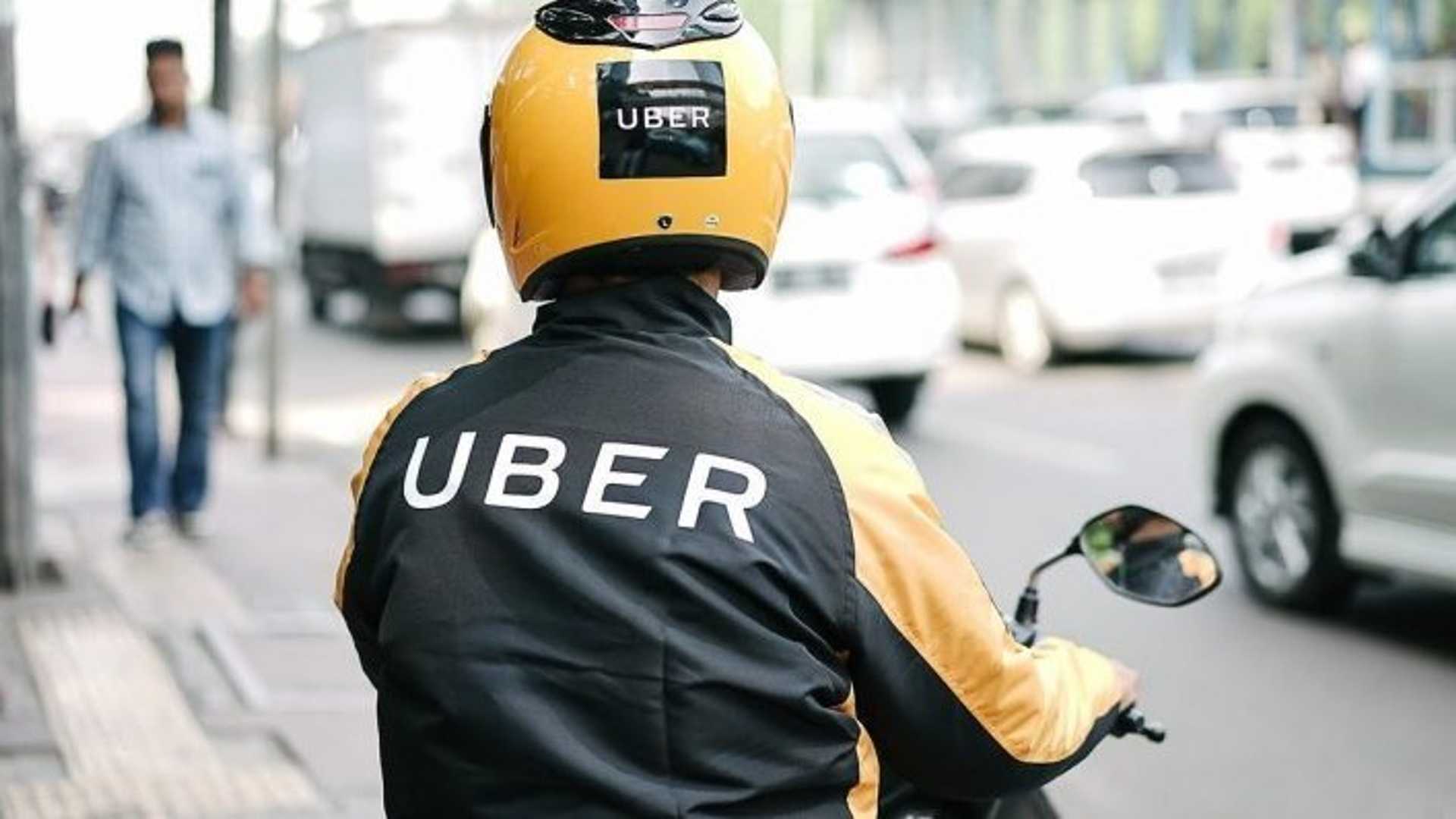
Uber Technologies Inc. reported stronger-than-expected revenue for the fourth quarter ended December 31, 2025, driven by robust growth in both its mobility and delivery segments, yet shares slipped in premarket trading on Wednesday, as investors parsed the results through the lens of rising autonomous vehicle (AV) ambitions and ongoing profitability concerns.

Adjusted earnings per share came in at 71 cents, while revenue reached $14.37 billion—surpassing the LSEG consensus estimate of $14.32 billion and climbing 20% from $12 billion a year earlier. Gross bookings hit $54.1 billion, topping StreetAccount’s $53.1 billion forecast.

The mobility segment, Uber’s core ride-hailing business, generated $8.2 billion in revenue, up 19% year-over-year, though it fell slightly short of StreetAccount’s $8.3 billion expectation. Delivery, encompassing Uber Eats and expanding grocery/retail services, posted the strongest growth at 30% to $4.9 billion, beating estimates of $4.72 billion.Net income for the quarter was $296 million, a sharp decline from $6.88 billion in the prior-year period, largely due to a $1.6 billion net pre-tax headwind from revaluations of equity investments.

Excluding such non-operating items, profitability trends remained solid, supported by disciplined cost management and scale efficiencies. CEO Dara Khosrowshahi struck an optimistic tone in prepared remarks ahead of the earnings call, highlighting delivery as the company’s fastest-growing segment in 2025, particularly in Europe, the Middle East, and Africa.

Strategic partnerships with OpenTable (for restaurant reservations), Shopify (for e-commerce integration), and major grocers such as Loblaws (Canada), Biedronka (Poland), Seiyu (Japan), and Coles (Australia) fueled the expansion, broadening Uber Eats beyond food into everyday retail. The company also underscored progress in its Uber One subscription program, noting that members book more rides and purchase more items across the platform after subscribing.

Advertising revenue continued to gain traction, with Khosrowshahi pointing to integrations with generative AI tools like ChatGPT to enhance discovery—enabling users to explore services and restaurants before completing checkouts. A significant portion of the shareholder deck and call focused on Uber’s accelerating shift toward autonomous vehicles.

Khosrowshahi reiterated his conviction—first voiced a year earlier—that AVs represent a “multi-trillion dollar opportunity” and “fundamentally amplify the strengths of our existing platform.” In Atlanta and Austin, Texas, where Uber offered autonomous rides in 2025, overall trip growth “significantly accelerated” even for human-driven vehicles. In San Francisco, where Waymo operates driverless services via its own app and partners with Uber, Khosrowshahi noted that AV supply has grown the total ride-hailing category rather than cannibalizing it.

Uber currently facilitates AV trips in select markets through partnerships with Waymo (Alphabet), Waabi, Lucid Motors, and others. Khosrowshahi projected expansion to up to 15 cities globally by the end of 2026, including Houston, Los Angeles, San Francisco, London, Munich, Hong Kong, Zurich, and Madrid—split between the U.S. and international markets. By 2029, he said, Uber intends to become “the largest facilitator of AV trips in the world.”

He tempered expectations, however, cautioning that autonomous vehicles “are likely to remain a very small portion of the rideshare category for many years to come” due to technological, regulatory, safety, and scaling hurdles. This tempered outlook may have contributed to the premarket share decline, as some investors had hoped for more aggressive near-term AV revenue guidance.

Guidance for the first quarter of 2026 called for gross bookings growth of at least 17% year-over-year, targeting a range of $52 billion to $53.5 billion. The company reiterated its long-term target of achieving profitability on an adjusted EBITDA basis and generating strong free cash flow, though near-term margin pressures from AV investments and competitive dynamics remain in focus.

Uber’s results arrive during a pivotal transition for the ride-hailing industry. The rapid rollout of driverless services in urban markets—led by Waymo’s fully autonomous operations in San Francisco since 2024—has reshaped competitive landscapes. Uber’s strategy of partnering rather than owning AV fleets positions it as a platform aggregator, potentially mitigating capital intensity while capturing network effects.

Despite the revenue beat, premarket shares softened as investors weighed the AV narrative against near-term profitability concerns and broader market rotation away from growth stocks. The company’s ability to balance aggressive AV expansion with sustained delivery momentum and margin improvement will likely remain a key focus for analysts and shareholders in the months ahead.

SpaceX-xAI Integration Positions the Merger as a Powerhouse at the Intersection of AI

0

Elon Musk’s xAI has recently begun hiring “crypto experts” specifically in roles like “Finance Expert – Crypto” to help train and enhance its AI models’ understanding of cryptocurrency markets and trading dynamics.

The job postings appear on xAI’s official careers page via Greenhouse, and the news spread quickly on X (formerly Twitter) with headlines like “Elon Musk’s xAI begins hiring ‘crypto experts’ to teach AI models how to trade.”

The positions are remote and focus on data annotation, evaluation, and expert reasoning to improve frontier AI models including Grok. Rather than having the AI directly execute live trades, the experts will teach models to: Understand real-world crypto trading behavior.

Analyze on-chain activity using tools like Dune Analytics, Glassnode, Nansen, or DefiLlama. Handle DeFi protocols, derivatives, arbitrage opportunities, MEV (Maximal Extractable Value), quantitative strategies, and risk management in volatile 24/7 markets.

Reason like professional traders instead of just predicting prices. Requirements typically include a Master’s or PhD in quantitative fields or equivalent professional experience as a trader/analyst, deep knowledge of blockchain data platforms, and expertise in areas like on-chain analysis and quantitative finance.

Compensation is listed in the range of $45–$100 per hour for U.S. applicants, with some state restrictions noted. This aligns with xAI’s broader push to build more capable, truth-seeking AI systems by incorporating specialized domain knowledge—similar to their ongoing hiring of experts in finance, quant trading, and other areas like STEM fields.

The timing comes amid other Musk-related developments, such as reports of potential mergers or integrations involving xAI with SpaceX, and growing institutional interest in AI-crypto intersections.

While speculative chatter on X ties this to potential AI-native trading systems or on-chain execution, the job descriptions emphasize training and refinement rather than deploying autonomous trading bots. This move signals deepening integration between advanced AI and the complexities of digital asset markets.

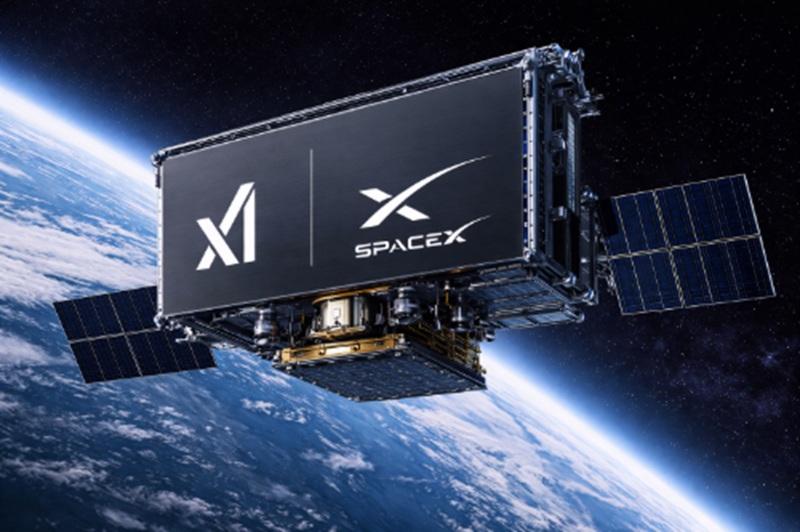
Elon Musk’s xAI has been fully integrated into SpaceX through a major acquisition/merger announced on February 2, 2026. This marks a significant consolidation of Musk’s companies, creating what he describes as “the most ambitious, vertically-integrated innovation engine on (and off) Earth.”

SpaceX acquired xAI in an all-stock deal (xAI shares exchanged for SpaceX shares). The combined entity is valued at approximately $1.25 trillion, with SpaceX valued at around $1 trillion and xAI at $250 billion. This makes it the largest merger in history by valuation.

Confirmed by SpaceX on their website and via Musk’s posts on X. In a company memo and statement, Musk emphasized uniting AI, rockets, space-based internet (Starlink), direct-to-mobile communications, and real-time information platforms including X, which had previously merged into xAI.

The merger aims to address AI’s massive energy and compute demands by enabling space-based data centers and orbital AI infrastructure. Musk has argued that solar-powered AI satellites in space (leveraging Starlink’s constellation and Starship launches) are essential for scaling AI beyond Earth’s energy limits.

This combines xAI’s Grok models and AI expertise with SpaceX’s launch, satellite, and orbital capabilities. Talks were reported in late January 2026, with the deal closing quickly. It precedes SpaceX’s anticipated blockbuster IPO later in 2026 (potentially mid-year, targeting tens of billions raised), which could now include the full integrated entity.

The merger boosted Musk’s net worth significantly estimates put him over $850 billion shortly after, driven by his stakes in the combined company. On X (the social platform), users noted fun updates like a new “like” animation featuring a rocket launch especially on merger-related posts, symbolizing the SpaceX tie-in.

This builds on prior moves, like X merging into xAI earlier and potential synergies with Tesla Speculation continues about further integrations across Musk’s companies. Musk framed it as advancing humanity’s multi-planetary future and understanding the universe, with phrases like “scaling to make a sentient sun” and extending consciousness to the stars.

This integration positions the combined SpaceX-xAI as a powerhouse at the intersection of AI, space exploration, and global connectivity—potentially disrupting both sectors. The move has generated massive buzz, with some viewing it as Musk unifying his empire ahead of major public market events.