Artificial intelligence-driven political communication, rising political competition, weaknesses in electoral technology and inconsistent enforcement of electoral laws are emerging as major concerns ahead of Nigeria’s 2027 general elections, an ongoing monitoring initiative has found.
The findings are contained in preliminary observations from the #TrackingNaija2027Elections initiative, a collaborative project involving the Centre for Research on Development of African Media, Governance and Society (CEREDEMS-Africa), the Centre for Peace and Strategic Studies (CPSS), University of Ilorin, and the Institute of Geopolitical Communications, RUDN University, Moscow.
The initiative deployed a 300-member volunteer monitoring network to collect and analyse information on Nigeria’s evolving electoral environment.
According to the organisations, the 2027 electoral environment is already being shaped by developments occurring well ahead of the formal campaign and election period.
AI enters political communication
One of the key concerns identified by the monitors is the growing use of artificial intelligence in political communication.
The initiative said its monitoring has identified AI-generated content being used both to promote political actors and to attack their opponents.
It described promotional AI-generated content as “glowfake”, while content designed to attack opponents or political issues was described as “foefake.”
The organisations warned that the growing use of synthetic content could influence political perceptions and deepen divisions along political and ideological lines.
The monitoring initiative said AI should no longer be treated simply as a technological development but as an emerging component of campaign strategy.
It said content promoting candidates could influence favourable perceptions and mobilisation, while AI-generated attacks could amplify negative narratives and political polarisation.
The implication, according to the monitors, is that electoral stakeholders will increasingly need to understand not only whether political content is authentic, but also how synthetic content is produced, distributed, targeted and used to influence voters.
The initiative also said its approach goes beyond traditional monitoring of misinformation by examining the political purpose of information.
It said monitors are examining who is targeted, which political actor or issue is being promoted or attacked, the narrative being advanced, and the political divisions such narratives could reinforce.
Rising political competition
The monitoring has also identified what it described as an increasing number of presidential aspirants and political parties ahead of the 2027 elections.
While this could indicate increased political participation, the initiative said the development could also influence campaign strategies, political narratives, voter mobilisation and the behaviour of political actors as the electoral cycle progresses.
Electoral technology and public confidence
The monitors also raised concerns about the role of technology across Nigeria’s electoral chain.
According to the findings, technology now connects several stages of the electoral process, including voter accreditation, voting, recording, electronic transmission, collation and declaration of results.
While technology can make elections faster, more transparent and traceable, weaknesses at any stage could undermine public confidence in the entire electoral system, the initiative said. The organisations said the challenge goes beyond having digital systems in place.
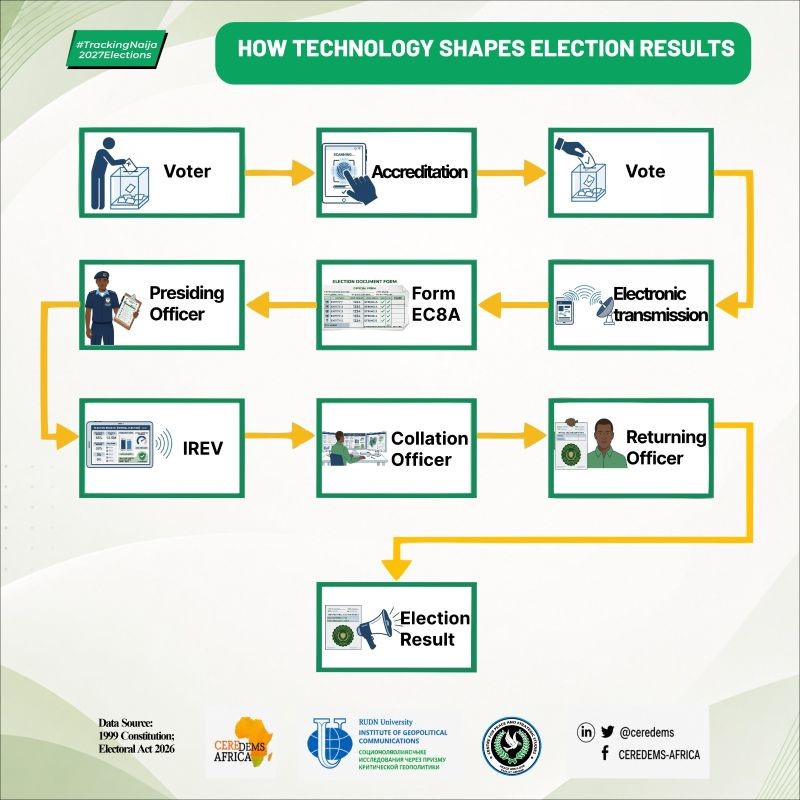
They stressed the need for adequate capacity among election officials, clear procedures and better public understanding of how votes move from polling units through transmission and collation to the final declaration.
“If citizens, political parties or other stakeholders cannot clearly understand how votes are recorded, transmitted, collated and declared, technological systems may become a source of suspicion rather than confidence,” the initiative said.
Enforcement of electoral laws
The monitoring exercise also examined electoral violence and enforcement of the Electoral Act 2026. It found that the law contains provisions addressing prohibited conduct by political actors, including threats, use of force and abusive language.
However, the initiative said the existence of legal provisions alone would not be sufficient to prevent electoral violence. It identified awareness of the law, detection of violations and consistent enforcement as critical factors in preventing inflammatory political conduct from escalating into wider electoral crises.
The monitors said consistent enforcement could strengthen deterrence and demonstrate that electoral rules apply equally to political actors. Conversely, allowing threats, intimidation and abusive political communication to persist without consequences could encourage actors and their supporters to cross established boundaries, they warned.
Risks are interconnected
The initiative said its preliminary findings point to an interconnected set of risks ahead of the 2027 elections.
It said intensifying political competition could increase campaign communication, while sophisticated digital tools and AI-generated content could amplify both positive and negative political narratives.
At the same time, limited understanding of electoral technology could generate distrust, while weak enforcement could allow inflammatory political behaviour to escalate.
The monitors said these developments should therefore be assessed as parts of a connected electoral environment rather than as isolated problems.
The initiative will continue monitoring electoral governance, political finance and vote commodification, electoral security, information integrity, AI and elections, electoral justice and peace, and inclusive participation.
It said the objective is to identify emerging risks early, provide accessible evidence to the public and support informed discussions among institutions and other stakeholders responsible for protecting Nigeria’s democratic process.
300 volunteers deployed
The 300-member monitoring network is providing the operational foundation for the project.
According to the organisers, volunteers have been collecting and analysing election-related information across Nigeria, with subsequent capacity-building aimed at improving their understanding of the frameworks and indices used to assess electoral developments.
The initiative said its objective is not merely to accumulate election-related information but to transform raw information into evidence capable of helping stakeholders identify emerging patterns, risks and opportunities for intervention.
The organisations emphasised that the initiative is non-partisan and is not intended to promote any political party, candidate or political interest.
Its stated focus is on generating independent evidence about Nigeria’s electoral environment and supporting peaceful, credible and inclusive elections.
Stephen Obiri, Director of Communications at CEREDEMS-Africa, said the initiative would continue monitoring the electoral environment and publishing evidence-based findings as the political cycle develops.
“The partnership’s broader objective is to contribute to a democratic process in which emerging risks are identified early, relevant actors are informed, institutions are better prepared, and citizens have access to credible information about the forces shaping their elections,” Mr Obiri said.
The partners said the monitoring will continue before, during and after the 2027 elections.