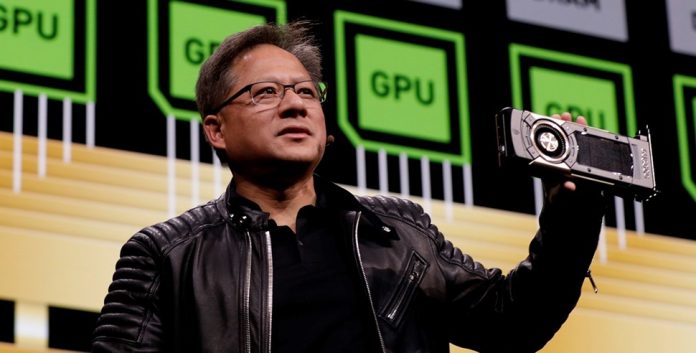
Jensen Huang has agreed to join the advisory board of Tsinghua University School of Economics and Management, according to a report by the Financial Times.
The development places the head of the world’s most valuable semiconductor company inside one of China’s most politically connected academic institutions at a time of intensifying technological rivalry between Washington and Beijing.
The move is symbolically significant because it comes amid continuing U.S. restrictions on exports of advanced artificial intelligence chips to China and growing scrutiny of American technology executives operating in the country.
Tsinghua University, often referred to as “China’s Harvard,” occupies a unique position in China’s political and technological system. Chinese President Xi Jinping studied there, and the institution has long served as a pipeline for senior Chinese policymakers, engineers, and state-linked business leaders.
Its School of Economics and Management maintains a high-profile advisory board that includes some of the most influential figures in global technology and finance. Current members reportedly include Tim Cook, who chairs the board, alongside executives such as Elon Musk, Satya Nadella, Mark Zuckerberg, Michael Dell, Jamie Dimon, and Larry Fink.
Huang’s addition to the board reflects Nvidia’s continuing effort to preserve strategic ties with China even as U.S.-China technology tensions deepen.
China remains one of the world’s largest markets for AI infrastructure, advanced computing, and data-center investment. Although U.S. export controls have sharply limited Nvidia’s ability to sell its most advanced AI chips into the country since 2022, the company continues to view China as central to its long-term growth strategy.
Huang has repeatedly argued that cutting China off entirely from U.S. semiconductor technology risks accelerating Beijing’s efforts to build domestic alternatives. Chinese firms, including Huawei, Cambricon, and SMIC, have intensified efforts to reduce dependence on American chips, backed by significant state support.
The timing of Huang’s reported appointment is particularly notable because it follows his participation in President Donald Trump’s recent trip to China, where he joined a delegation of senior American executives. Despite speculation that the visit could ease restrictions on Nvidia’s access to the Chinese market, no breakthrough emerged regarding sales of the company’s H200 AI chips.
Nvidia has received certain export licenses from the U.S. government, but broader regulatory uncertainty continues to cloud its China operations. Reuters recently reported that while some Chinese firms had received approvals to purchase H200 chips, shipments had not yet commenced.
For Nvidia, maintaining relationships inside China has become increasingly important as the company attempts to balance two competing realities: geopolitical pressure from Washington and commercial dependence on global AI demand, much of which still involves Chinese technology companies, cloud providers, and research institutions.
The advisory board role may also help reinforce Huang’s standing among Chinese policymakers and academic leaders at a time when Beijing is aggressively investing in domestic AI ecosystems.
The broader backdrop is a rapidly escalating global AI race led by Nvidia, whose chips power much of the world’s AI infrastructure, from frontier models developed by American companies to cloud computing systems used across Asia and Europe. The company recently projected that markets for AI-related CPUs and infrastructure could expand into the hundreds of billions of dollars annually.
At the same time, Washington increasingly views advanced semiconductors as strategic national-security assets rather than ordinary commercial products. U.S. policymakers fear that high-end AI chips could enhance Chinese military capabilities, surveillance systems, and autonomous technologies.
That has turned Nvidia into one of the most geopolitically sensitive companies in the world.
Huang’s engagement with Tsinghua, therefore, is seen as a reflection of more than an academic appointment. It is believed to be part of a pattern of global technology executives attempting to navigate a fragmented world of intertwined commercial partnerships and national security concerns.
The move, however, paints China in a green light. Attracting prominent Silicon Valley leaders onto elite institutional boards signals that the country remains deeply connected to global technological networks despite mounting restrictions. For Nvidia, it is another indication that even amid export controls and strategic rivalry, the company is unwilling to retreat from one of the largest and most important technology markets in the world.
This week, Huang announced a new $200 billion market that he later revealed China is part of.