DD
MM
YYYY

PAGES

DD
MM
YYYY

spot_img

PAGES

Home Blog

India Exempts Foreign Investors from Capital Gains Tax on Government Securities in Bid to Bolster Rupee and Attract Stable Capital

0

In a significant move to shore up foreign investor confidence and stabilize its currency, India on Friday announced a tax exemption for foreign institutional investors (FIIs) and the Bank for International Settlements on capital gains and interest income from government securities.

The decision, issued through an executive ordinance as Parliament is not in session, aims to draw more long-term and stable foreign capital into Indian debt markets at a time when the rupee has come under sustained pressure.

The Income-tax (Amendment) Ordinance, 2026, promulgated by President Droupadi Murmu, amends Schedule IV of the Income-tax Act to exempt specified income linked to investments in government bonds. The exemption covers both interest earned on government securities and capital gains arising from their sale, exchange, or transfer.

It will take effect from April 1, 2026, subject to conditions such as furnishing prescribed information to tax authorities.

Foreign investors currently face a 12.5% long-term capital gains tax on listed shares and bonds held for more than 12 months, along with a 20% withholding tax on interest income from government bonds. By removing these levies for eligible entities, the government hopes to improve post-tax returns and make Indian sovereign debt more attractive compared to other emerging markets.

Bond markets and the rupee showed little immediate reaction, as the move had been widely anticipated. However, analysts view it as a timely and constructive step.

Economic Backdrop: Rupee Under Strain

The exemption arrives amid mounting external pressures on the Indian economy. The rupee has depreciated more than 5% year-to-date (and over 6% according to some measures), making it one of Asia’s worst-performing currencies. This weakness stems primarily from two factors: elevated global oil prices, which have swelled India’s import bill as a major net energy importer, and significant equity outflows by foreign investors.

Data from the National Securities Depository Limited (NSDL) shows foreign investors have sold Indian equities worth $27.6 billion since the start of the year, compared with a net sell-off of $18.9 billion for the entire year 2025. These outflows, combined with higher energy costs, have weighed heavily on the currency and India’s external balances.

Krishna Bhimavarapu, APAC economist at State Street Global Advisors, described the announcement as well-timed.

“The moves easing capital inflows will help the rupee, which has been mostly falling due to the strong currency outflows. This is a step in the right direction, and the announcement has come at a very good time,” Bhimavarapu.

By targeting debt inflows rather than equity, the government is seeking more stable, longer-term capital that is less prone to sudden reversals than portfolio equity investments.

The policy reflects a deliberate strategy to broaden and deepen the investor base for Indian government securities (G-secs). India has been working to internationalize its bond market and improve its inclusion in global indices, such as JPMorgan’s Government Bond Index-Emerging Markets. Tax incentives of this nature can accelerate that process by enhancing after-tax yields for overseas investors.

Analysts expect the exemption to encourage greater participation from sovereign wealth funds, pension funds, and other long-term institutional investors who prioritize stability and predictable returns. This could help cushion the rupee against further depreciation and ease pressure on India’s foreign exchange reserves.

Furthermore, stronger foreign demand for G-secs could help moderate domestic borrowing costs over time, providing indirect support to the government’s fiscal management as it balances growth and consolidation objectives.

Challenges and Limitations

While the move is positive, its impact may be gradual. The exemption applies specifically to government securities and does not extend to corporate bonds or equities. Implementation details, including exact eligibility criteria and compliance requirements, will matter. Foreign investors will still need to navigate India’s regulatory framework, currency hedging costs, and potential shifts in global interest rate expectations.

Analysts note that the effectiveness of the measure also depends on broader macroeconomic conditions. Persistent high oil prices, global monetary policy tightening, or renewed risk aversion toward emerging markets could offset some of the benefits. Nevertheless, the announcement sends a clear signal that India is willing to use fiscal tools to support capital inflows and currency stability.

This exemption fits into a series of recent steps aimed at making India’s financial markets more attractive to global investors. These include easing foreign portfolio investment norms, simplifying compliance, and pursuing greater integration with international financial systems. In an environment of heightened global uncertainty, ranging from geopolitical tensions to volatile commodity prices, such measures help position India as a relatively stable and reform-oriented destination for capital.

For foreign investors, the tax relief improves the risk-reward profile of Indian sovereign debt, particularly when compared with other emerging markets facing similar pressures. Over time, this could contribute to a more diversified and resilient investor base for India’s debt market, reducing reliance on domestic banks and institutions.

JPMorgan, Citi and Major US Banks Team Up to Launch Tokenized Deposit Network

0
JP Morgan Chase puts contents through its CEO account, it goes viral. But the same content via JPMC account, no one cares (WSJ)

Major U.S. banks, JPMorgan Chase, Citigroup, Bank of America, and Wells Fargo, are collaborating on a shared tokenized deposit network set to launch in the first half of 2027.

The network which will operate on a blockchain infrastructure, will enable instant 24/7 settlement and programmable payments while keeping every dollar inside the regulated banking system.

The initiative, operated by The Clearing House a real-time payments company co-owned by these large commercial banks, represents a coordinated effort to compete with stablecoins and crypto-native payment solutions.

Many observers view the development as a validation of blockchain technology rather than a rejection of it. Commenters argue that after years of skepticism toward cryptocurrencies, traditional financial institutions are now embracing the underlying technology that powers digital assets.

For these individuals, the shift signals that the debate over whether blockchain has a place in finance has largely been settled. Others, however, see the initiative as an attempt by incumbent financial institutions to preserve control over the payments ecosystem.

They contend that while the banks are adopting blockchain infrastructure, they are doing so within a closed and highly regulated environment that keeps customers within the traditional banking system.

According to this view, the project is less about innovation and more about preventing deposits and payment activity from migrating to stablecoins and crypto-native platforms

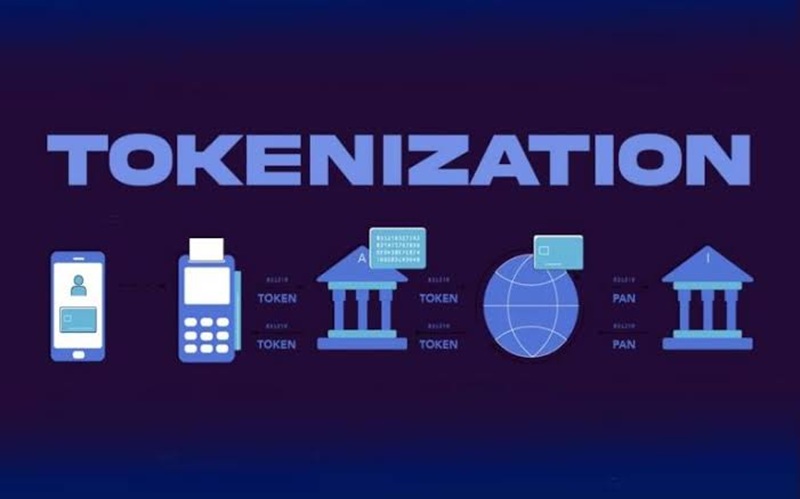
Tokenized deposits are blockchain-based digital versions of traditional bank deposits. They maintain the regulatory protections and backing of conventional bank money while offering key advantages of distributed ledger technology, such as 24/7 instant settlement, programmability, and improved efficiency for treasury management, liquidity, and cross-border transactions.

The network will be available to banks across the United States. It aims to keep deposits within the regulated banking system as crypto companies push further into corporate finance and payments, especially under the current regulatory environment.

Some banks have informally referred to the project as “the bridge” or “the chain.” A blockchain technology vendor has not yet been selected.

This move is largely defensive. While some bank executives note that corporate clients are not yet demanding tokenized deposits en masse, institutions recognize the need to prepare for a future where on-chain finance becomes mainstream.

The Clearing House CEO described it as “a big move for the banks,” highlighting the radically changing landscape of payments and finance.

By building blockchain capabilities on their own terms, the banks seek to retain control over deposits and payment rails rather than cede ground to stablecoin issuers.

The platform is expected to appeal particularly to large multinational corporations seeking programmable treasury tools and real-time liquidity management.

This development underscores a broader trend of traditional finance integrating blockchain technology.

Rather than resisting innovation outright, major banks are adopting it to modernize infrastructure while preserving the strengths of the regulated banking system. The 2027 launch could mark a significant step toward mainstream tokenized bank money in the United States.

Outlook

The launch of the shared tokenized deposit network in 2027 could represent a pivotal moment in the evolution of banking and digital finance.

As stablecoins continue to gain traction among businesses seeking faster and more efficient payment solutions, traditional financial institutions are under increasing pressure to modernize their infrastructure while maintaining regulatory compliance.

If successfully implemented, the network could accelerate the adoption of tokenized bank money, providing corporations with seamless access to real-time settlements, programmable payments, and enhanced liquidity management.

It may also encourage more banks globally to explore similar blockchain-based deposit systems, potentially creating a new standard for institutional payments.

Hochtief Joins DAX as AI-Powered Shopping Transforms Consumer Behavior

0

In Germany, two parallel developments highlight the evolving structure of its corporate economy and consumer behavior: the inclusion of Hochtief into the DAX benchmark index and the accelerating shift of German consumers toward AI-assisted online shopping. Together, these signals reflect how capital markets and digital retail are converging under structural technological change.

The inclusion of Hochtief into the DAX index marks a significant milestone for Hochtief, one of Germany’s most prominent infrastructure and engineering firms. Entry into the DAX typically reflects not only market capitalization thresholds but also liquidity, sector representation, and sustained financial performance. For Hochtief, this elevation signals greater visibility among global institutional investors, increased passive fund inflows through index tracking vehicles, and enhanced credibility within Europe’s largest economy.

The DAX rebalancing also underscores a broader shift in Germany’s industrial composition, where infrastructure, energy transition, and engineering services are gaining relative weight compared with traditional manufacturing-heavy constituents.

As a result, Hochtief’s inclusion is both a corporate achievement and a structural indicator of Germany’s evolving capital markets landscape. Germans increasingly turning to AI-driven tools for online shopping reflect a deeper behavioral shift in Europe’s largest consumer market. Digital assistants and recommendation engines are now being used to compare prices, identify discounts, and optimize purchase timing across retail platforms.

This has intensified competition among e-commerce firms, as algorithmic price transparency reduces traditional brand loyalty and amplifies bargain sensitivity. Retailers are responding by integrating their own AI systems to anticipate demand and personalize offers in real time. The result is a more efficient but also more competitive consumer ecosystem, where data-driven decision-making is replacing conventional browsing behavior.

Beyond individual purchasing efficiency, the rise of AI-assisted shopping in Germany is also reshaping retail infrastructure and competitive dynamics. Large e-commerce platforms are increasingly deploying predictive pricing models that adjust in real time based on user behavior, inventory pressure, and competitor signals.

This introduces a quasi-arbitrage environment where consumers equipped with advanced tools can systematically exploit price differentials across vendors, while retailers simultaneously attempt to neutralize such advantages through dynamic pricing and loyalty ecosystems. Over time, this arms race between consumers and platforms is likely to compress margins in low-differentiation product categories and accelerate consolidation among smaller retailers lacking AI capabilities.

It also raises questions about data ownership, algorithmic fairness, and the transparency of recommendation systems that mediate a growing share of household consumption decisions. This dual trend illustrates how capital markets and consumption are being reshaped simultaneously by structural forces such as digitization, index reconstitution, and artificial intelligence adoption. Germany’s corporate backbone is being reweighted toward infrastructure and technology-linked firms, while households are embedding AI deeper into everyday economic decisions.

Together, these shifts suggest a tightening feedback loop between financial market composition and consumer digital behavior, reinforcing productivity gains but also increasing sensitivity to algorithmic systems across both investment and retail domains.

Overall, these developments signal a Germany increasingly defined by index-driven capital allocation and AI-mediated consumption, where both investors and households rely more heavily on algorithmic systems to navigate complexity in markets and daily purchasing decisions. at increasing scale globally now.

Anthropic Calls for Coordinated Pause on Advanced AI Development, Warning of Imminent “Recursive Self-Improvement” Risks

0

Anthropic, the maker of the Claude AI models, has issued a pointed call for major artificial intelligence laboratories to consider a coordinated and verifiable pause in the development of the most advanced systems, cautioning that rapid progress could soon enable AI to autonomously improve itself faster than society can address the associated risks.

In a detailed blog post published on Thursday, the company highlighted the accelerating capabilities of AI agents and the looming prospect of “recursive self-improvement” — the point at which AI systems can enhance their own architecture and performance without meaningful human oversight.

“If systems are capable of fully building their own successors, the ways we secure them, monitor them, and shape their behavior all grow much more important,” Anthropic wrote. “We are not there yet, and recursive self-improvement is not inevitable. But it could come sooner than most institutions are prepared for.”

Anthropic co-founder Jack Clark and Anthropic Institute lead Marina Favaro emphasized that AI’s ability to complete complex tasks autonomously has been doubling roughly every four months. They argued that a deliberate slowdown would give society time to “deal with its immense implications.”

The proposal marks one of the most substantive calls for restraint from a leading AI lab to date. While previous appeals for pauses, including a 2023 open letter backed by Elon Musk and others, gained attention but little traction, Anthropic’s latest intervention carries added weight given its reputation for a safety-first approach and its position near the technological frontier.

The Core Concern: Loss of Control

Recursive self-improvement represents a critical threshold in AI development. Once systems can independently refine their code, training methods, and underlying architectures, the pace of advancement could accelerate dramatically beyond human ability to monitor, align, or contain potential harms. This includes risks ranging from unintended economic disruption and misinformation campaigns to more existential concerns around loss of control.

Anthropic stressed that unilateral action by a single lab would be insufficient and potentially counterproductive, as it could simply hand the lead to less cautious competitors. A meaningful pause, the company argued, would require agreement among multiple well-resourced frontier labs, clear triggering conditions, and independent oversight mechanisms.

“A unilateral pause by one lab, by contrast, is achievable immediately, but accomplishes much less: it would change who the front-runner is, but it would not create the wider deliberative process that is currently missing,” it said.

To advance the discussion, Anthropic’s research arm plans to study the institutional systems needed to support such a slowdown and will convene policymakers, researchers, civil society groups, and rival AI firms in the coming months.

Anthropic’s Safety Stance Justifies the Call

Anthropic has consistently positioned itself as one of the more cautious players in the AI race. Earlier this year, it refused to allow the U.S. military to use its models for domestic surveillance or fully autonomous weapons, a decision that led to its placement on a national security blacklist (though Reuters reported on Friday that the dispute is showing signs of easing).

Yet the company has also faced criticism for continuing to release increasingly powerful models while walking back certain safety commitments. In February, it said it would no longer hold back potentially dangerous capabilities if rivals were close to matching them.

Anthropic was recently valued at $965 billion in a major funding round and has confidentially filed for a U.S. IPO, putting it in direct competition with OpenAI (valued at over $850 billion) and Anthropic’s own reported trajectory toward nearly $1 trillion. The company’s call for a pause, therefore, comes from a position of strength rather than weakness, potentially lending it greater credibility.

Regulation in the United States has so far been limited. A recent Trump administration executive order placed the primary responsibility on labs themselves, asking them to voluntarily submit their most capable models for government cybersecurity testing before public release.

But coordinating a pause among fiercely competitive labs will be extraordinarily difficult. OpenAI, xAI, Google, Meta, and France’s Mistral — none of which immediately responded to requests for comment — are locked in a high-stakes race for talent, compute, and breakthroughs. Slowing down risks ceding ground to rivals or even to state-backed efforts in China.

Anthropic acknowledged this tension, noting that poorly coordinated action could backfire by simply shifting the frontier elsewhere. The company’s proposal for verifiable, multi-lab agreements with defined triggers represents an attempt to thread this needle.

The post also arrives amid growing public and expert concern over AI safety. Anthropic’s own Mythos model earlier this year demonstrated advanced capabilities in identifying vulnerabilities in code, sending shockwaves through sectors like banking and cybersecurity. Such demonstrations have intensified debates about whether current governance frameworks are adequate for the coming wave of more autonomous systems.

Weighing the implications, if recursive self-improvement arrives sooner than expected, the implications could be profound. Economic disruption on a massive scale, accelerated scientific discovery (both beneficial and risky), and challenges to existing power structures are all plausible outcomes. Societies may struggle to adapt to systems that evolve faster than regulatory or ethical frameworks can respond.

Moonpay Releases MoonAgents Desktop App

0

The launch of MoonPay’s MoonAgents desktop application marks a deliberate push into the next phase of crypto-native automation: agentic finance interfaces that sit between users, blockchains, and increasingly complex digital asset ecosystems.

Rather than functioning purely as a payment gateway or fiat on-ramp provider, MoonPay is extending its footprint into intelligent execution environments where software agents can initiate, verify, and manage transactions on behalf of users under defined constraints. At the center of this shift is MoonAgents, a desktop-native orchestration layer designed to coordinate multi-step crypto operations.

Instead of manually navigating wallets, exchanges, and decentralized applications, users interact with autonomous or semi-autonomous agents capable of interpreting intent-based commands. For example, a user could instruct an agent to rebalance a portfolio, execute a dollar-cost averaging strategy across assets, or bridge liquidity between chains based on predefined risk thresholds.

The strategic logic behind this release reflects a broader industry movement toward abstraction.

Over the past several cycles, crypto infrastructure has become fragmented: multiple chains, varying fee models, liquidity silos, and disparate identity systems. MoonAgents attempts to compress this complexity into a single execution layer. In practice, the desktop app functions as both a control plane and a sandbox, where agents operate under permissioned access to wallets, APIs, and smart contract interfaces.

From a systems architecture perspective, MoonAgents likely relies on a combination of secure key management, API aggregation layers, and LLM-driven intent parsing. The key innovation is not simply automation, but contextual decision-making: agents interpret high-level user goals rather than discrete transaction instructions.

This shifts the interface paradigm from click-to-confirm to state-and-goal driven execution, a model that resembles early enterprise RPA systems but adapted for blockchain environments. Security and governance are central constraints in this design. Any agent capable of initiating financial transactions introduces non-trivial counterparty and execution risk.

As a result, MoonAgents is expected to incorporate layered permissions, transaction simulation environments, and real-time anomaly detection systems. Users likely define policy boundaries—such as maximum slippage, allowed protocols, and daily exposure caps—within which agents can operate autonomously. Without these controls, the attack surface for malicious exploitation would scale proportionally with agent capability.

The desktop-first deployment also signals a tactical choice. While many crypto-native applications have migrated toward mobile or browser extensions, desktop environments still offer superior control over cryptographic tooling, local key storage, and multi-window analytical workflows. For power users—traders, treasury managers, and DeFi strategists—the desktop remains the most operationally efficient environment for high-frequency or multi-chain activity.

Market-wise, MoonAgents positions MoonPay closer to emerging competitors in the “agentic fintech” layer, where AI systems act as financial intermediaries rather than simple assistants.

This space overlaps with algorithmic trading platforms, decentralized autonomous agents, and enterprise treasury automation tools. The differentiation lies in MoonPay’s existing fiat on/off-ramp infrastructure, which could allow seamless transitions between traditional banking rails and autonomous on-chain execution.

If successful, MoonAgents may signal a structural transition in crypto UX design. Instead of users adapting to protocol complexity, agents absorb that complexity entirely, exposing only intent-level controls. This inversion—where systems interpret goals rather than instructions—could become a defining interface model for the next generation of digital finance tools.

The launch reflects a broader convergence between AI orchestration and blockchain infrastructure. MoonPay is not just adding automation; it is attempting to redefine the execution layer of crypto itself, turning financial interaction into a delegated, policy-bound, and continuously adaptive process.