DD
MM
YYYY

PAGES

DD
MM
YYYY

spot_img

PAGES

Home Blog

How Regional Marketing Strategies Create Stronger Customer Connections

0

Not all marketing strategies are created equal. The right one can take your brand to new heights, but only if you’re crystal-clear about your end goal.

Want maximum reach? Go big with a broad campaign that gets your product in front of the right people. Want customers who don’t just buy from you but actually stick around? Regional marketing is where the magic happens.

When your messaging, offers, and channels reflect local realities, your brand starts feeling like it belongs within the scene. With time, this means deeper customer trust, better customer retention, stronger brand recognition, and significantly higher engagement.

But don’t take our word for it; let’s see why this happens and how you can implement these strategies within your own marketing plan.

How Regional Marketing Strategies Create Engagement

The main reason localized marketing gets better results than broad campaigns is personalization. Customers today are exposed to ads wherever they go, so they can tell the difference between a brand that just wants to slip into their wallet and one that actually gives a damn.

When you align your brand messaging with local beliefs, way of speaking, or cultural nuances, you take one step further than competitors. Plus, buyers have come to expect it; personalization is a way to show your audience you’re invested.

Now, let’s take a look at the three pillars that make regional marketing strategies so much more efficient:

1. Nuanced Messaging and Cultural Resonance

The first rule of marketing communication is to speak the same language as your audience. If the region you’re targeting has a local dialect, use it in your ads and communications. Overall, tone, idioms, and visual imagery must mirror the lived realities of the local demographic rather than forcing generic corporate templates.

Big brands, like Nivea or Unilever, take this one step further and adjust both their formulations and ad messaging to align with specific climate conditions and cultural beauty standards.

2. Community Integration and High-Touch Involvement

Keep in mind that your audience is fed up with standard media buys (TV spots, radio slots, billboards, or sponsored social media ads). They are most likely desensitized, so even highly personalized content can fly under the radar.

One way to catch people’s attention is by earning your presence in their mental space. You can do so by actively participating in the physical and social fabric of the community.

Here is what that looks like in practice:

  • Sponsoring local institutions: Funding a neighborhood sports league, supporting a community center, or hosting regional events
  • Solving local problems: Funding local clean water initiatives, sponsoring local transport hubs, or running neighborhood cleanup drives
  • Building local networks: Creating physical agent networks or supporting local vendors

3. Data-Driven Market Insights

Another rule of good marketing is to make buyers feel special. Customers enjoy receiving discounts or offers that look tailored for their needs, and you can do this by using geo-fencing, regional sales data, and localized search behavior.

With the help of AI-driven communication platforms, you can segment your data by zip code or municipality to dynamically serve localized offers, payment methods (e.g., local mobile money preference), or fulfillment options. Just make sure to keep human content experts in the loop to review and edit any communication before going public.

Partnering with Regional Experts (The Secret Fourth Pillar)

The focus of a regional marketing campaign shouldn’t be solely on the buyers; you also need support from local media experts.

When you work with local partners, you don’t have to reinvent the wheel by understanding how the local market operates from scratch. Instead, you can use your partners’ knowledge and launch timely, market-ready campaigns at a faster pace.

For instance, if an expanding national restaurant chain is preparing to launch across the Greater Cincinnati area, a broad Ohio-wide campaign may overlook important differences within the local market. Working with a Cincinnati marketing agency can give the brand access to regional insight that helps tailor messaging and campaign execution to the distinct communities, preferences, and cultural touchpoints that shape Greater Cincinnati.

Regional touchpoints like local rivalries, regional food obsession (Skyline vs. Gold Star chili), and local institution affiliations (UC Bearcats, Bengals, Reds) matter when you want your campaign tone to feel like a neighbor offering savvy advice.

Lastly, local marketing agencies maintain decades-long relationships with regional broadcast networks, local podcasts, neighborhood civic boards, and local influencers. This accelerates campaign execution and unlocks preferred local ad rates that outside teams often cannot access.

Localization is Your Strongest Tool

A well-designed regional marketing strategy can be your brand’s sharpest competitive advantage. When you meet customers where they live, speak their language, and solve their specific regional challenges, loyalty follows naturally.

Regional marketing can turn one-time buyers into devoted brand advocates and boost brand reputation to new levels. Own your regions, and sustained growth will take care of itself in the long run.

SpaceX Revenue Nearly Doubles As AI, Starlink Fuel Growth, But Massive Spending Weighs On Shares

0

SpaceX reported its first earnings as a public company on Wednesday, posting revenue that nearly doubled in the second quarter as rapid expansion of its Starlink satellite internet business and AI operations boosted investor optimism around Elon Musk’s long-term growth strategy.

However, the results also highlighted the enormous capital requirements needed to build the company’s next generation of AI infrastructure, data centers and space technologies, prompting investors to send the stock lower in after-hours trading.

The results offered the first detailed look into the financial engine underpinning SpaceX’s $1.75 trillion valuation following its record-breaking initial public offering in June. They suggest the company is attempting to replicate the playbook that has rewarded leading AI infrastructure firms: aggressively investing today in computing capacity and digital infrastructure in anticipation of years of high-margin recurring revenue.

Revenue for the three months ended June 30 surged to $7.8 billion from $4.1 billion a year earlier, comfortably exceeding Wall Street estimates compiled by LSEG. Starlink, now the company’s largest business, generated more than half of total revenue after sales climbed 66%, while revenue from SpaceX’s AI operations soared roughly 250% year over year.

The company said it expects to achieve a $100 billion annualized revenue run-rate by December, underscoring management’s confidence that demand for satellite connectivity and AI computing remains exceptionally strong despite growing competition across both industries.

“We’re building AI compute capacity at scale faster than anyone else, we believe, and we’re significantly improving our AI models,” Musk told investors during the post-earnings conference call.

Management also said it expects investments in AI infrastructure to generate payback in less than one year, an unusually short return period that reflects surging demand for large-scale computing capacity as enterprises accelerate artificial intelligence adoption.

The company plans to launch at least 1,000 next-generation V3 Starlink satellites over the next year while expanding into mobile communications, setting the stage for more direct competition with traditional wireless carriers.

SpaceX President Gwynne Shotwell said the company expects to win “quite a few” customers from major U.S. telecom operators including T-Mobile, AT&T and Verizon as Starlink evolves beyond satellite broadband into a fully integrated mobile communications platform combining space- and ground-based infrastructure.

The optimism surrounding revenue growth was tempered by an extraordinary increase in spending.

Capital expenditure expanded to more than $18 billion during the quarter from $2.83 billion a year earlier, with AI investments alone soaring to $15.83 billion from just $749 million. Chief Financial Officer Bret Johnsen cautioned that capital spending would likely remain at similarly elevated levels over the next several quarters as the company continues building data centers and AI infrastructure.

The scale of investment illustrates the increasingly expensive race among AI companies to secure computing power. As technology giants and AI developers compete to build larger models, demand for graphics processors, data centers and electricity has triggered an unprecedented infrastructure spending cycle across the industry.

Unlike many competitors that lease cloud computing resources, SpaceX is pursuing a vertically integrated strategy by building much of its own AI infrastructure, betting that owning computing capacity will generate higher long-term returns while reducing dependence on third-party cloud providers.

Despite the heavy spending, profitability showed signs of improvement.

Total operating losses narrowed sharply to $143 million from $970 million a year earlier. AI-related operating losses also improved, while operating income at Starlink jumped 79%, suggesting the satellite business is becoming increasingly capable of funding the company’s broader expansion strategy.

“That’s a tremendous upside surprise today alone, the fact that AI is already monetizing itself. They’re not relying on Starlink to fund operations there. I think that’s a huge part of the story,” Reuters quoted Brian Mulberry, chief market strategist at Zacks Investment Management, as saying.

Thomas Monteiro, an analyst at Investing.com, said investors were primarily evaluating whether SpaceX’s ambitious strategy could translate into sustainable financial performance.

“The central question for SpaceX’s first quarter as a public company was whether the machine underneath the story actually works, and on that question Elon Musk and his team delivered a few positives,” Monteiro said.

Nevertheless, investors remained cautious.

SpaceX shares fell 7.5% in after-hours trading after climbing 9.4% during the regular session ahead of the earnings release. The stock has declined about 8% since its IPO, and analysts note additional volatility could emerge as the company’s post-listing lock-up period begins to expire, potentially allowing insiders and early investors to sell shares.

Starlink continued to strengthen its position as SpaceX’s primary earnings engine.

Subscriber numbers doubled to 12 million from a year earlier, supported by expanding consumer, enterprise, aviation, maritime and government services. However, average revenue per subscriber declined 22% as the company expanded into more international markets and introduced lower-priced service plans to accelerate customer acquisition.

Meanwhile, SpaceX’s AI business—which includes xAI, Grok, social media platform X and an expanding network of AI data centers—is beginning to generate meaningful commercial revenue. The company disclosed that it has secured AI computing contracts with Anthropic, Google and Reflection AI, although management said part of that recurring revenue has yet to be recognized.

Musk said SpaceX expects to build more than two gigawatts of AI computing capacity this year and expand that figure to nearly 10 gigawatts by the end of next year. The company plans to build its AI infrastructure exclusively using Nvidia hardware.

Nvidia Chief Executive Jensen Huang has previously estimated that each gigawatt of AI computing capacity could eventually support between $40 billion and $50 billion in annual revenue, highlighting the scale of the opportunity companies see in AI infrastructure.

Beyond AI, SpaceX’s traditional launch business also continued to grow.

Revenue from commercial launches, government missions and Starship-related operations rose 29% from a year earlier. However, the segment continues to absorb substantial development costs as the company prioritizes deployment of its own Starlink satellites while simultaneously funding Starship, the reusable rocket system central to Musk’s long-term ambitions for deep-space transportation.

While SpaceX’s spending remains among the industry’s most aggressive, its rapidly growing cloud, satellite and AI businesses suggest the company is beginning to generate the commercial returns needed to justify one of the world’s richest corporate valuations.

India’s Services Growth Slows To Weakest In Over Four Years As Demand Softens; SEBI Stands By New Market Closing Auction

0

India’s services sector expanded at its slowest pace in more than four years in July as weaker client demand, intense competition and fading business confidence weighed on activity, adding to signs that momentum across the country’s private sector is easing even as inflation remains contained ahead of the Reserve Bank of India’s policy decision.

The latest survey comes after manufacturing activity also slowed to a near five-year low in July, supporting evidence that Asia’s third-largest economy is experiencing a broad moderation in growth following a prolonged period of strong expansion.

According to the S&P Global HSBC India Services Purchasing Managers’ Index (PMI), compiled by S&P Global, the index fell sharply to 53.3 in July from 57.4 in June. Although the reading remained above the 50-point threshold separating expansion from contraction, it marked the weakest pace of growth since early 2022 and came in slightly above the preliminary estimate of 53.1.

The slowdown was driven primarily by softer demand, with new business expanding at its weakest pace in nearly four-and-a-half years.

Companies cited heightened competition and reduced customer spending as key factors weighing on sales growth. While international demand remained supportive, export orders also moderated from the previous month, although they continued to outperform overall domestic demand.

The combination suggests that external markets are providing some cushion for service providers, but are no longer strong enough to offset weakening conditions at home.

Business confidence also deteriorated further, falling to a seven-month low and marking the fourth consecutive monthly decline. Firms remained optimistic that stronger demand, tourism and new business opportunities would support activity over the coming year, but sentiment has become increasingly cautious amid slowing order growth.

Employment continued to expand for a seventh consecutive month, although hiring remained subdued.

Job creation improved modestly from June’s six-month low, but most companies reported no change in staffing levels, with only a small proportion adding workers. The softer labour market trend mirrors slowing demand and suggests businesses are becoming more cautious about expanding payrolls until growth improves.

Cost pressures eased further during July, providing some relief for businesses. Input cost inflation slowed for a fourth straight month to its lowest level since January, helped by moderating price increases across key inputs.

However, companies continued to raise prices charged to customers, with selling price inflation accelerating to a three-month high as firms passed part of their remaining cost increases on to clients.

Even so, inflationary pressures remain considerably more contained than in many other major economies, giving the Reserve Bank of India greater flexibility in setting monetary policy.

But the weakness in services added to slowing manufacturing activity, pushing India’s Composite PMI, which combines both sectors, down to 54.3 in July from 57.1 in June.

The reading was the weakest since March 2022, pointing to a broad-based moderation across the private sector rather than weakness confined to a single industry.

The latest PMI data spur the belief that India’s economic growth is cooling after several years of robust expansion, although activity continues to remain comfortably in expansion territory.

The survey comes just ahead of the Reserve Bank of India’s monetary policy decision, where economists overwhelmingly expect policymakers to leave interest rates unchanged while adopting a more cautious tone as inflation risks from higher oil prices remain under close watch.

SEBI Stands By New Closing Auction Despite Market Volatility

Separately, India’s market regulator signaled it has no immediate plans to review the country’s newly introduced stock closing auction mechanism after sharp swings in derivatives markets sparked criticism from traders.

According to a source with direct knowledge of the matter who spoke to Reuters, the Securities and Exchange Board of India (SEBI) believes it is too early to assess the effectiveness of the system, which was introduced on Monday to determine official closing prices for listed stocks.

The new mechanism contributed to significant volatility earlier this week, particularly on Tuesday when weekly derivatives contracts expired. Futures and options prices experienced unusually sharp movements, producing unexpected losses for some traders while creating substantial gains for others.

Arbitrage funds emerged among the biggest beneficiaries, recording sizeable one-day mark-to-market valuation gains as pricing dislocations opened temporary trading opportunities. Despite complaints from market participants that the system was not functioning as intended, the regulator expects trading conditions to normalize as participation increases.

The source said SEBI has encouraged brokers to broaden retail investor participation in the closing auction and does not have a specific timetable for reviewing the framework.

Overall, the latest PMI surveys suggest India’s economy is entering a period of slower, but still positive, growth as both manufacturing and services lose momentum simultaneously.

While easing inflation provides policymakers with room to keep interest rates unchanged for now, softer demand, weaker business confidence and slower job creation indicate that the economy is becoming more sensitive to higher global energy prices and persistent external uncertainty.

At the same time, SEBI’s decision to stand by its new market-closing mechanism signals that regulators remain focused on improving market structure despite initial volatility, betting that greater participation and increased liquidity will help stabilize price discovery over time.

Samsung, SK Hynix Evaluate Chinese Chip Equipment As Hedge Against Tougher U.S. Export Controls

0

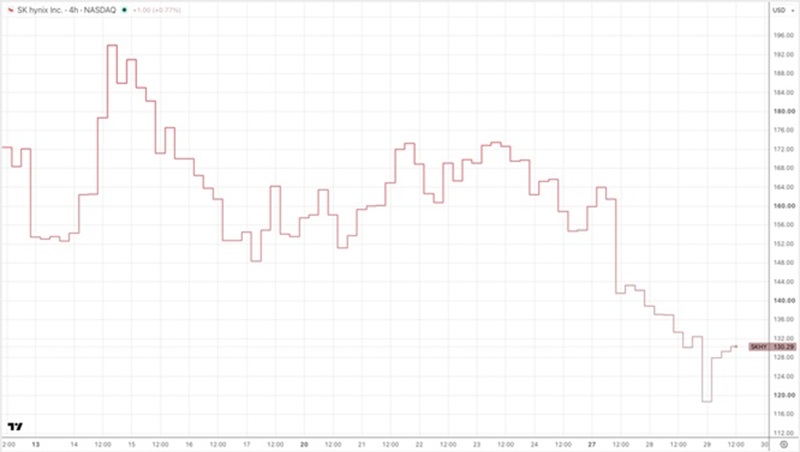
Samsung Electronics and SK Hynix have been evaluating semiconductor manufacturing equipment from China’s Advanced Micro-Fabrication Equipment (AMEC) for potential use at their Chinese production facilities, Reuters reports, citing people familiar with the matter.

The evaluations, which began roughly two years ago, are part of contingency planning by the world’s two largest memory chipmakers as they seek to reduce operational risks should Washington impose further restrictions on Western semiconductor equipment entering China.

While neither company has approved broader deployment of AMEC’s tools, the trials represent an important milestone for China’s semiconductor equipment industry, offering one of its leading manufacturers a rare opportunity to gain validation from global memory chip leaders.

The development also marks an unintended consequence of U.S. technology restrictions: measures designed to curb China’s semiconductor ambitions are simultaneously creating openings for Chinese equipment makers to displace Western suppliers inside foreign-owned fabrication plants operating in China.

However, Samsung told Reuters it has not tested AMEC equipment for use at its factory in China and has not considered doing so.

SK Hynix declined to comment.

Export Control Uncertainty Drives Contingency Planning

According to the sources, the chipmakers began assessing Chinese equipment as uncertainty grew over whether the United States would continue allowing them to import American chipmaking tools into China.

Washington designated Samsung’s and SK Hynix’s Chinese operations as Validated End Users (VEU) in 2023, allowing them to receive certain controlled U.S. semiconductor equipment without applying for individual export licenses. That arrangement changed in 2025 when the United States revoked the VEU designation before later granting both companies annual licenses covering equipment shipments into their Chinese facilities for 2026.

Although the licenses currently permit continued operations, executives remain concerned that future restrictions could become significantly broader. Rather than targeting only new equipment sales, future U.S. measures could also limit servicing, repairs, software upgrades or replacement parts for Western tools already installed inside Chinese fabs, the sources said.

As a result, Samsung and SK Hynix are evaluating Chinese suppliers primarily as a safeguard to maintain existing production lines if access to Western equipment becomes more restricted, rather than as a means of expanding manufacturing capacity in China.

China’s Growing Equipment Capabilities

The evaluations underscore the rapid progress made by Chinese semiconductor equipment manufacturers in narrowing the technology gap with established global competitors.

While Chinese companies remain behind international leaders in advanced lithography and certain inspection technologies, they have become competitive in other areas including:

  • Etching
  • Deposition
  • Cleaning
  • Chemical mechanical planarization (CMP)

According to Dan Hutcheson, Vice Chairman of research firm TechInsights, Chinese equipment is often priced 20% to 30% below comparable products offered by Western manufacturers, making it increasingly attractive for customers seeking lower costs alongside supply-chain diversification.

AMEC’s etching systems are already deployed by leading Chinese memory producer Yangtze Memory Technologies (YMTC), providing additional confidence that some of its technology has reached commercial maturity.

Western Suppliers Face Emerging Competition

Samsung’s NAND flash memory plant in Xi’an and SK Hynix’s NAND and DRAM facilities in Dalian and Wuxi currently rely heavily on equipment supplied by U.S. companies including Applied Materials and Lam Research.

A successful qualification by either Korean manufacturer would represent a significant commercial endorsement for AMEC and could eventually increase competitive pressure on established global equipment makers, including Applied Materials, Lam Research and KLA, as well as Japanese and European rivals.

China remains one of the industry’s largest markets. Applied Materials generated $8.53 billion in revenue from China during fiscal 2025, representing approximately 30% of its global sales.

Even if Chinese equipment receives technical approval, however, replacing entrenched Western suppliers would likely take years because semiconductor manufacturing tools undergo extensive qualification procedures before entering production.

Other obstacles include smaller service networks, intellectual property concerns and potential geopolitical pressure from Washington discouraging adoption of Chinese technology.

The sources also noted that it remains unlikely Samsung or SK Hynix would install Chinese equipment at fabrication facilities in South Korea because of security and intellectual property considerations.

The broader trend nevertheless reflects China’s accelerating progress toward semiconductor self-sufficiency.

According to Deutsche Bank estimates, Chinese equipment manufacturers including Naura Technology, AMEC, Piotech and ACM Research are each expected to generate more than $1 billion in revenue during 2026.

Collectively, those companies could capture 25% to 30% of China’s projected $28 billion wafer fabrication equipment market this year. Excluding lithography and metrology equipment, Chinese manufacturers’ market share could approach 40%, highlighting the rapid expansion of domestic suppliers in segments where technological barriers are lower.

However, the evaluations demonstrate how geopolitical tensions are fundamentally reshaping procurement strategies across the semiconductor industry. Rather than relying exclusively on established Western suppliers, multinational chipmakers operating in China are now exploring domestic alternatives as insurance against future export restrictions.

U.S. Refunds $100bn in Struck-Down Trump Tariffs as Legal Battle Over Trade Powers Continues

0

Customs filing shows more than half of invalidated tariff collections have been returned to importers, although some critics believe consumers have yet to benefit

The Trump administration has refunded approximately $100 billion in tariffs that were collected before the U.S. Supreme Court invalidated a large portion of President Donald Trump’s trade duties earlier this year, according to a court filing, marking one of the largest repayments of tariff revenue in U.S. history.

The disclosure, contained in a filing submitted Tuesday to the U.S. Court of International Trade by U.S. Customs and Border Protection officials, provides the clearest picture yet of the government’s efforts to unwind tariffs that the nation’s highest court ruled had been imposed without proper legal authority.

According to the filing, “refunds (duties plus interest) of approximately $100 billion have been completed using the Consolidated Administration and Processing of Entries Refund component, certified by the agency, and sent to the U.S. Department of Treasury for disbursement.”

The figure came from refunds processed through the end of July and represents more than half of the approximately $166 billion in tariff revenue invalidated by the Supreme Court’s February ruling. The repayments include both the original duties collected and accrued interest, with the money being returned primarily to businesses that imported goods subject to the tariffs.

The refunds stem from the Supreme Court’s landmark February 20 decision striking down most of Trump’s broad tariffs imposed under the International Emergency Economic Powers Act (IEEPA).

The court concluded that the decades-old emergency powers law does not authorize a president to unilaterally impose sweeping tariffs on imports from U.S. trading partners, curbing one of the administration’s principal trade policy tools.

The ruling marked a significant constitutional and legal setback for the White House, limiting the scope of executive authority in trade policy and reinforcing Congress’ central role in setting tariffs.

The decision affected roughly $166 billion in tariffs collected under the IEEPA framework, triggering an extensive refund process administered by Customs and the Treasury Department.

Tariffs have remained a defining feature of Trump’s economic agenda throughout his presidency. The administration has argued that higher import duties protect domestic manufacturers, encourage companies to relocate production to the United States, and provide leverage in trade negotiations with foreign governments.

However, the administration’s approach has faced sustained legal challenges from businesses, trade groups and state governments, many of whom argued that the president exceeded statutory authority by invoking emergency powers to impose broad-based tariffs.

The latest court filing illustrates the substantial financial consequences of the Supreme Court’s ruling, with federal agencies now tasked with returning tens of billions of dollars already collected. While businesses that paid the tariffs are receiving the refunds, critics argue that the repayments do not compensate American households that ultimately absorbed much of the higher cost through increased prices on imported goods.

“Trump is sending the ‘refunds’ to the companies, not working people. Every single cent of these refunds should go back to American consumers,” Democratic Representative Greg Casar said this week.

Economists have long debated who ultimately bears the cost of tariffs. Although importers pay the duties at the border, many companies pass some or all of those costs through supply chains to wholesalers, retailers and ultimately consumers in the form of higher prices.

As a result, consumer advocates argue that businesses receiving refunds may already have recovered much of the tariff expense by raising prices during the period the duties were in effect.

The Supreme Court’s decision has not ended Trump’s use of tariffs.

Following the ruling, the president sharply criticized the justices, describing them as “disloyal,” and quickly introduced a temporary 10% tariff on imports under a different statutory authority that, like the IEEPA, had not previously been used by any president to impose broad tariffs.

The administration subsequently expanded its trade measures by invoking Section 301 of the Trade Act of 1974, a long-established legal mechanism that authorizes the United States to respond to unfair or discriminatory trade practices by foreign countries.

Unlike the emergency powers statute rejected by the Supreme Court, Section 301 has been used by successive administrations to impose tariffs following investigations into foreign trade practices, making it a more established legal foundation for trade enforcement.

The administration has noted that the revised tariff framework complies with existing law while preserving its broader strategy of using import duties to address trade imbalances, protect domestic industries and encourage manufacturing investment in the United States.

While the government has already returned about $100 billion, roughly $66 billion in invalidated tariff collections remains to be refunded, suggesting the unwinding of the Supreme Court’s decision will continue for months.