Among the names qualifying as trending crypto right now, two stories intersecting this week deserve attention for reasons beyond price. Hyperliquid and Monero, a perpetual futures DEX and a privacy coin, on paper unrelated, have just crossed paths in a genuinely significant way, and both are posting roughly 5% gains as a result. Meanwhile, BlockDAG’s Stage 1 presale is drawing its own kind of attention, for a completely different reason. Here’s what’s actually moving each of the three this week.
Hyperliquid (HYPE): Revenue-Driven Tokenomics Push $1.3B in Buybacks
Hyperliquid is dominating the decentralized exchange landscape as a purpose-built Layer-1 blockchain, and the biggest narrative driving HYPE right now is its aggressive revenue-driven tokenomics. According to a recent Bitwise report, Hyperliquid has bought and burned approximately $1.3 billion worth of HYPE since launch, a mechanism tying the network’s trading activity directly to token-holder value rather than relying on speculative demand alone.
HYPE currently trades near $57.40 with a $14.6 billion market cap, placing it among the top 10 cryptocurrencies globally. The platform processed a staggering $178 billion in 30-day perpetual contract volume, capturing nearly 32% of the entire perp DEX market. Total open interest recently hit an all-time high above $11 billion.
Among trending crypto right now, HYPE’s combination of real revenue and genuine market share makes it one of the more fundamentally backed movers this month.
Monero (XMR): $700M in Order Flow Just Routed Through Hyperliquid
Monero continues to thrive as the undisputed leader of the privacy coin sector, fueled by growing global demand for censorship resistance and financial anonymity. The most exciting recent development connects directly back to Hyperliquid, Wagyu.xyz, a major cross-chain swap operator for native Monero, just announced it has routed over $700 million in XMR order flow directly through Hyperliquid’s on-chain order book. That integration lets XMR traders execute swaps against competitive market makers instead of relying on centralized intermediaries.
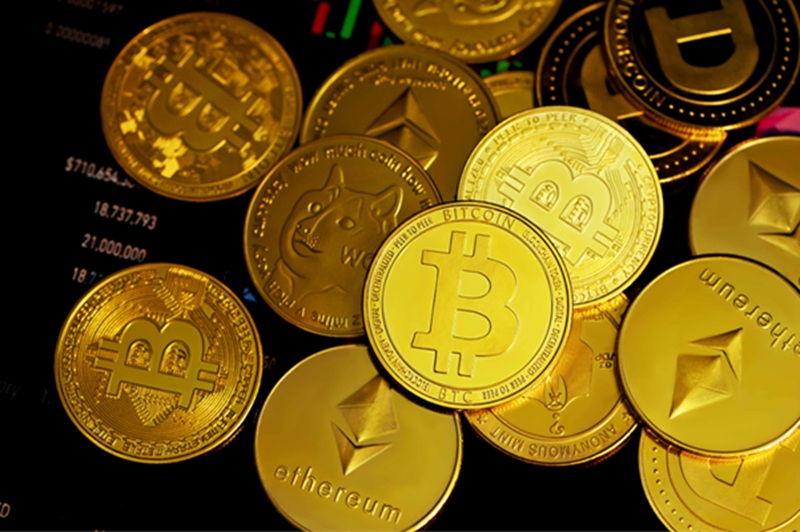
Earlier in 2026, XMR smashed previous records to hit an all-time high above $590. Despite major exchanges delisting privacy coins to appease regulators, on-chain demand remains relentless, decentralized routing protocols like Wagyu are letting end-users bypass those centralized bottlenecks entirely.
BlockDAG (BDAG): Why Stage 1 Deserves a Spot in the Conversation
Hyperliquid and Monero are both proving something real this week, that revenue mechanics and decentralized routing can drive genuine token demand independent of broader market sentiment. BlockDAG is demonstrating a related but distinct idea: that a presale’s own pricing structure can create demand without needing an integration announcement or a burn milestone to land first.
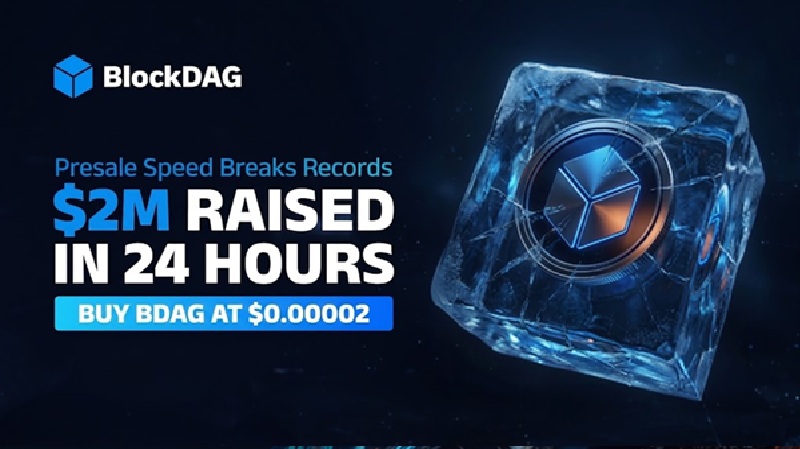
Stage 1 is live right now at $0.00002 per token, the first of 25 stages climbing toward a $0.05 final price, with a $0.10 launch reference beyond that. A $1,000 position at Stage 1 secures 50,000,000 BDAG, worth $5,000,000 if BDAG reaches its $0.10 target, a structural 5,000x built directly into the presale’s published schedule. The reason to act now rather than later is simple arithmetic: every stage that closes moves the entry price further away, and Stage 1 is mathematically the only point where this pricing will ever be this low.
That math is backed by infrastructure already running. The BlockDAG blockchain is live, processing real network activity through a hybrid Proof-of-Work and Directed Acyclic Graph architecture, supporting 7,000 transactions per second with roughly 2-second confirmation times under GhostDAG consensus and full EVM compatibility. BlockDAG Casino is operational. Mining hardware is actively shipping worldwide, with the X1 mobile miner letting anyone mine directly from their phone.
BlockDAGX is being developed for trading and price discovery once BDAG lists, alongside a Super App unifying wallets, mining, trading, and payments, backed by $100 million in planned launch liquidity. With $2 million already raised in a single 24-hour stretch, BlockDAG’s presale momentum is earning its place among trending crypto right now for structural reasons, not headline reasons.
Takeaway
Hyperliquid’s 5% move is backed by $1.3 billion in real buybacks and a dominant 32% share of the perp DEX market, revenue mechanics doing exactly what they’re designed to do. Monero’s 5% move is backed by a genuinely creative integration that routes hundreds of millions in order flow around centralized chokepoints, proof that privacy demand keeps finding new rails even as old ones close. Both are legitimate, fundamentals-backed stories worth tracking through the rest of the month.
BlockDAG offers a third kind of momentum entirely, not a percentage gain reacting to an announcement, but a presale price that only moves in one direction from here. Among the names qualifying as trending crypto right now, Hyperliquid and Monero show what happens when real usage drives price. BlockDAG’s Stage 1 shows what happens when the pricing structure itself is the reason to act before the next stage closes.
Presale: https://purchase.blockdag.network
Website: https://blockdag.network
Telegram: https://t.me/blockDAGnetworkOfficial
Discord: https://discord.gg/Q7BxghMVyu