DD
MM
YYYY

PAGES

DD
MM
YYYY

spot_img

PAGES

Home Blog

“Too Late to Return”: PayPal’s Africa Wallet Ambitions Rekindle Old Wounds Among Nigerian Users, Face Backlash

0

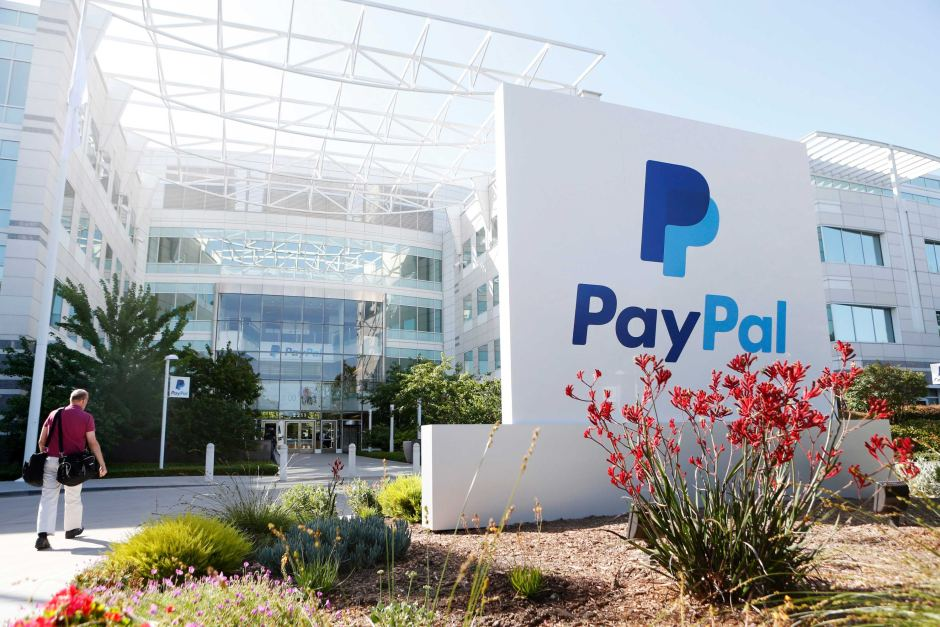
Nigerians have expressed strong criticism over PayPal’s proposed expansion into Africa following reports that the global payments giant is in talks with African fintech companies to launch a cross-border digital wallet platform in 2026.

The planned platform, known as PayPal World, is designed to enable interoperability between global and local digital wallets. Through this system, users would be able to make cross-border payments or shop internationally using a PayPal button connected to their local digital wallets, without the need to open a traditional PayPal account.

Despite the promise of seamless global payments, the announcement has reopened long-standing frustrations among Nigerians, many of whom argue that PayPal’s re-entry comes far too late. Many point to years of restrictions that limited economic opportunities for freelancers, remote workers, and digital entrepreneurs, forcing them to seek alternatives.

Background Story

In the early 2000s, around 2004, PayPal placed heavy restrictions on several sub-Saharan African countries, including Nigeria. While the company did not completely ban Nigerian users, it prevented them from receiving payments, citing high fraud risks linked to stolen credit cards and online scams originating from the region.

At the time, Nigerians could send money through PayPal but were largely unable to withdraw funds to local bank accounts. Although PayPal described the restrictions as temporary, the ban persisted for nearly two decades.

In 2014/2025, PayPal briefly allowed some inflow capabilities, but full merchant functionality remained unavailable, leaving many users excluded from the global digital economy.

Public Reaction in Nigeria

Following news of PayPal’s renewed interest in Africa, Nigerian users across social media have expressed anger and disappointment, describing the move as opportunistic amid new tax regulations.

Many recalled losing access to foreign jobs, freelance gigs, surveys, and remote work opportunities because PayPal was often the only payment option available on global platforms.

Several commentators emphasized that Nigerians were forced to adapt during PayPal’s absence, leading to the rise of homegrown fintech solutions such as Cleva, Raenest, Grey Finance, and others. These platforms now serve thousands of freelancers and businesses, reducing dependence on international payment providers.

Others argued that PayPal underestimated Africa’s growing youth population and tech ecosystem and is only now attempting to tap into a market it previously ignored.

Check out some reactions on X,

@Technical Ben wrote,

“PayPal thinks they’re smart reopening Nigeria. Nigerians survived without them. We lost foreign jobs and gigs for years because of their restrictions, so we adapted. We built alternatives. We moved on. Now they’ve checked Africa’s youth stats and realized how much money they left on the table. Too late mate we have moved on.”

@Ede Ifeanyinchuku wrote,

Africa has the largest youth population and an exploding tech ecosystem, I guess they are just waking up to that reality and want to get their own slice of the pie. I would argue that they will have a  hard time competing with entrenched local players as well as the cultural nuances of winning trust in the African market.”

@Kami_iyo wrote,

“I lost a lot of transcription, survey, and some online jobs because PayPal is the only payment method and now they want to come back like nothing happened, that will never happen we will boycott them. I was in serious financial strain and had these opportunities I couldn’t touch”

@haroldsphinx wrote,

“If Nigerians have any sense of self-worth, they should actually boycott PayPal, there’s absolutely nothing in this life that can make me use PayPal again. This is when we should double down on supporting our own products that have solved that problem for us now”.

@Ossynoya wrote,

“PayPal will burn actually, they are one of the only global payment platforms that totally exclude Africans and Nigerians especially. And they literally gave the most stupid excuse for doing it. Now they want to stroll into the African market like nothing happened.”

@AbiodunØx wrote,

“I guess PayPal won’t fly in this part of the world. They went too far with the exclusionary policy [their excuse was lame]. The most annoying thing was when they only allowed us to send money and not receive it.”

@doctorwalesmd wrote,

“Grey Finance didn’t come this far for people like me to switch to PayPal if they ever decide to unblock services for Africans. They should kindly stay blocked. For me, they are no longer relevant here.”

A Changed Market Landscape

Nigeria’s fintech ecosystem has evolved significantly since PayPal first imposed restrictions. In 2025, the country hosts over 200 fintech startups processing an estimated $100 billion in transactions annually, according to central banking data. This growth has been driven largely by youth-led innovation, increased digital adoption, and solutions tailored to local needs.

As a result, PayPal is no longer entering an underserved market but one dominated by well-established local players with strong user loyalty and deep cultural understanding.

Outlook

PayPal’s planned expansion into Africa signals recognition of the continent’s economic potential, particularly its youthful population and fast-growing digital economy.

While PayPal World may offer technical advantages in cross-border interoperability, success in Nigeria will depend on more than infrastructure. Rebuilding trust, addressing historical grievances, and demonstrating long-term commitment to local markets will be critical. Without these, PayPal risks struggling against entrenched local fintech platforms that have already earned the confidence of Nigerian users.

Ultimately, PayPal’s return may reshape competition in Africa’s payments space, but in Nigeria, the battle will be as much about credibility and timing as it is about technology.

Cyber Threats Intensify Across Africa, as Nigeria’s Digital Adoption Drives 4,200 Weekly Attacks

0

As Africa enters a critical phase of digital transformation, technology is driving unprecedented growth, connectivity, and innovation across the continent.

However, this rapid digital expansion has also significantly widened the cyber threat landscape, exposing organizations and governments to increasingly sophisticated attacks

In a report titled “2025 African Perspectives on Cyber Security” by Check Point, cyber attacks across Africa are becoming faster, more targeted, and increasingly powered by Artificial Intelligence (AI).

Check Point noted that Africa’s digital growth continues to outpace security maturity creating opportunity for identity-led intrusions. Across Africa, organizations are operating under sustained and elevated cyber pressure. Over the past six months, on average an organization has faced 3,153 attack attempts per week, compared with 1,963 globally.

Information disclosure remains the most common exploit class in the region, impacting 77% of organizations. Email remains the dominant delivery vector, accounting for 80% of malicious files.

In Nigeria, organizations now record an average of 4,200 attack attempts per week, more than double the global average, confirming that adversaries are scaling fast as digital transformation itself.  The financial sector remains the epicentre of these threats.

Phishing and business e-mail compromise persist as dominant entry points, proving that awareness training is just as vital as technology. Beyond finance, energy, and healthcare operators are integrating IoT and cloud-based systems, creating efficiencies but also new vulnerabilities.

Nigeria’s threat picture aligns with global shifts. Nation-state operators leverage AI-assisted disinformation, disruptive malware, and hacktivism to weaken trust and set conditions for access. Ransomware affiliates emphasize data-leak extortion over encryption and infostealers have surged, harvesting browser and VPN tokens to feed initial access brokers.

Government entities remain high-value targets for both state-aligned and financially motivated actors. Higher education and research institutions face consistent pressure from infostealers and botnet-delivered leaders that harvest credentials and tokens, with targeted data-leak extortion following mailbox compromise. Common gaps include SSO/email misconfigurations, exposed tokens, and over-permissive data shares that increase lateral movement risk across academic platforms.

On the other hand, Banks, insurers, and payment providers draw persistent attention from organised cybercrime. Infostealers that capture VPN/session tokens remain a primary on-ramp while credential stuffing and API abuse target consumer portals. Telcos face sustained risk-across customer-facing portals and management planes. Identity misuse and exposed APIs drive incidents, while ransomware crews lean on data-leak extortion and pervasive infostealer infections siphon tokens from BYOD/VPN contexts.

Encouragingly, Nigeria’s cybersecurity maturity is rising. Organizations are deploying layered prevention-first architectures across perimeter, endpoint, and cloud environments.

Elsewhere on the continent, South Africa remains one of the most targeted markets in Africa, facing a complex mix of legacy vulnerabilities, rapid digital adoption, and an expanding threat surface that mirrors its economic growth. Check Point reveals that South African entities face thousands of attacks weekly with phishing, data exfiltration, and DDoS activity dominating the threat spectrum.

In Kenya, the East African country faced 3,758 attacks per week on average, compared with 1,963 globally. The most common vulnerability exploit type in the country, is information disclosure, impacting 77% of the organizations. The country’s embrace of mobile banking, fintech innovation, and digital government has accelerated national growth, but has also expanded cyber attacks.

As Africa’s leading markets continue to face escalating and sophisticated cyber pressure, the continent’s resilience lies in the strength of its partnerships. Stronger public–private partnerships, cross-border intelligence sharing, workforce training, and identity-centric security strategieswill be critical.

As digital transformation accelerates, aligning cybersecurity maturity with innovation will determine whether Africa can sustain growth while safeguarding trust in its digital future.

Trump Chief of Staff Susie Wiles Offers Rare, Candid Assessment of Elon Musk and His Turbulent DOGE Role

0

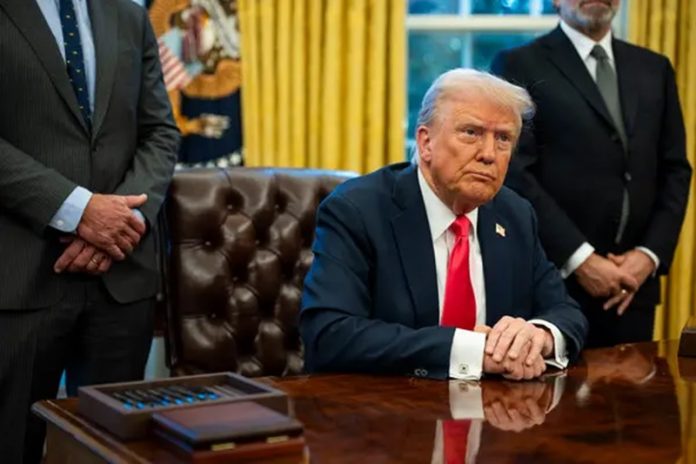
One of President Donald Trump’s closest aides has offered an unusually frank window into Elon Musk’s brief but disruptive presence inside the White House, lifting the curtain on internal tensions, clashing management styles, and unease over the rapid dismantling of a major U.S. government agency.

In a series of interviews published Tuesday by Vanity Fair, White House Chief of Staff Susie Wiles spoke at length about Musk’s time as the de facto leader of the Department of Government Efficiency (DOGE), his personality, and his role in the shutdown of the U.S. Agency for International Development (USAID).

“The challenge with Elon is keeping up with him,” Wiles told the magazine.

She described Musk as an “odd, odd duck,” adding that his unconventional habits — including sleeping in a sleeping bag inside an office building adjacent to the White House — were part of a broader pattern that came with working alongside someone she repeatedly described as a genius operating at extreme speed.

Wiles also made remarks about Musk’s reported drug use that quickly became one of the most contentious aspects of the interview. She referred to Musk as an “avowed ketamine” user and, when asked about a meme he reposted and later deleted — one that compared public sector workers to mass murderers under the dictatorships of Adolf Hitler, Joseph Stalin, and Mao Zedong — she responded: “I think that’s when he’s microdosing.”

Musk has publicly rejected claims that he is currently using ketamine. In June, he wrote on X that he was “NOT taking drugs,” saying he had been prescribed ketamine “a few years ago” but had not taken it since. When asked for comment following the Vanity Fair publication, a spokesperson for Musk’s artificial intelligence company, xAI, responded tersely: “Legacy Media Lies.”

The remarks soon triggered a second round of controversy. In an interview published Monday by The New York Times, Wiles denied having commented on Musk’s drug use at all, saying she “wouldn’t have said it and I wouldn’t know.” The Times reported that journalist Chris Whipple, who conducted the interviews for Vanity Fair, later played a recording for the paper in which Wiles could be heard making the statements.

Beyond Musk’s personal behavior, Wiles also addressed what she described as her initial shock over the dismantling of USAID, one of the most dramatic policy moves associated with Musk’s tenure.

“I was initially aghast,” she told Vanity Fair. She said that her understanding, shared by many who have worked in or studied government, was that USAID “do very good work.” While she acknowledged long-standing concerns about inefficiencies within the agency, Wiles said the execution of its shutdown crossed lines.

“That’s not the way I would do it,” she said, adding that she explicitly told Musk that “you can’t just lock people out of their offices.”

Wiles framed the episode as a clash of philosophies rather than a personal feud. She said Musk’s approach was rooted in urgency and disruption, likening it to the mindset required to build rockets and push technological boundaries.

“Elon’s attitude is you have to get it done fast,” she said. “If you’re an incrementalist, you just won’t get your rocket to the moon.” That mindset, she added, inevitably leads to collateral damage. “With that attitude, you’re going to break some china.”

At the same time, Wiles made clear she did not believe the existing USAID structure was defensible in its entirety.

“No rational person could think the USAID process was a good one. Nobody,” she said, signaling agreement with the goal of reform even as she questioned the method.

Musk ultimately exited the White House in the spring after a falling-out with Trump over the so-called “Big Beautiful Bill.” While tensions between the two men were widely reported at the time, their relationship has appeared to stabilize in recent months.

Following the publication of the Vanity Fair story, Wiles pushed back publicly. Writing on X on Tuesday morning, she described the article as a “disingenuously framed hit piece,” saying “significant context was disregarded” to create what she called an “overwhelmingly chaotic and negative narrative” about Trump and his administration.

The White House quickly moved to close ranks around Wiles. Asked about her comments, the administration shared a statement from Press Secretary Karoline Leavitt expressing firm support.

“Chief of Staff Susie Wiles has helped President Trump achieve the most successful first 11 months in office of any President in American history,” Leavitt said. “President Trump has no greater or more loyal advisor than Susie. The entire Administration is grateful for her steady leadership and united fully behind her.”

Taken together, the interviews offer one of the clearest accounts yet of how Musk’s fast-moving, Silicon Valley style collided with the realities of governing, and how even Trump’s most trusted aides struggled to manage the consequences of speed, scale, and disruption at the highest levels of power.

Next Tekedia Capital Portfolio Business Update – Feb 28, 2026

0

Hello,
Greetings. Our next portfolio business update is scheduled as follows:
Date: Saturday, Feb 28, 2026
Time: 4-6pm WAT
Zoom link will be sent later.

If you are not in the WhatsApp Group, please read this note published here for context ahead of the session. Note that you can schedule anytime with the provided Zoom for update; no need to wait for the Group scheduled session.

Tekedia Team


Best Crypto to Buy Now: Ripple (XRP), Cardano (ADA), Ethereum (ETH) Bulls Buy New Coin Under $0.0025 Before a $1 Run

0

As markets swell with optimism, seasoned bulls are looking at three stalwarts, Ripple (XRP), Cardano (ADA), and Ethereum (ETH), as solid anchors.  But beyond the blue-chips, an emerging presale star, Little Pepe (LILPEPE), is capturing attention for its parabolic potential. With a current presale price of just $0.0022, LILPEPE is being framed by some as the meme-powered underdog that could run toward $1, and bulls are not shy about calling it their moonshot bet.

Ripple (XRP): The Regulatory Milestone and Payments Powerhouse

Ripple’s native token, XRP, has entered a new chapter. In a landmark change, legal battle with U.S. regulators over high fees has ended with Ripple paying a fine of $125 million, which has wiped out one of its biggest overhangs. This resolution prepares the way for new institutional trust and a more obvious mainstream way. When paired with the growing sentiment around tokenization, especially in real-world assets, XRP could become a deep liquidity rail for global finance. Analysts from Standard Chartered have even projected it reaching $5 by 2025, citing both payment use-cases and a strategic push into tokenized finance. On the technical front, some 6-month outlooks place XRP’s bullish target in the $3.20–$4.00 zone, driven by ETF speculation, institutional inflows, and favorable macro trends.  Taken together, XRP’s recent regulatory clarity, real-world utility, and bullish price forecasts make it a strong contender for the next leg up.

Cardano (ADA): PoS Sustainability Meets Long-Term Vision

Bulls still have an interest in Cardano because of its slow, research-oriented strategy. Its PoS consensus is energy-efficient by design and scales in a manner that is sustainable to adopt Web3. Academic rigor combined with peer-reviewed developmental model Layer 1 competition provides an interesting alternative to more rapid, yet less rigorous ecosystems. Although the gains of Cardano in the short term are not as epic as those of meme coins, its long-term runaway is substantial. ADA is starting to be framed as the base standard of a decentralized application, governance, and real-life solutions. For investors who believe in measured, principled growth rather than speculative mania, ADA remains a favorite.

Ethereum (ETH): Programmability and Institutional Reawakening

Ethereum is the foundation of innovation in smart contracts. It is used to run most DeFi, NFTs, and decentralized applications, and its discourse is supported with institutional inertia. In 2025, ETH surpassed its 2021 all-time high, with a market cap approaching $600 billion, a clear sign that capital is returning in force.  Beyond price action, Ethereum’s ecosystem benefits from research on scalability. New models for parallel transaction execution are being explored, which could dramatically increase throughput and lower costs. For bulls, ETH stands as the programmable backplane for Web3, powerful, battle-tested, and primed for the next wave of global adoption.

Little Pepe (LILPEPE): The Sub-$0.0025 Underdog with Meme Energy and Utility

While XRP, ADA, and ETH anchor the core, speculative bulls are zeroing in on a different kind of bet: Little Pepe. Currently in stage 13 of its presale, LILPEPE is priced at $0.0022 and has reportedly raised over $27.5 million so far. The presale has been blazing, with more than 16.7 billion tokens sold.  What makes LILPEPE stand out is not just its cheap entry, but its foundation: rather than being a purely speculative meme token, it is built on its own EVM-compatible Layer 2 blockchain designed for high throughput and near-zero trading fees.  Presale mechanics amplify the bullish case. Since Stage 12 sold out early at $0.0021, Stage 13’s $0.0022 price already reflects strong demand. With a confirmed listing price of $0.003, early buyers are eyeing a 30% return even before secondary trading begins. Given the rapid adoption, the community-driven launch structure, and the meme-native utility, many bulls believe LILPEPE could orbit far beyond its initial valuation.

Conclusion

For those who believe this bull market is not just about speculative noise but a return to serious infrastructure plays, combining these assets could capture both reliability and upside.  Little Pepe, in particular, represents an asymmetric bet: a low-cost presale entry with high-leverage potential, underpinned by a technical roadmap and community energy.

For more information about Little Pepe (LILPEPE) visit the links below:

Website: https://littlepepe.com 

Whitepaper: https://littlepepe.com/whitepaper.pdf

Telegram: https://t.me/littlepepetoken

Twitter/X: https://x.com/littlepepetoken

$777k Giveaway: https://littlepepe.com/777k-giveaway/