DD
MM
YYYY

PAGES

DD
MM
YYYY

spot_img

PAGES

Home Blog

Growth Models Project Ozak AI Could Outperform Large-Cap Crypto by Over 20× Based on Presale Entry Levels

0

As the Crypto market is now moving from the major Cryptocurrencies to the AI-based early-stage Tokens. The Return on investment from these Large Cap Cryptos and AI-based tokens have teh huge difference. Ozak AI, which is an Early stage AI based token, is one of the top AI-based tokens on the List. The analysts say Ozak AI’s Presale growth could outperform the large-cap Tokens. The Ozak AI has raised over $7 million in Presale funding in a short period of time and has more massive Presale growth momentum than any other AI token in its early stages. The Ozak AI has already quickly advanced from its initial launch phase to the current presale phase, demonstrating how the technology is attracting a lot of interest from investors worldwide.

Ozak AI Presale Positioning: Where Growth Multiplies

The Ozak AI’s Presale shows how the technology is gaining massive adoption from investors at a rapid pace. Currently, Ozak AI is priced at $0.014 in its 7th Pre-Sale Phase. The token has increased 14x in growth from the initial phase to the current Phase, in a short period of time. The tokens have raised over $7 million in presale funding, and over 1.2 billion OZ tokens have been sold so far. This Presale growth has increasingly built the investors’ trust and confidence and has led many investors to enter the Presale phase. The Ozak AI’s Presale Phases are selling out quickly, and the tokens are nearing teh target price of $1. The token is moving in the exact way where the early-stage tokens would explode and outperoforms teh large cap Cryptos in the market.

Technology Is Reinforcing Accumulation, Not Just Price

Unlike Other hyped coins, Ozak AI carries real-world AI utility, which combines cutting-edge predictive models, real-time data streaming, and a decentralized infrastructure (DePIN) into one powerful ecosystem. The Ozak AI’s Agentive AI system with multi-agent reasoning uses multiple specialized AI agents that work together. The Prediction Agent handles the price Forecast, the Sentiment Agent checks Social media and on-chain mood, the Technical Agent looks at trading charts and patterns, and the Event Agent watches token unlocks, Updates, and big announcements. All agents share results and work together to give a single, smarter answer. The Smart Contract Execution Layer is the brain of Ozak AI. It controls Work distribution, Payment to node operators, and Staking. It uses rollup technology to make all actions cheaper and faster. This ensures the trustless payments, Transparent rules, and no central Authority controlling the AI.

Why Early-Stage Entry Produces a 20× Growth Differential

The Growth model usually compares the entry price, Presale price growth, market cap size, adoption curve position, and historical cycle behavior. Based on that, the large-cap crypto ROI is very much less when compared to Ozak AI’s ROI potential growth. As per the analyst prediction, the major Cryptos like Bitcoin and Ethereum, which have a large market cap, would deliver a lower ROI, like 1.4x growth. But Ozak AI, which is currently priced at $0.014 in its 7th Presale phase. Assuming the investment of $500 in the current presale phase of Ozak AI could secure 35,714 OZ tokens. If teh token reaches $1 as per teh analyst projection, then the secured tokens’ worth would be $35,714 with 71x growth. If the token reaches the $3 market, then the secured tokens’ worth would be $107,142 with 214x growth. This shows even the small investment in Ozak AI could gain a massive ROI compared to teh large market cap Tokens as per teh projection.

Strategic Partnerships Reduce Execution Risk

Ozak AI has recently partnered with AImstrong, which is an AI-driven Omnichain Lending protocol that uses intelligent automation and real-time data analysis to help users maximize their DeFi profits across several chains. Partnering with AImstrong will investigate how AImstrong’s lending algorithms can work in tandem with Ozak AI’s Prediction Agents and the Neuron AI brain.

Conclusion: Presale Entry Is the Multiplier

The long-term Investment Tokens are the large-cap cryptocurrency assets, while the ambitious, high-yield tokens are the Ozak AI. The large-cap tokens’ enormous ROI is constrained by their enormous market capitalization. Ozak AI’s projected price range is achievable if the token keeps up its current positive momentum, accomplishes the objectives outlined in the white paper, and makes incremental improvements. The token’s strong real AI utility and low entry cost are currently driving its widespread adoption. Because of this, the growth models predict that Ozak AI will perform more than 20 times better than large-cap cryptocurrencies. These early-stage tokens have a high growth potential to blow up, not because the big caps fail.


For more information about Ozak AI, visit the links below:

Website: https://ozak.ai/

Twitter/X: https://x.com/OzakAGI

Telegram: https://t.me/OzakAGI
Tekedia Capital Backs the Trust Infrastructure for the AI Economy, Didit

0

Tekedia Capital is excited to join Pioneer Fund, Orange Collective, Founders Future, Phosphor Capital, Rebel Fund, Lobster Capital, Y Combinator, and other investors to support Didit which just raised a US$7.5 million Seed round to build the infrastructure for identity and fraud management in the AI era.

Didit is already profitable, growing more than 30% month-over-month, and evolving from identity verification into something much bigger: foundational trust infrastructure for the internet economy.

Why did we join this round? Because artificial intelligence is dramatically changing the economics of fraud. AI is making it incredibly cheap to generate fake identities, fake businesses, fake documents, fake voices, fake transactions, and even synthetic digital histories at internet scale. In the coming years, trust itself may become one of the most important infrastructure layers in the global digital economy.

At Tekedia Capital, we believe every major application will soon require trust infrastructure the same way modern systems today depend on payments infrastructure or cloud hosting. As AI capabilities expand, identity verification and fraud prevention will no longer be optional compliance layers; they will become core operational systems.

Good People, the future internet will not merely be about intelligence. It will also be about verifiability, authenticity, and trust. Didit has demonstrated that it could be part of that future and that is why we supported its round.

The Decline in Oil Prices Reflects More Than Optimism About Diplomacy

0

Oil prices fell sharply after President Donald Trump signaled that the United States would take a more patient and diplomatic approach toward Iran, easing fears of an immediate escalation in Middle East tensions. The market reaction highlighted how sensitive global energy prices remain to geopolitical developments, particularly those involving Iran and the strategically vital Strait of Hormuz.

Brent crude and West Texas Intermediate both declined significantly as traders interpreted Trump’s comments as a sign that supply disruptions may not worsen in the near term. For weeks, oil markets had been pricing in a substantial geopolitical risk premium. Concerns about conflict in the Gulf region, possible sanctions changes, and disruptions to shipping routes had pushed crude prices sharply higher.

The Strait of Hormuz, through which roughly one-fifth of the world’s oil supply passes, became a focal point of global anxiety. Any threat to traffic through the narrow waterway immediately translated into fears of tighter global supply and rising inflation.

Trump’s latest remarks altered that narrative. Rather than signaling urgency or imminent military action, he emphasized that negotiations with Iran were progressing in an “orderly and constructive manner” and instructed his representatives not to rush into a deal. That language reassured investors that diplomacy remained the preferred path, at least for now. Oil traders quickly unwound some of the speculative positions that had accumulated during the height of the tensions.

The decline in oil prices reflected more than just optimism about diplomacy. Markets also interpreted Trump’s comments as a sign that the White House is increasingly aware of the economic consequences of prolonged energy volatility. Elevated oil prices have already placed pressure on consumers, transportation sectors, and manufacturing industries worldwide. Higher fuel costs also risk reigniting inflation at a time when many central banks are still struggling to stabilize prices after years of economic turbulence.

Financial markets broadly welcomed the shift in tone. Stock markets rallied alongside the drop in oil prices, while bond yields declined as investors anticipated reduced inflationary pressure. Traders increasingly believe that avoiding a prolonged Gulf conflict could help stabilize global growth prospects.

However, despite the optimism, uncertainty remains extremely high. Analysts caution that markets may be reacting too aggressively to preliminary diplomatic signals. Several critical issues remain unresolved, including sanctions enforcement, maritime security guarantees, and Iran’s nuclear ambitions.

Even if negotiations advance, restoring full oil flows through the region could take months due to damaged infrastructure, insurance complications, and shipping bottlenecks. There is also skepticism surrounding the consistency of Trump’s Iran strategy. Over recent months, his administration has alternated between aggressive rhetoric and conciliatory gestures.

At times, Trump has spoken about winding down tensions while simultaneously deploying additional military assets to the region. These mixed signals have contributed to extreme market volatility, where a single headline can send oil prices surging or collapsing within hours. The recent drop in oil prices underscores the extent to which geopolitical psychology now dominates commodity markets.

Traders are responding less to actual supply fundamentals and more to political messaging and diplomatic expectations. As long as uncertainty around Iran and the Strait of Hormuz persists, oil markets are likely to remain highly reactive to every statement coming from Washington and Tehran.

For now, Trump’s patient approach has temporarily calmed investors. But the broader energy market remains fragile, and any breakdown in negotiations could quickly reverse the recent decline in prices.

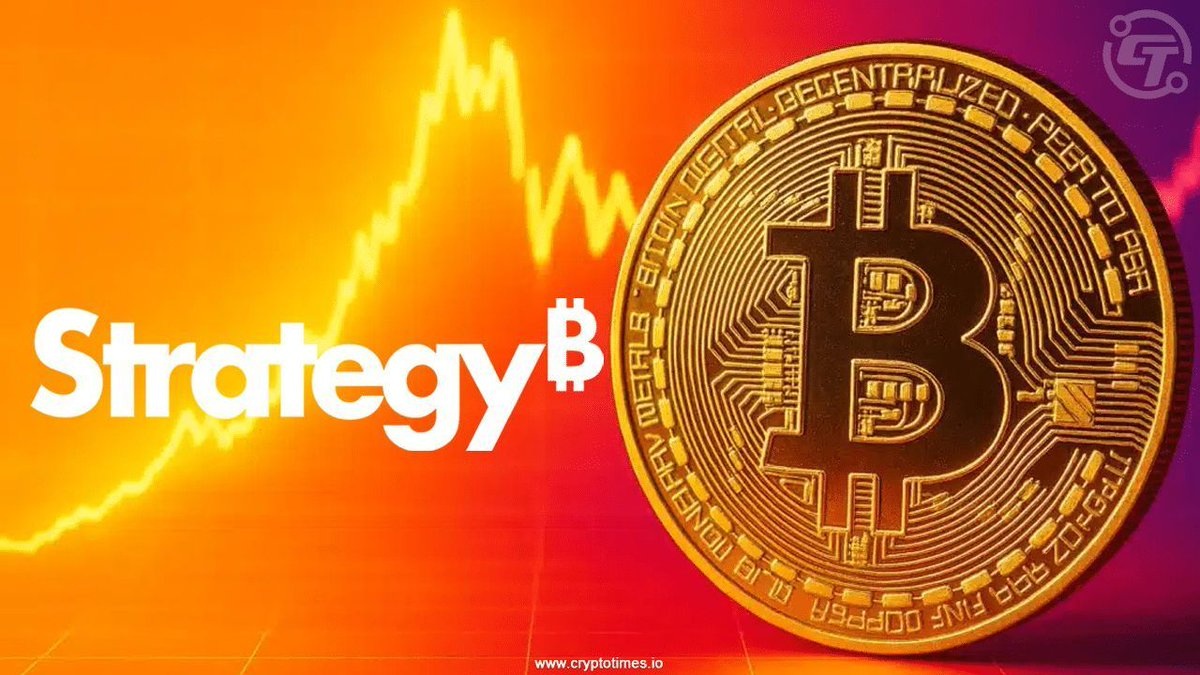
Critics Argue MicroStrategy’s Bitcoin Strategy Resembles a Highly Leveraged Investment Vehicles

0

Many critics argue that Strategy’s Bitcoin strategy resembles a highly leveraged carry trade wrapped inside a public company. The concern is not simply that the firm owns a massive amount of Bitcoin, but that it financed much of that accumulation with debt, preferred shares, and continuous equity issuance tied to the assumption that Bitcoin’s long-term appreciation will outpace the company’s financing costs.

At the center of the debate is the company’s transformation from a traditional software business into what is effectively a leveraged Bitcoin holding vehicle. Under Michael Saylor, the company aggressively borrowed money through convertible notes and other financing structures to buy more Bitcoin.

As Bitcoin appreciated, the strategy appeared brilliant because rising BTC prices increased the value of the treasury faster than the dilution or debt burden grew.

The disaster waiting to happen narrative emerges from what happens if that trend reverses for an extended period. One major concern is leverage amplification. If Bitcoin falls sharply and remains depressed, Strategy still owes interest payments, redemptions, and obligations tied to its financing instruments.

Unlike a spot Bitcoin ETF that simply tracks Bitcoin’s price, Strategy has layered capital structure risk on top of crypto volatility. Critics argue that this transforms normal Bitcoin downside into potentially exponential downside for shareholders. Another issue is dilution risk.

To continue accumulating Bitcoin, the company has repeatedly issued new shares or preferred instruments. Bulls see this as efficient capital formation. Bears see it as a cycle where existing shareholders are continuously diluted to sustain Bitcoin purchases. If investor appetite weakens while Bitcoin stagnates, Strategy could lose its ability to raise cheap capital efficiently.

Strategy’s stock has traded significantly above the value of the Bitcoin it actually holds. Investors were effectively paying a premium for leveraged exposure and for Saylor’s accumulation strategy. Critics warn that if market sentiment changes, that premium could collapse even without Bitcoin crashing.

In that scenario, shareholders could suffer from both falling BTC prices and shrinking valuation multiples simultaneously.

The convertible debt structure adds another layer of complexity. Much of the company’s financing worked well because low interest rates and strong equity performance made refinancing easier. But tighter liquidity conditions or prolonged crypto weakness could make refinancing more expensive.

Skeptics compare this to historical leveraged investment vehicles that looked invincible during bull markets but became fragile when credit conditions tightened. Supporters of Strategy counter that the critics underestimate Bitcoin’s long-term trajectory.

They argue the company intentionally structured much of its debt with long maturities and relatively favorable terms. From this perspective, temporary volatility is irrelevant because the strategy is designed around Bitcoin appreciating over decades, not quarters.

Bulls also point out that Strategy has become one of the most successful corporate treasury transformations in modern financial history. The company’s stock dramatically outperformed many traditional technology firms during Bitcoin bull cycles, and Saylor’s conviction attracted institutional investors seeking indirect Bitcoin exposure before spot ETFs became widely available.

However, the criticism persists because leverage changes the nature of risk. A normal Bitcoin holder can theoretically wait indefinitely through drawdowns.

A leveraged corporate entity cannot ignore financing realities forever. If Bitcoin were to enter a prolonged multi-year bear market combined with restricted access to capital markets, the company could face pressure to sell assets, refinance at unfavorable rates, or dilute shareholders heavily.

That is why opponents describe the strategy as potentially dangerous: it depends not only on Bitcoin succeeding eventually, but on capital markets remaining cooperative long enough for the thesis to play out.

TURBO Presale Review: Why BlockDAG’s First Utility Token Is May 2026’s Biggest 100x Opportunity

0

The crypto market has entered a phase that rewards precision over enthusiasm. Bitcoin is stabilizing between $76,000 and $77,500 after weeks of consolidation, the Altcoin Season Index sits suppressed in the 30-40 range, and Bitcoin dominance holds firm at 58-60%. This is not a market where everything rises together. It is a market where capital rotates surgically into assets with mechanical reasons to perform, and away from anything coasting on borrowed narrative.

Against that backdrop, the most interesting opportunity in the presale market right now isn’t a meme coin or a Layer 2 promising to reinvent Bitcoin. It is TURBO, the first utility token built directly into the BlockDAG ecosystem, a network that has already raised more than $400 million across its own presale and is now preparing to anchor an entire economic flywheel on top of it.

TURBO Is The Utility Layer For A $400M+ Ecosystem

To understand why TURBO matters, the context of BlockDAG itself has to be understood first. BlockDAG has built one of the most successful presales in crypto history, surpassing $400 million in funding while constructing a fully operational EVM-compatible Layer 1 network. Chain ID 1404 is live. The explorer at bdagscan.com is live. BDAG functions as the native gas currency. This is not a network being promised. It is infrastructure that already operates at scale, with a community of buyers, validators, and developers already inside it.

TURBO is the first utility token deploying into that ecosystem. That sequencing matters enormously. Most presale tokens launch into chains that don’t yet exist or barely function. TURBO is launching into a chain that has already demonstrated $400M+ in market demand, with the audit framework, explorer infrastructure, and developer tooling already deployed and tested.

The Tokenomics Are Built For Long-Term Scarcity

The supply architecture is where TURBO separates itself from every other presale in the current cycle. 50 billion tokens were minted at genesis. No future issuance is possible. No minting function exists for the team to trigger later. The supply is fixed, capped, and verifiable.

From that ceiling, the weekly Foundation burn begins immediately. Every seven days, 90% of the burn amount is permanently sent to the burn-destination wallet, with the transaction hash published on the BlockDAG Explorer for anyone to verify. The remaining 10% is distributed to a randomly selected pool of eligible holders. The long-term target is to reduce total supply from 50 billion to 25 billion through this automatic, weekly process.

Buyer balances are never touched. The Foundation burns from its own 22.5 billion token reserve. The supply shrinks around holders, not from within their wallets.

Upcoming Utility: What’s Coming After Launch

TURBO’s anchor use case is casino and gaming utility on the BlockDAG network, covering betting, deposits, VIP access, reward distribution, and high-frequency platform transactions. This is the demand foundation that creates organic token velocity from day one.

Beyond gaming, the phased rollout includes staking for approved rewards, a tiered VIP system offering cashback and reward boosts, a full NFT ecosystem for minting and gated tiers, and application-layer features including entry fees, boost mechanics, and feature unlocks. Each utility activation post-launch becomes a fresh catalyst for the token economy, and every Stage 1 buyer is already positioned ahead of every one of those activations.

Why Stage 1 Pricing Is Critical Right Now

Stage 1 is open at $0.0005. The projected listing price is $0.04. That is an 80x gap, a 7,900% upside between today’s presale entry and the targeted exchange debut.

The example is straightforward. A $1,000 entry at Stage 1 secures 2,000,000 TURBO tokens. At the $0.04 listing target, that position is valued at $80,000. The same $1,000 deployed at Stage 5, assuming the standard price escalation across the 10-round structure, secures dramatically fewer tokens at meaningfully higher cost.

Stage 1 is also intentionally the largest allocation in the entire 10-round presale. Each subsequent round shrinks in available supply and rises in price. The window that exists today is the widest and cheapest the token will ever offer. Once Stage 1 closes, that price disappears, permanently.

The Expert Read

TURBO’s setup combines what most presales offer in isolation but rarely together: a live blockchain ecosystem already proven by $400M+ in BDAG presale demand, a fixed and automatically deflationary supply model, real utility anchored in casino and gaming activity, and a Stage 1 entry that has not yet priced in any of the above.

For investors hunting the next major presale catalyst in May 2026, TURBO is structurally positioned to deliver. Stage 1 is open. The burn is running. The ecosystem is already built. The only variable left is timing, and timing closes round by round.

Join BDAG TURBO Presale Now:

Presale: https://purchase.blockdag.network

Website: https://blockdag.network

Telegram: https://t.me/blockDAGnetworkOfficial

Discord: https://discord.gg/Q7BxghMVyu