DD
MM
YYYY

PAGES

DD
MM
YYYY

spot_img

PAGES

Home Blog

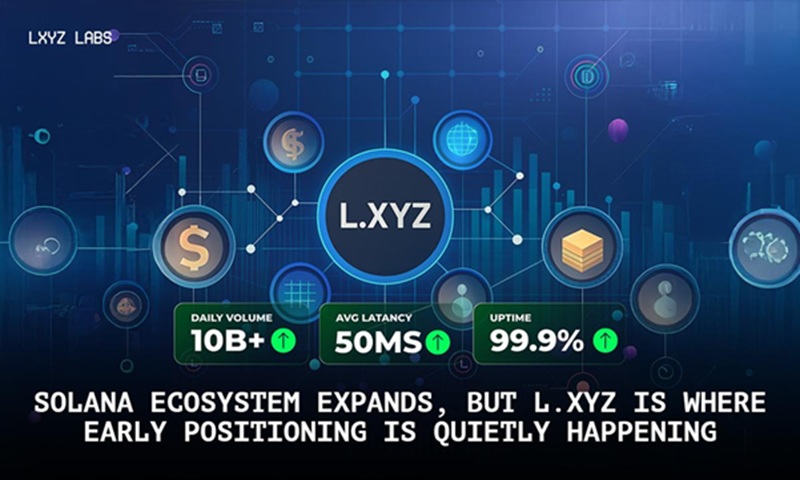
Solana Ecosystem Expands, but L.xyz Is Where Early Positioning Is Quietly Happening

0

The Solana ecosystem continues to expand at a rapid pace. Trading volumes are increasing, new applications are launching, and capital is flowing toward platforms that can handle scale without sacrificing speed. As this growth accelerates, traders are becoming more selective about where they deploy capital, especially when it comes to decentralized exchanges.

Rather than chasing every new launch, many experienced traders focus on identifying platforms that address real structural gaps. L.xyz is increasingly appearing in this category. Built on Solana, the project is developing a decentralized exchange designed around execution quality, liquidity depth, and professional-grade trading tools.

Why Solana’s Growth Is Creating New Demands

As more activity moves on-chain, limitations in existing trading infrastructure become more visible. Many decentralized exchanges rely entirely on AMM models, which can struggle during periods of high volatility or large order flow. Slippage increases, pricing becomes less predictable, and execution quality suffers.

L.xyz aims to solve this by integrating a hybrid AMM and order book architecture. Automated liquidity pools provide continuous access to markets, while the order book allows traders to place limit orders, stop orders, and structured entries. This combination is designed to improve price discovery and reduce execution inefficiencies.

Solana’s high throughput and low transaction costs enable this architecture to function efficiently, allowing traders to react quickly to changing market conditions.

Early Positioning in Infrastructure Follows a Pattern

Infrastructure adoption rarely happens overnight. Early participants tend to focus on architecture, security, and long-term utility. Broader adoption follows once platforms demonstrate reliability under real trading conditions.

L.xyz is currently in this early positioning phase. Its roadmap outlines spot trading, futures markets, leverage up to 100x on select pairs, advanced risk management tools, and future cross-chain capabilities. These features are being built as core components rather than experimental add-ons.

For traders who understand how infrastructure adoption unfolds, early positioning often means engaging before platforms become widely recognized.

Transparency and Audits Support Quiet Accumulation

Trust plays a central role in early-stage participation. L.xyz has reinforced transparency through multiple independent audits conducted by SpyWolf and QuillAudits, with public verification available via SolidProof’s TrustNet.

These audits confirm that the LXYZ token supply is permanently fixed at 500 million units. Mint authority has been revoked, preventing inflation. Freeze authority is disabled, ensuring user balances cannot be restricted. The audits also verify the absence of hidden taxes, transfer fees, or blacklist mechanisms.

This level of verification removes many of the uncertainties that typically surround presale projects and allows traders to focus on platform fundamentals.

Why L.xyz Keeps Appearing in Trader Research

The LXYZ token supports governance participation, staking rewards, and liquidity incentives that align long-term participation with platform growth. Early participants are not simply acquiring exposure, but positioning themselves within an ecosystem designed to support active trading.

As the Solana ecosystem continues expanding, early positioning in performance-focused infrastructure platforms like L.xyz is becoming a recurring theme among traders who prioritize structure over noise.


Telegram: T.me/ldotxyz
X: X.com/ldotxyz

Peter Schiff Dismisses Claims of Jamie Dimon Softening His Bitcoin Stance

0
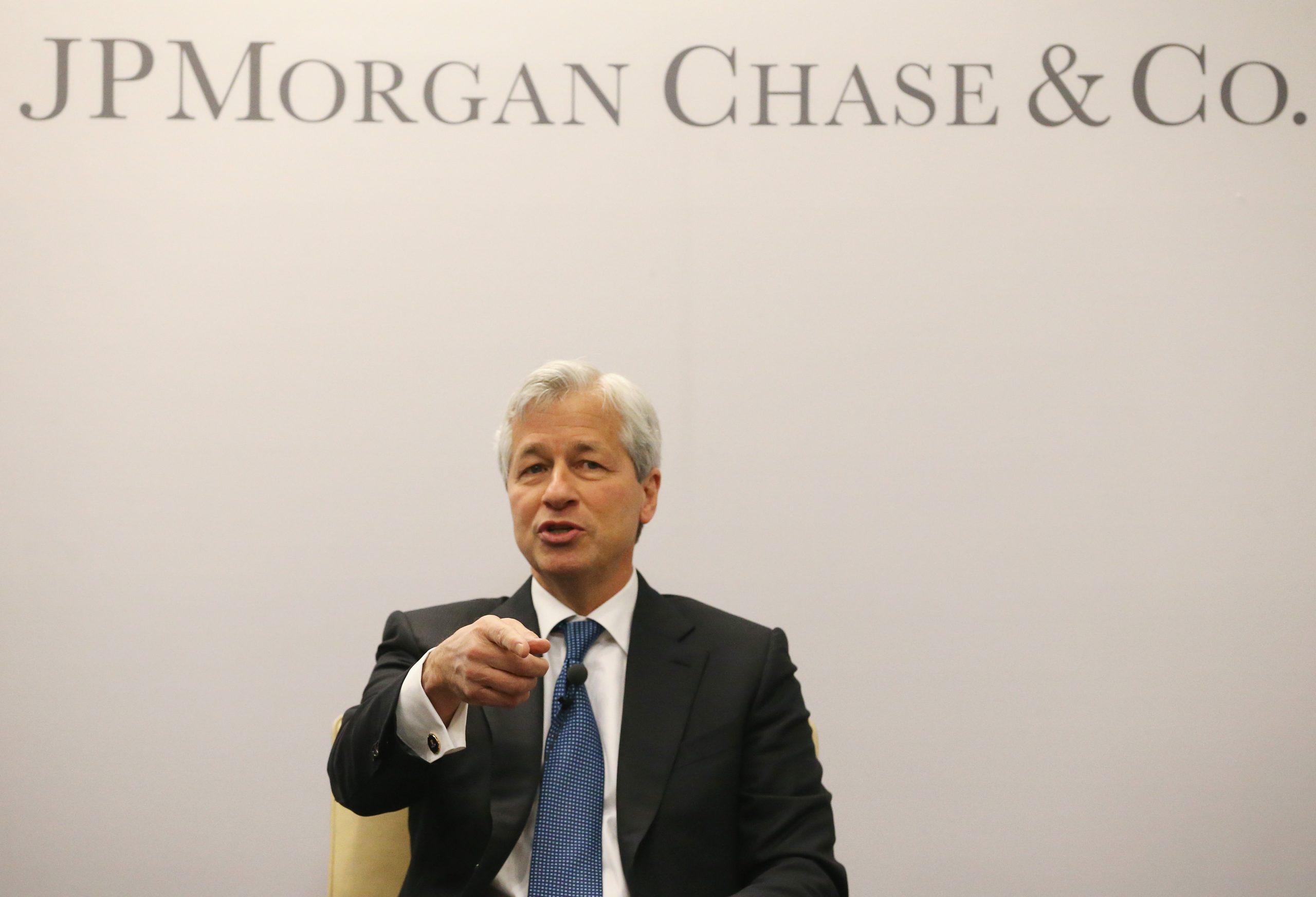
JP Morgan Chase puts contents through its CEO account, it goes viral. But the same content via JPMC account, no one cares (WSJ)

Peter Schiff, a long-time critic of Bitcoin and an outspoken supporter of gold, has dismissed claims that JPMorgan CEO Jamie Dimon is changing his stance on cryptocurrencies.

The misunderstanding followed Dimon’s December 11, 2025, interview on Fox Business, in which he discussed blockchain’s practical uses in traditional finance.

During the interview, Dimon reiterated that blockchain technology is “real” and increasingly effective for moving money. He emphasized that JPMorgan uses blockchain to settle trillions of dollars daily in faster and cheaper ways, particularly through stablecoins pegged to the U.S. dollar.

He also highlighted the bank’s ongoing development of a stablecoin built on the Base network and the tokenization of real-world assets. Despite this, Dimon maintained his skepticism toward Bitcoin, describing it as speculative and separate from enterprise blockchain applications.

JPMorgan’s broader blockchain adoption is reflected in its Onyx platform, which processes more than $1 trillion annually through services like intraday repos and cross-border payments. These systems rely on permissioned blockchain networks—far removed from Bitcoin’s decentralized nature.

Some observers had interpreted Dimon’s praise of blockchain as a softening of his long-standing criticism of Bitcoin. However, Schiff refuted this interpretation, insisting that Dimon’s views on Bitcoin remain unchanged.

He wrote,

“He is talking about stablecoins not Bitcoin. His opinion on Bitcoin has not changed. He still knows it’s a Ponzi.”

According to Schiff, those celebrating Dimon’s remarks as bullish for Bitcoin are misunderstanding the distinction between blockchain as a technological tool and Bitcoin as a decentralized monetary system.

In his response, Schiff stressed that Dimon’s comments were strictly about blockchain infrastructure and stablecoins not Bitcoin. He bluntly stated that Dimon “still knows it’s a Ponzi,” reaffirming the JPMorgan chief’s historical position.

Schiff’s clarification underscores a broader reality in the financial sector: institutional adoption of blockchain technology does not necessarily translate into endorsement of Bitcoin.

Peter Schiff, a prominent economist, gold advocate, and long-time critic of unconventional assets, has remained one of Bitcoin’s most vocal skeptics. Even as cryptocurrencies gain wider acceptance among institutional investors and traditional financial players, Schiff’s opposition has stayed firm.

His criticism is rooted not just in market movements, but in deep-seated economic beliefs that shape how he views money, value, and financial stability. At the core of Schiff’s argument is his belief that Bitcoin lacks intrinsic value. He maintains that, unlike productive assets such as businesses or tangible commodities, Bitcoin does not generate income or serve a fundamental economic function.

According to Schiff, Bitcoin’s price is largely sustained by speculation and the expectation that someone else will be willing to buy it at a higher price in the future, a dynamic he believes is unsustainable over the long term.

Schiff’s long-standing support for gold also plays a central role in his critique. He views gold as “real money,” pointing to its thousands of years of history as a store of value, its physical properties, and its widespread acceptance across cultures and economies. In contrast, he argues that Bitcoin, as a purely digital asset, has not been tested across multiple economic cycles and lacks the historical credibility that gold enjoys.

Outlook

The exchange between Schiff and Bitcoin proponents highlights a broader divide shaping the future of finance. As banks and financial institutions increasingly adopt blockchain infrastructure, stablecoins, and tokenized assets, skepticism toward Bitcoin itself persists among many traditional economists and executives.

For critics like Schiff, institutional blockchain adoption reinforces not weakens the argument that the technology’s value lies in regulated, centralized applications rather than decentralized cryptocurrencies.

Meanwhile, Bitcoin supporters continue to argue that fixed supply, decentralization, and growing global awareness will ultimately validate its role as digital gold.

Gold Surges to Seven-Week High as Safe-Haven Rush Deepens; Silver Breaks New Record

0

Gold pushed to its highest level in nearly two months on Friday, powered by a weaker dollar, growing expectations of additional U.S. interest rate cuts, and a fresh wave of safe-haven appetite linked to economic and geopolitical tension.

Silver extended an extraordinary 2025 breakout, shattering another record and underscoring a year in which industrial metals have outperformed even the most bullish projections.

Spot gold rose 1% to $4,327.31 an ounce by 1248 GMT, its strongest reading since October 21 and enough to secure a 3.1% gain for the week. The U.S. futures market tracked the same trajectory, with contracts climbing 1.2% to $4,363.20.

A softer dollar has been central to gold’s latest move. The U.S. currency drifted near a two-month low and was heading for a third consecutive weekly slide, easing pressure on commodity prices globally and making bullion more attractive for international buyers. The dollar’s retreat has been tied partly to weakening U.S. labor data, including a spike in weekly jobless claims — the largest increase in almost four and a half years. That jump erased the sharp drop seen the previous week and raised doubts about the durability of U.S. labor market resilience.

Market analysts said the labor data injected a new layer of caution into investor sentiment. Zain Vawda of MarketPulse by OANDA described gold’s upward push as a combination of economic nerves and geopolitical unease.

“The sharp rise in U.S. weekly jobless claims as well as U.S.-Venezuela tensions are underpinning gold and keeping haven demand strong,” he said.

The Federal Reserve’s third rate cut of the year — a 25-basis-point reduction announced on Wednesday — added more fuel to the metal’s momentum. Although the Fed signaled a more measured approach to further easing, markets have already priced in two rate cuts for 2026. That expectation, combined with softening labor indicators, has strengthened the appeal of non-yielding assets like gold, which typically benefit when borrowing costs fall and real yields weaken.

Attention now shifts to next week’s U.S. non-farm payrolls report, which is expected to play a critical role in shaping near-term Fed expectations. A weak reading would likely deepen the case for lower U.S. rates and could drive bullion toward an even stronger first quarter in 2026.

A separate support pillar emerged from geopolitical tensions involving Washington and Caracas. The U.S. government is preparing to intercept additional ships carrying Venezuelan oil after seizing a tanker this week. The incident heightened anxiety in energy markets and helped push investors toward traditional hedges. Tense energy corridors have historically generated rapid inflows into gold, especially when traders fear disruptions to oil supply routes or a slide in diplomatic stability.

In Asia, the response to high global prices was visible in physical markets. Indian gold dealers widened discounts this week, even though the country is in the middle of the wedding season, traditionally the strongest period for demand. Buyers have been unwilling to absorb prices at current levels. Demand in China followed a similar path, with elevated spot levels discouraging fresh purchases.

Silver, meanwhile, staged another dramatic climb, touching a new record of $64.56 an ounce before easing slightly to $64.09. The metal is poised for a 10% weekly surge and has more than doubled this year. Industrial consumption has remained the dominant force behind silver’s rise, driven by booming demand from solar panel manufacturers, electric vehicle producers, semiconductor fabrication, and emerging energy-storage technologies.

Global inventories have been sliding for months, tightening supply conditions in key hubs and lifting long-term price projections. Silver’s inclusion on the U.S. critical minerals list earlier this year added institutional weight to its rally, making it far more central to U.S. strategic supply planning.

Ole Hansen of Saxo Bank traced the rally to a blend of real-economy demand, thinning inventory levels, and heavy speculative flows.

“Silver is supported by industrial demand amid fears of shortages, a continued tight market, and the speculative frenzy, mostly from retail investors which has helped drive inflows to Silver ETFs,” he said.

Other precious metals gained altitude as well. Platinum rose 3.2% to $1,750.35, and palladium climbed 2.6% to $1,523.10, putting both metals on track for solid weekly gains after a sluggish first half of the year.

Taken together, gold’s steady climb, silver’s blistering rally, and the broader surge across the complex suggest that investors are positioning for an uncertain 2026. Economic signals from the United States have started to wobble, geopolitical tensions remain unstable, and the Federal Reserve is edging deeper into an easing cycle, even if cautiously.

In that environment, the market has migrated back toward precious metals with a level of conviction that had been absent for months — marking a decisive shift in global trading sentiment as the year draws to a close.

Taiwan’s Tech Stocks Power Toward Record 30,000 as Investors Brush Off Global AI Bubble Fears

0

Taiwan’s tech-heavy equities are showing no signs of fatigue, even as anxiety about overstretched AI valuations dents sentiment in global markets.

The island’s benchmark Taiex is now within striking distance of the symbolic 30,000 mark — a level investors say could be crossed in early 2026 — extending a blistering rally that has nearly doubled the market over three years, Reuters reports.

The surge rides on a simple reality: Taiwan sits at the heart of the global AI supply chain. And local investors, unlike their global counterparts, aren’t second-guessing that advantage.

Foreign funds have spent much of the year worrying about what many see as an overheated AI trade. But at home, Taiwanese investors have doubled down, latching onto what they describe as structural, long-run opportunities that outsiders may be underpricing.

“The momentum is tied to Taiwan’s role as the world’s semiconductor hub,” said Piter Yang, fund manager at Fuh Hwa Securities Investment Trust. “Taiwan is a major beneficiary of the AI market.”

The rally has endured even as geopolitical tension with Beijing simmers — a factor that has historically spooked global money managers. Domestic investors have shrugged off these concerns, focusing instead on earnings, semiconductors, and a pipeline of new AI-related work that continues to swell.

GPUs and TPUs as Taiwan’s dual advantage

One of the main pressure points in global markets has been the question of whether Nvidia can keep its extraordinary dominance in AI computing. Google’s tensor processing units — or TPUs — have emerged as a cheaper alternative for some customers, sparking fears that Nvidia’s revenue curve could flatten.

But in Taiwan, this shift is seen not as a threat, but as a cushion.

Taiwan is deeply embedded in the manufacturing ecosystem behind both Nvidia’s GPUs and Google’s TPUs. That gives the island a rare dual advantage: competition between the two chip standards still funnels orders back to Taiwanese firms.

“Even rising rivalry between chip architectures ends up supporting Taiwan,” one Taipei-based analyst said. “It ensures more design work, more advanced packaging, more manufacturing runs — all of which benefit companies like TSMC.”

TSMC, the world’s top contract chipmaker, remains the center of that ecosystem and the largest single holding in many Asian portfolios. HSBC strategists wrote this month that the average Asian fund has 10 percent of its portfolio concentrated in TSMC — a level they described as “crowded” but consistent with the chipmaker’s unmatched influence.

Unlike the Nasdaq or Japan’s Nikkei, Taiwan’s market has not seen a valuation blowout. The Taiex trades at a price-to-earnings ratio of about 21 — elevated, but relatively stable given the scale of gains.

“We are not worried about an AI bubble,” said Li Fang-kuo, chairman of the securities investment arm of Uni-President. “We are comfortable with where the valuations stand.”

Li pointed to healthy earnings from Taiwan’s leading chip and component makers and contrasted them with the dot-com era, when many companies had little revenue and almost no profits.

“Several of the ‘magnificent seven’ in the U.S. have gross margins of 70% or above. It’s not comparable to 2000,” he said.

Goldman Sachs echoed that view. “The current industry context does not constitute a full-fledged bubble,” their strategists said in a recent report. Goldman remains overweight tech and predicts hyperscaler capital expenditure will soar to $552 billion in 2026 and $644 billion in 2027 — a flood of investment that feeds directly into Taiwanese supply chains.

Local investors powering the rally as foreign money flees

For all the optimism, foreign money has been heading for the exit. Overseas investors have dumped a net T$533.8 billion ($17 billion) of Taiwanese stocks this year, after T$695.1 billion in net outflows in 2024.

The outflows reflect caution over trade friction, profit-taking after huge gains in past years, and soft concerns about a slowdown in global AI hardware profitability.

But domestic investors have more than made up the difference. Taiwanese funds, retail investors, pension vehicles, and insurance firms have poured billions into equities, especially semiconductor and AI-related names.

“Sentiment at home remains strong,” said one Taipei-based strategist. “Local investors see Taiwan’s ecosystem as irreplaceable.”

Kieron Kader, associate portfolio manager at London-based Alquity, agreed: “The ecosystem’s proximity to TSMC creates a competitive moat that is very difficult to replicate.”

Why analysts still expect more upside

The Taiex is up 22 percent in 2025, matching the Nasdaq’s performance. It trails South Korea’s Kospi, Hong Kong’s Hang Seng, and Japan’s Nikkei — three markets that have enjoyed surges driven by corporate reforms and region-specific catalysts — but analysts argue Taiwan’s rally is built on more durable long-term foundations.

Goldman expects the index to reach about 30,200 over the next 12 months — roughly 7 percent above current levels — fueled by AI servers, advanced packaging, high-end semiconductors, and a steady expansion in hyperscaler orders.

Uni-President’s Li sees the 30,000 mark being crossed in the first half of 2026, led by heavyweights such as TSMC, Foxconn, Elite Material, and other component manufacturers tied into AI computing demand.

“Looking ahead to 2026, the structural demand story around AI and high-end semiconductors remains intact,” said Gina Kim, portfolio manager for emerging markets at Nordea Asset Management. “This points to continued long-term strength.”

Analysts acknowledge risks — including potential pressure on AI hardware margins if customers shift from high-end chips to cheaper alternatives, and any major escalation in U.S.–China tension. Some also warn that heavy reliance on a handful of companies leaves Taiwan vulnerable if demand cycles turn.

Even so, the strength of current order books, the scale of 2026–27 hyperscaler spending projections, and Taiwan’s position as a manufacturing and packaging powerhouse leave most investors confident the rally still has room to run.

In short, global markets may be debating whether the AI boom is too hot to handle. In Taiwan, investors are leaning the other way — betting that the next leg of growth in the global AI economy will still run through the island.

Inside Nvidia’s Blackwell Rollout at Microsoft: Internal Email Flags “Wasteful” Cooling as AI Data Center Demands Surge

0

As Nvidia races to deploy its most powerful GPUs into Microsoft’s global data-center network, an internal note from early fall shows that the rollout hasn’t been entirely seamless.

In the email, an Nvidia Infrastructure Specialists (NVIS) team member questioned whether Microsoft’s cooling strategy at one facility was “wasteful,” underscoring the mounting resource pressures tied to the AI boom.

The observation came during the installation of GB200 Blackwell servers supporting OpenAI workloads — a reminder of how intertwined Nvidia, Microsoft, and OpenAI have become as the global AI arms race accelerates.

Nvidia announced its Blackwell architecture in March 2024, touting it as roughly twice as powerful as the preceding Hopper generation. The GB200 series was the first wave of Blackwell systems shipped to hyperscalers, followed now by the newer GB300 generation already making its way into top-tier data centers.

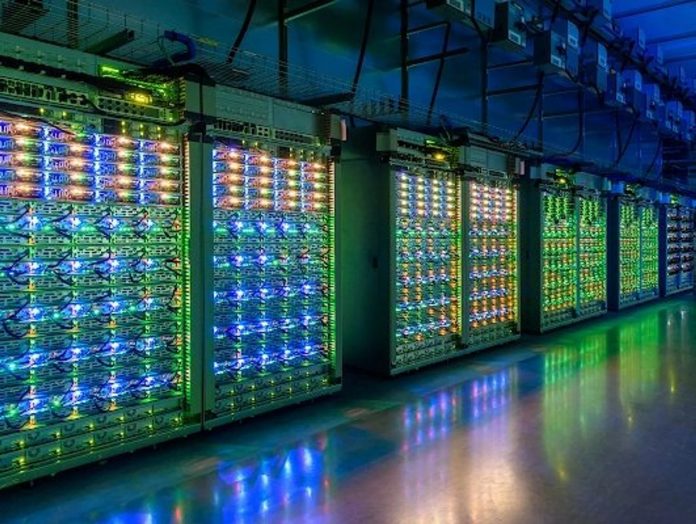
The email described the setup of two GB200 NVL72 racks — each holding 72 GPUs — installed for OpenAI via Microsoft’s cloud infrastructure. Given the extreme heat density created by these multi-GPU clusters, Nvidia’s systems rely on liquid cooling inside the racks. But a second facility-wide cooling layer is still required to expel the heat, and this is where the Nvidia staffer raised concerns.

Microsoft’s approach “seems wasteful due to the size and lack of facility water use,” the Nvidia employee wrote, though the note acknowledged that the design offered flexibility and fault tolerance.

Shaolei Ren, an associate professor of electrical and computer engineering at the University of California who studies data-center resource use, offered context consistent with the internal critique. He said the Nvidia staffer was likely referring to the building-level cooling stage. In some facilities, Microsoft uses an air-based system at this second stage rather than a water-based one.

“This type of cooling system tends to be using more energy,” Ren said, “but it doesn’t use water.”

Ren added that operators face a “trade-off” between water use and energy consumption. Air cooling consumes more power, but it avoids the public pushback that often comes with heavy water usage — now one of the most sensitive environmental issues facing hyperscalers and AI developers around the world.

Microsoft confirmed that the installation used a closed-loop liquid cooling heat exchanger inside an air-cooled facility.

“Microsoft’s liquid cooling heat exchanger unit is a closed-loop system that we deploy in existing air-cooled data centers to enhance cooling capacity,” a spokesperson told Business Insider.

The company said the hybrid approach allows it to scale AI infrastructure using its existing footprint while maintaining efficient heat dissipation and “optimizing power delivery to meet the demands of AI and hyperscale systems.”

The debate around cooling is no longer technical background noise — it is central to the politics and environmental footprint of AI expansion. In regions from Europe to the American Southwest, community groups and local governments have pushed back against hyperscale data centers over water use, energy intensity, and strain on local grids. Ren noted that companies weigh energy costs, water costs, and “publicity cost” in deciding which cooling strategy to adopt.

Microsoft insists it remains on track to meet its self-imposed 2030 goals to become “carbon negative, water positive, and zero waste.” It has also announced a “zero-water” cooling design for future facilities, along with advances in on-chip cooling intended to reduce thermal load at the processor level.

The Nvidia memo, while flagging cooling as an area of inefficiency, also described common early-deployment challenges. Blackwell’s first large-scale rollouts require close coordination between Nvidia and hyperscaler staff, and the email said on-site support was critical. Validation documentation needed extensive rewriting, and handover processes between Microsoft and Nvidia “required a lot more solidification.”

Still, the note suggested that Nvidia’s production hardware quality has improved significantly from the early qualification samples customers received before the formal launch. Both NVL72 racks deployed at the facility achieved a 100% pass rate on compute performance tests.

Nvidia, in its public response, said Blackwell systems “deliver exceptional performance, reliability, and energy efficiency” and that companies such as Microsoft have already deployed “hundreds of thousands” of GB200 and GB300 NVL72 systems.

The episode offers a glimpse into the intense, resource-hungry infrastructure race beneath today’s AI boom. Nvidia is under pressure to deliver chips fast enough. Microsoft is under pressure to build cooling and power capacity fast enough. And the entire industry is under pressure to justify its environmental footprint as AI workloads grow at a pace no one predicted even three years ago.

The friction is almost inevitable. Blackwell is far more powerful — and far more thermally demanding — than anything that came before it. As deployments scale into the hundreds of thousands, cooling will remain one of the most contested, expensive, and politically sensitive aspects of the AI infrastructure buildout.

And if the industry’s trajectory is any guide, the next-generation chips coming after Blackwell will only intensify that battle.