

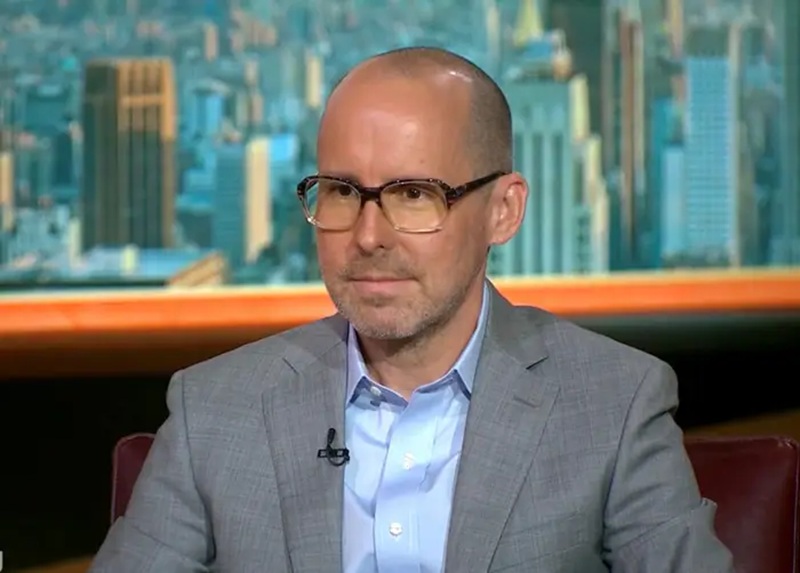
Spitznagel argues markets are still climbing toward a euphoric peak, even as the foundations for what he sees as a once-in-a-century collapse quietly harden.
Mark Spitznagel, the founder and chief investor of Universa Investments, says investors should brace for a paradoxical sequence: a powerful surge in stock prices, followed by what he believes could be the most severe market crash since the Great Depression.
Spitznagel, who runs one of Wall Street’s best-known “Black Swan” or tail-risk hedge funds, said equities are still in the late stages of a speculative blow-off that has been building for years. In an email to Business Insider, he said he has been waiting “for over three years” for this final phase to play out before markets “march off a cliff.”
“That blow-off is still in process,” he said, adding that it will “probably culminate in the months ahead.”
Register for Tekedia Mini-MBA edition 20 (June 8 – Sept 5, 2026).
Register for Tekedia AI in Business Masterclass.
Join Tekedia Capital Syndicate and co-invest in great global startups.
Register for Tekedia AI Lab.
Universa’s investment strategy is built around protecting portfolios against rare but devastating market events, the kind of crashes that most conventional risk models underestimate. The firm rose to prominence during periods of extreme stress, including the 2008 financial crisis and the Covid-19 market shock, when its hedges paid off as markets imploded. Nassim Nicholas Taleb, author of The Black Swan, serves as the firm’s scientific adviser and has long argued that financial systems are far more fragile than they appear during boom periods.
Spitznagel’s current outlook reflects that philosophy. He says the forces driving markets higher are real, but dangerously one-sided. The excitement around artificial intelligence, expectations of interest-rate cuts, and unprecedented levels of government spending have combined to push asset prices higher with only brief interruptions. Valuations, in his view, have become untethered from underlying economic resilience.
He describes himself as a long-term believer in AI’s transformative power, but cautions that technological breakthroughs do not immunize markets from speculative excess. Asset bubbles, he said, tend to develop their own momentum, separate from the genuine value of the innovation at their core.

“Asset bubbles have a hype that is independent of the underlying idea,” Spitznagel said, suggesting that even legitimate technological revolutions can become vehicles for financial overreach.
Gold, which has surged to record highs, is also part of that dynamic. While Spitznagel sees the precious metal as an important long-term store of value, he expects it to suffer sharp losses when broader risk assets eventually unwind. In a January letter to Universa’s investors, he warned that gold, like cryptocurrencies, has recently behaved more like a speculative trade than a defensive hedge.
“I remain a believer in gold’s long-term thesis,” he wrote, “but I expect it to fall precipitously alongside other risk assets when the turn comes.”

Spitznagel outlined what he called a “Goldilocks zone” for markets in the near term: inflation and interest rates easing, economic growth slowing but not collapsing, and investor sentiment tipping from confidence into outright euphoria. That combination, he argued, would set the stage for a final surge in equities before the reckoning.
He used stark imagery to describe what he believes follows next. As the Goldilocks market peaks, he said, “Papa Bear arrives for the historic bust that is logically to follow,” bringing an end to what he has labelled “the greatest bubble in human history.”
His warnings echo those of other high-profile investors who have been cautioning about excess for years. Michael Burry, made famous by The Big Short, and veteran strategist Jeremy Grantham of GMO have both argued that markets are dangerously overvalued and vulnerable to a sharp reset. Yet those predictions have repeatedly been challenged by the market’s resilience and by investors who see AI-driven productivity gains as a structural support for higher valuations.
Optimists such as Ross Gerber and Kevin O’Leary argue that the current cycle is fundamentally different, with AI acting as a genuine growth engine rather than a speculative fad. From that perspective, elevated valuations reflect future earnings power rather than irrational exuberance.
Spitznagel remains unconvinced. For him, the defining risk is not whether growth exists, but whether the financial system can absorb shocks after years of leverage, stimulus, and risk-taking. His message to investors is not to shun rallies, but to recognize that the most dangerous phase of a bubble often comes at the end, when confidence is highest, and protection is most neglected.
If his thesis proves correct, the coming months could deliver strong gains for those still riding the rally, followed by losses that reshape portfolios, markets, and assumptions about risk for a generation.