

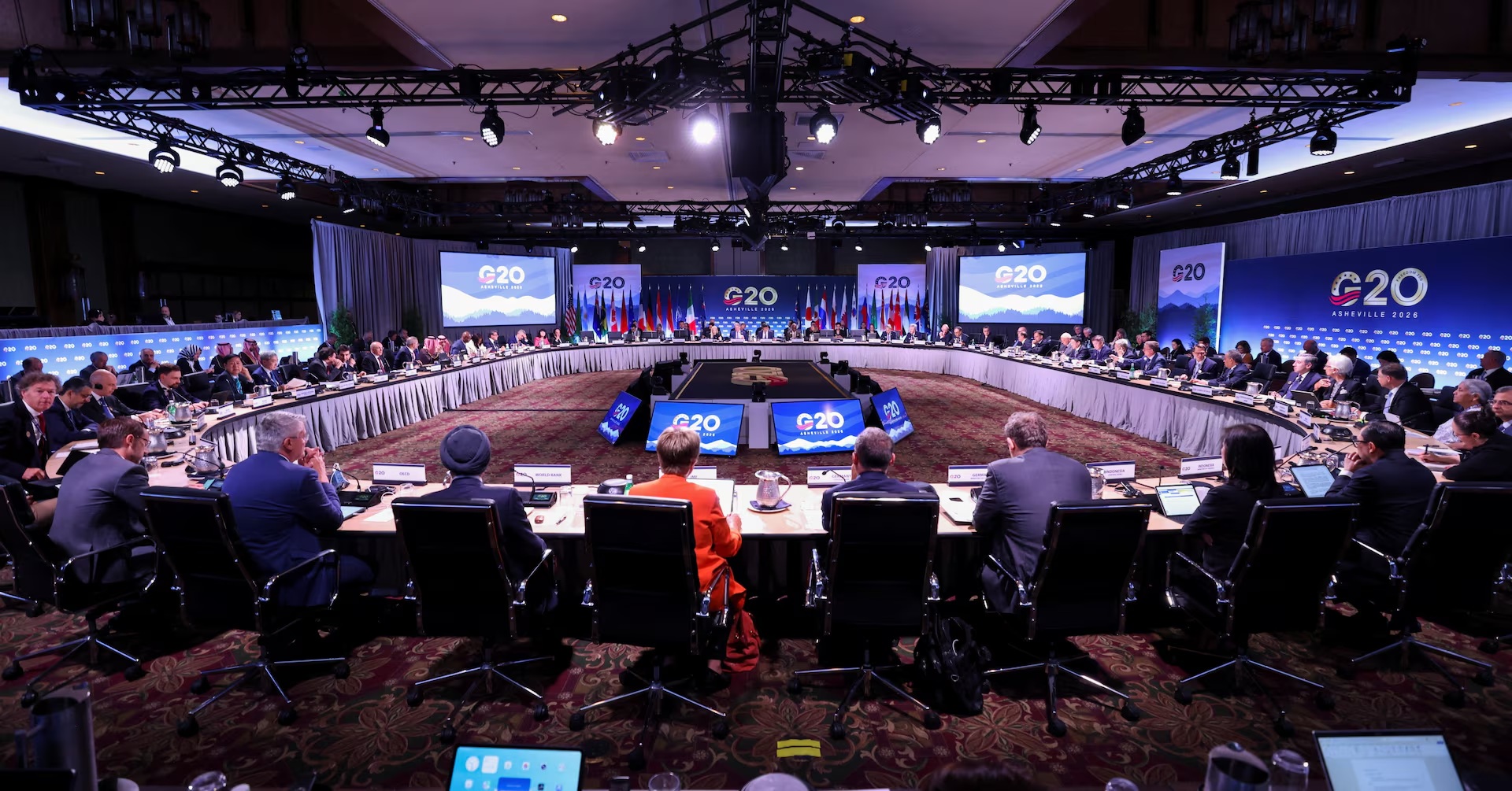
The global economy is entering a more complicated phase, where geopolitical fragmentation and financial-market stress are increasingly reinforcing one another.
This week offered a stark demonstration of that reality as divisions among the world’s largest economies became visible at a G20 finance meeting while government bond markets simultaneously came under intense pressure across major economies.
The US-hosted G20 finance meeting ended without a joint communiqué, highlighting the difficulty of achieving consensus among countries facing increasingly different economic and strategic priorities.
China rejected proposed language concerning “non-market policies,” reflecting longstanding disagreements over state intervention, industrial policy and the role of government in economic activity.
Register for the next Tekedia Mini-MBA.
Register for Tekedia AI in Business Masterclass.
Join Tekedia Capital Syndicate and co-invest in great global startups.
European objections also prevented Russia’s finance minister from appearing in the traditional group photograph, underscoring how geopolitical tensions continue to shape even forums designed for economic cooperation.
The significance extends beyond diplomatic symbolism. The G20 was established in part to provide a platform where major economies could coordinate during periods of financial instability.
Its inability to produce a unified statement suggests that the international system has become more fragmented precisely when coordinated responses may be most necessary.
At the same time, bond markets delivered another warning signal. UK long-term borrowing costs climbed to a 28-year high, while benchmark government bond yields in the United States and Germany reached multi-year highs.

Japan’s 10-year yield moved above 3% for the first time since 1996. The simultaneous rise in borrowing costs across these major economies suggests that the pressure is not isolated to one country’s fiscal position or monetary policy.
Higher government bond yields matter because they represent the cost of financing for states and influence borrowing conditions throughout the economy.
When yields rise sharply, governments face larger interest expenses, while households and businesses can also encounter higher borrowing costs. For highly indebted economies, sustained increases can create difficult fiscal choices between spending, taxation and debt management.
The Japanese move is particularly important because Japan spent decades operating with exceptionally low interest rates and subdued bond yields. A sustained transition toward higher yields could therefore represent a structural change in global capital markets.

Japanese investors have historically played an important role in international bond markets, and changing domestic returns could influence where capital is allocated globally. The US and Germany face different economic circumstances.
But rising yields in both markets point toward a broader repricing of sovereign debt. Investors may be demanding greater compensation for inflation risks, fiscal deterioration, economic uncertainty or the prospect that interest rates will remain elevated for longer than previously expected.
This creates an uncomfortable feedback loop. Geopolitical fragmentation can increase uncertainty and encourage governments to pursue strategic industrial policies, defense spending and supply-chain restructuring.
Those policies can require greater public expenditure, potentially adding to fiscal pressures. At the same time, higher bond yields make financing that expenditure more expensive. For financial markets, the combination is particularly important.
Equities, cryptocurrencies and other risk assets are sensitive to changes in liquidity and interest rates. A sustained bond-market selloff can therefore tighten financial conditions even without a conventional recession.
The deeper message from this week is that the global economy is not merely slowing or accelerating in a conventional cycle. It is being reorganized. Political rivalry, fiscal pressures, changing monetary regimes and shifting capital flows are converging at the same time.
The absence of G20 consensus and the simultaneous bond-market rout illustrate the same underlying problem: the institutions and assumptions that supported global economic coordination are under increasing strain.
For investors, policymakers and businesses, that means volatility may become less of an exception and more of a defining feature of the new global economic landscape.