

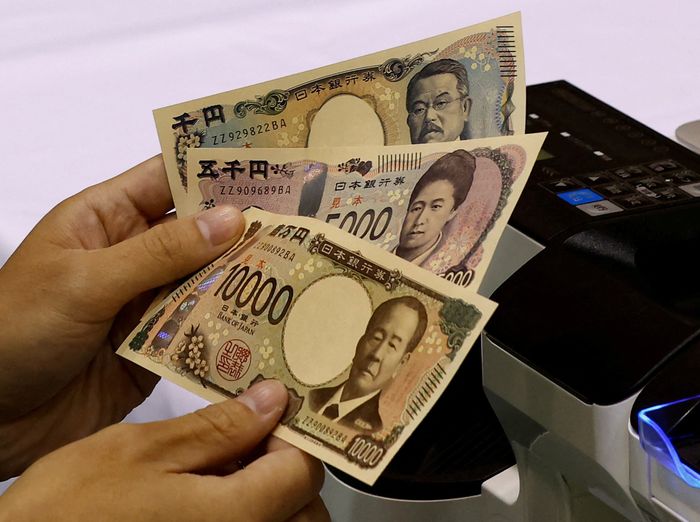
The Japanese yen surged to a one-month high against the U.S. dollar on Thursday as traders increased bets on further Bank of Japan interest-rate hikes and weighed the possibility that Tokyo could intervene again to support the currency.
The yen climbed more than 1% against the dollar, reaching ¥156.15, its strongest level since Aug. 3, according to LSEG data. It was trading around ¥156.40 per dollar at 6:20 a.m. ET and also strengthened against the euro and British pound.
The move marks a sharp reversal from earlier in the week, when the yen breached the psychologically important ¥160-per-dollar threshold. That level has become a key focus for markets because sustained weakness beyond it could increase pressure on Japanese authorities to act.
Register for the next Tekedia Mini-MBA.
Register for Tekedia AI in Business Masterclass.
Join Tekedia Capital Syndicate and co-invest in great global startups.
Atsushi Mimura, Japan’s vice finance minister for international affairs, said Thursday that authorities were “neither satisfied nor reassured” by recent currency moves and remained “on a state of heightened alert,” according to Reuters.
His comments bolstered the perception that Tokyo is closely monitoring the yen and could respond if movements become excessively rapid or disorderly.
Intervention or Rate-Hike Repricing?
Thursday’s rally followed a similar roughly 1% jump in the yen on Wednesday, prompting speculation that Japanese authorities might have intervened in the foreign-exchange market.

Japan has already demonstrated its willingness to deploy substantial resources to support the currency. The Finance Ministry said the country spent a record ¥15.4 trillion, equivalent to about $98 billion, on yen-buying intervention between July 30 and Aug. 26.
The United States also confirmed its participation in a coordinated effort at the end of July, using foreign-currency holdings to purchase yen. Washington has not disclosed the exact amount, although a Reuters photograph of U.S. Treasury Secretary Scott Bessent’s July 31 notepad appeared to reference a plan to buy between $5 billion and $10 billion of yen.
Bessent said Monday that he expected the Japanese government and BOJ to take measures that would strengthen the yen. He has also privately urged Japanese officials to provide clearer communication about the country’s interest-rate trajectory, according to local media reports.

Yet analysts remain divided over whether the latest yen surge represents another intervention.
Takuji Okubo, chief economist at Japan Macro Advisors, said it was “possible” that Thursday’s move reflected intervention, but argued that the more likely explanation was a market reassessment of the BOJ’s policy outlook following recent comments from Governor Kazuo Ueda.
“I do not think [the Ministry of Finance] has done this kind of small stealth intervention in recent history,” Okubo said. “So it is probably just a reaction to BOJ Governor Ueda’s comment cementing the high likelihood of a BOJ rate hike in September.”
ING’s global head of markets, Chris Turner, also questioned whether Wednesday’s move was intervention, pointing to the absence of significant disruption in electronic foreign-exchange matching systems at the time.
But a sustained appreciation driven by monetary policy would be fundamentally different from a temporary move engineered by government purchases of yen.
The BOJ’s next policy meeting is scheduled for Sept. 18, and markets are increasingly pricing the possibility of another rate increase.
BOJ board member Hajime Takata said Wednesday that the central bank should raise rates “nimbly” in response to rising inflation, suggesting policymakers could move faster or make larger adjustments than the roughly semiannual pace seen recently.
Ueda also left the door open to higher rates in comments on Tuesday.
The BOJ’s dilemma is becoming more acute. A weak yen raises the cost of imported energy, food and other goods, potentially keeping inflation elevated. A stronger currency, by contrast, can ease imported inflation but could weigh on exporters and economic activity. The prospect of higher Japanese rates is therefore becoming an increasingly powerful force in the foreign-exchange market because it narrows the interest-rate differential between Japan and the United States.
For years, the yen was heavily used to finance so-called carry trades, in which investors borrowed cheaply in Japan and invested in higher-yielding assets overseas. As Japanese rates rise and the potential return from holding dollars declines relative to the cost of funding in yen, some of those positions become less attractive and can be unwound, creating additional demand for the Japanese currency.
Yen Weakness Is Also A Treasury-Market Issue
The implications extend well beyond Japan’s currency market. Japanese investors are the largest foreign holders of U.S. Treasury securities, with roughly $1.1 trillion of U.S. government debt on their books as of June, according to the U.S. Treasury.
Analysts say a prolonged period of yen weakness could encourage Japanese investors to reduce overseas holdings or increase currency hedging, potentially affecting demand for U.S. government debt. Conversely, a stronger yen could make foreign assets more expensive for Japanese investors in yen terms and alter the attractiveness of U.S. Treasury investments.
That makes the yen an important transmission channel between Japanese monetary policy and global bond markets. The issue is particularly significant while global government bond yields are already elevated. Investors are assessing the combined impact of inflation, large fiscal deficits, heavy government borrowing and divergent central-bank policies.
Japanese government bond yields eased Thursday following a solid auction of 30-year debt, offering some relief after a sharp sell-off in longer-dated bonds.
Japan’s bond market has faced pressure as investors assess the government’s fiscal position and the scale of spending expected under its 2027 budget. Higher long-term yields can increase borrowing costs for the Japanese government while also making domestic bonds more attractive relative to foreign assets.
The interaction between currency, interest rates and government bonds is therefore becoming more relevant. Economists note that if the BOJ raises rates and Japanese bond yields continue climbing, domestic investors may have greater incentives to keep capital at home. That could support the yen while potentially reducing Japanese demand for overseas bonds, including U.S. Treasuries.
Deutsche Bank analysts said markets were also watching the possibility of intervention during thin trading conditions around Japan’s “Silver Week” holidays, which could amplify currency movements.
Fed Policy Limits The Yen’s Upside
The yen’s rally nevertheless faces an important counterforce: U.S. interest rates. Markets have recently increased expectations for another Federal Reserve rate hike this month following hawkish comments from Fed Chair Kevin Warsh. Higher U.S. rates would preserve a substantial yield advantage for dollar-denominated assets, limiting how far the yen can strengthen without a more decisive shift from the BOJ.
Turner said a sustained yen recovery would probably require a significantly more hawkish BOJ as well as new measures designed to encourage domestic investment in Japan.
The result is a three-way contest between monetary policy, government intervention and capital flows.
Tokyo can intervene directly in foreign-exchange markets, but intervention alone is unlikely to produce a durable change in the yen’s underlying trend if the interest-rate differential with the United States remains wide. A credible BOJ tightening cycle, meanwhile, could strengthen the currency more sustainably by changing the economic incentives behind global capital flows.
For investors, the ¥160 threshold may therefore remain less important than what happens after it, according to economic experts. They believe that if the yen continues strengthening toward ¥155 and below without intervention, it would suggest that expectations of higher Japanese rates are increasingly driving the market. If the currency repeatedly approaches ¥160 and then experiences abrupt rallies, speculation about official intervention is likely to remain intense.
The Sept. 18 BOJ meeting has consequently become a critical event for global markets, with the yen, Japanese government bonds and potentially U.S. Treasuries all exposed to the central bank’s next move.