

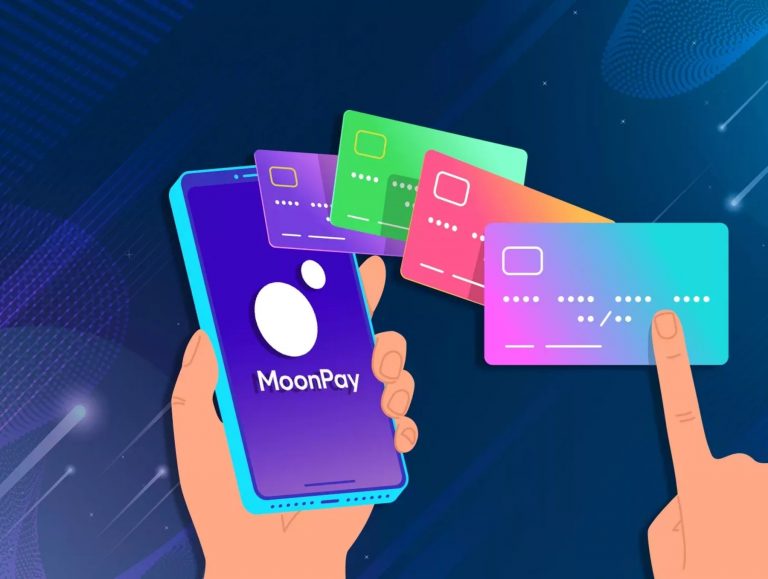
The convergence of artificial intelligence and decentralized finance has taken a tangible leap forward with the introduction of the MoonAgents Card by MoonPay. This development enables autonomous agents to spend USDC on the Solana network anywhere Mastercard is accepted.
What once sounded like a speculative vision—machines participating directly in economic activity—has now entered a practical phase, reshaping how value moves in a digitally native economy. Stablecoins like USDC have long promised frictionless, borderless payments, but their usability has largely remained confined within crypto-native environments.
By bridging Solana-based USDC with Mastercard’s global merchant network, MoonPay effectively dissolves one of the biggest barriers in crypto adoption: the gap between on-chain assets and off-chain commerce. The significance is not merely technical—it is structural. It allows digital capital to flow seamlessly into everyday transactions, from retail purchases to service payments, without requiring manual conversion or intermediaries.
What makes the MoonAgents Card particularly compelling is its focus on autonomous agents. These are not just passive wallets or payment tools; they are programmable entities capable of executing predefined tasks, making decisions, and now, conducting financial transactions. This introduces a new paradigm where AI-driven agents can operate as economic participants.
Register for the next Tekedia Mini-MBA.
Register for Tekedia AI in Business Masterclass.
Join Tekedia Capital Syndicate and co-invest in great global startups.
For instance, an agent could manage subscription services, pay for APIs, execute trading strategies, or even handle logistics payments—all in real time and without human intervention. By granting agents the ability to spend, we are effectively embedding financial agency into software. This transforms how businesses and individuals might interact with digital systems. Instead of manually approving every transaction, users can delegate spending authority to intelligent agents governed by rules, budgets, and objectives.
The result is a more dynamic and responsive financial layer, where transactions occur at machine speed and scale. Solana’s role in this ecosystem is also critical. Known for its high throughput and low transaction costs, it provides the infrastructure necessary for frequent, micro-scale transactions that autonomous agents are likely to generate.
Traditional payment rails would struggle to support such volume efficiently, but Solana’s architecture makes it viable. When paired with USDC’s price stability, the combination becomes particularly suited for real-world commerce, where predictability and speed are essential.
Mastercard’s involvement adds another layer of legitimacy and reach. With millions of merchants globally, its network ensures that this innovation is not limited to niche use cases. Instead, it plugs directly into the existing financial system, allowing crypto-native value to be spent in familiar environments. This hybridization of decentralized and centralized systems may well define the next phase of financial evolution.

However, this shift also raises important questions. Granting spending power to autonomous agents introduces new dimensions of risk, particularly around security, governance, and accountability. Who is responsible if an agent misbehaves or is exploited? How are spending limits enforced, and what safeguards exist against malicious code? These concerns highlight the need for robust frameworks that combine cryptographic security with intelligent oversight.
Ultimately, the MoonAgents Card represents more than just a payment tool—it is a signal of where the digital economy is heading. As AI agents become more capable and crypto infrastructure more integrated, the line between human and machine participation in markets will continue to blur. Financial autonomy will no longer be exclusive to individuals and institutions; it will extend to software entities operating with precision, speed, and independence.
In this emerging landscape, the ability for agents to spend USDC anywhere Mastercard is accepted is not just a feature—it is a foundational shift. It marks the beginning of an economy where machines are not just tools, but active participants, transacting value in a system designed for both humans and algorithms alike.
