

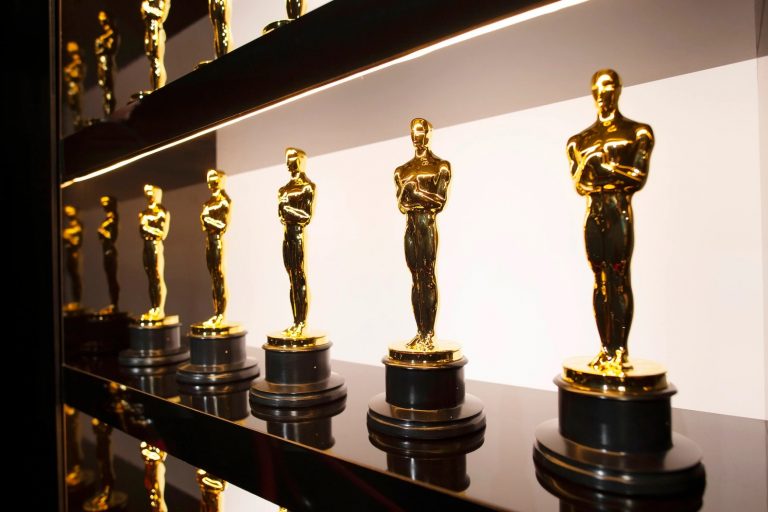
The decision to restrict and ban AI-generated content from major film awards like the Oscars is less about a simple rejection of technology and more about a deeper anxiety within the creative industries. It raises a fundamental question: if artificial intelligence cannot compete on equal footing, is it because it lacks something essential—often described as soul—or because it threatens to redefine what that very concept means.
Cinema has always been understood as a profoundly human art form. Films are not merely sequences of images but expressions of lived experience—of memory, emotion, struggle, and imagination shaped by consciousness. When audiences speak of a film having soul, they are often pointing to an intangible authenticity: the sense that a story emerges from human vulnerability and intention.
AI, by contrast, operates through pattern recognition, probabilistic modeling, and training data derived from existing works. It does not experience grief, joy, or desire; it simulates their expression based on what it has learned. From this perspective, the argument that AI lacks soul is compelling. It produces outputs without inner life, without stakes, and without the existential grounding that defines human creativity.
However, this explanation alone is insufficient. After all, many tools used in filmmaking—from CGI to editing software—do not possess soul, yet they are widely accepted. The difference lies not in the absence of humanity within the tool, but in the degree of authorship it assumes. AI systems are increasingly capable of generating scripts, performances, and even directorial decisions with minimal human intervention. This shifts them from being instruments of creativity to potential creators themselves.
Register for the next Tekedia Mini-MBA.
Register for Tekedia AI in Business Masterclass.
Join Tekedia Capital Syndicate and co-invest in great global startups.
The discomfort arises not because AI cannot create meaningful work, but because it might. This is where the notion of threat becomes more salient. AI challenges long-standing assumptions about originality, ownership, and labor in the arts. If a machine can generate a screenplay indistinguishable from one written by a human, what happens to the value we assign to human effort? If performances can be synthesized, what becomes of actors?
The resistance from institutions like the Oscars may therefore be less about preserving artistic purity and more about safeguarding the economic and cultural structures built around human creators. There is also a philosophical dimension to this tension. Art has historically been one of the last domains where human uniqueness seemed unquestionable.
The rise of AI erodes that boundary, forcing a reconsideration of what creativity actually entails. If creativity is defined as recombination and reinterpretation of existing ideas, then AI is already participating in it. But if it is defined by intention, consciousness, and subjective experience, then AI remains fundamentally outside it. The debate over AI in the Oscars is, in many ways, a proxy for this unresolved question.
The exclusion of AI-generated content is not a definitive judgment on its capabilities but a reflection of a transitional moment. It signals an industry grappling with rapid technological change and attempting to draw lines before those lines become impossible to enforce. Whether AI lacks soul or threatens it depends largely on how one defines both terms. What is clear, however, is that the conversation is far from settled, and the boundaries between human and machine creativity will continue to blur in the years ahead.
