

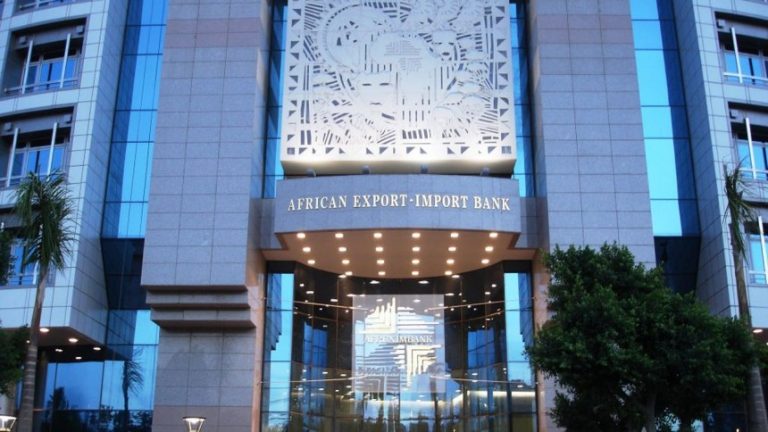
The African Export-Import Bank has closed its biggest syndicated borrowing ever, securing $2 billion in a three-year dual-currency facility that drew oversubscribed demand from 31 international lenders even as the Iran war roils energy markets and clouds Africa’s growth outlook.
The deal, signed March 9 and announced Monday, was originally shopped at roughly $1.5 billion but pulled in commitments topping $2.36 billion. Bank officials ultimately capped it at the $2 billion mark. The package splits into a $1.73 billion U.S. dollar tranche and a 228 million euro portion, with proceeds earmarked for refinancing existing debt and general corporate purposes.
Chandi Mwenebungu, the bank’s managing director for treasury and markets and group treasurer, called the outcome a powerful vote of confidence.
Register for Tekedia Mini-MBA edition 20 (June 8 – Sept 5, 2026).
Register for Tekedia AI in Business Masterclass.
Join Tekedia Capital Syndicate and co-invest in great global startups.
Register for Tekedia AI Lab.
“This transaction is the largest ever syndicated facility borrowing by Afreximbank,” he said. “It is a clear demonstration of the global investors’ confidence in the Bank’s credit story. This, clearly, affirms the Bank’s robust and undisputed access to international markets.”
Mashreqbank, MUFG, and Standard Chartered ran the books as joint global coordinators, with Standard Chartered also serving as facility and documentation agent. Lenders came from across Europe, the Middle East, Asia, and Africa — a broad geographic spread that underscores the bank’s ability to tap diverse capital pools.
The raise lands just as the African Development Bank warns that a prolonged Iran conflict could shave as much as 1.5 percentage points off continental growth if the Strait of Hormuz remains disrupted beyond six months.

AfDB chief economist Kelvin Urama, launching the 2026 Macroeconomic Performance and Outlook report on Monday, said even a three-month flare-up would trim growth by 0.2 points, compounding already heavy debt-service burdens, falling foreign investment, and shrinking aid flows.
Yet the AfDB held its baseline forecasts at 4.3 percent for 2026 and 4.5 percent for 2027, describing the outlook as “broadly stable” but with risks clearly skewed to the downside.
For Afreximbank, the continent’s premier trade-finance institution, the fresh liquidity arrives at a moment when it is being asked to do more with less. The bank exists to bridge the chronic financing gaps that commercial markets ignore, channeling funds into intra-African trade, export development, and industrial projects under the African Continental Free Trade Area. With global supply chains fragmenting and energy costs climbing, that mandate has rarely felt more urgent.

The deal also comes against the backdrop of last year’s very public break with Fitch Ratings. In June 2025, the agency downgraded Afreximbank’s long-term rating to BBB- with a negative outlook, prompting the bank to end the relationship. Officials, including group chief economist Yemi Kale, have long argued that such assessments rely on models ill-suited to multilateral development banks and unfairly penalize African institutions despite solid fundamentals and counter-cyclical performance during the pandemic and earlier commodity shocks.
That the facility is oversubscribed and attracted top-tier arrangers suggests many global banks continue to price Afreximbank’s credit story on their own terms. The bank’s track record of timely repayments, strong capitalization, and pan-African mandate appears to carry more weight with lenders than any single rating agency’s verdict.
In practical terms, the $2 billion provides Afreximbank with additional dry powder to keep trade flowing at a time when many African economies face higher import bills for fuel and fertilizer and tighter dollar liquidity. It also signals to other African multilateral institutions that diversified, syndicated funding remains accessible even amid geopolitical turbulence.
Analysts believe the oversubscribed deal sends a clear signal: at least some deep-pocketed investors continue to see value in backing the institutions that keep African trade moving.