

In the United States, the adoption of artificial intelligence has hit a record pace, but has failed to translate into greater public confidence in the technology. A new survey from the Pew Research Center reveals that while nearly half of U.S. adults now use chatbots, only a small minority believe the technology will ultimately benefit society.
The findings highlight the widening gap between AI’s rapid integration into daily life and persistent public concerns about its long-term consequences, ranging from job displacement and privacy risks to inadequate oversight and corporate accountability.
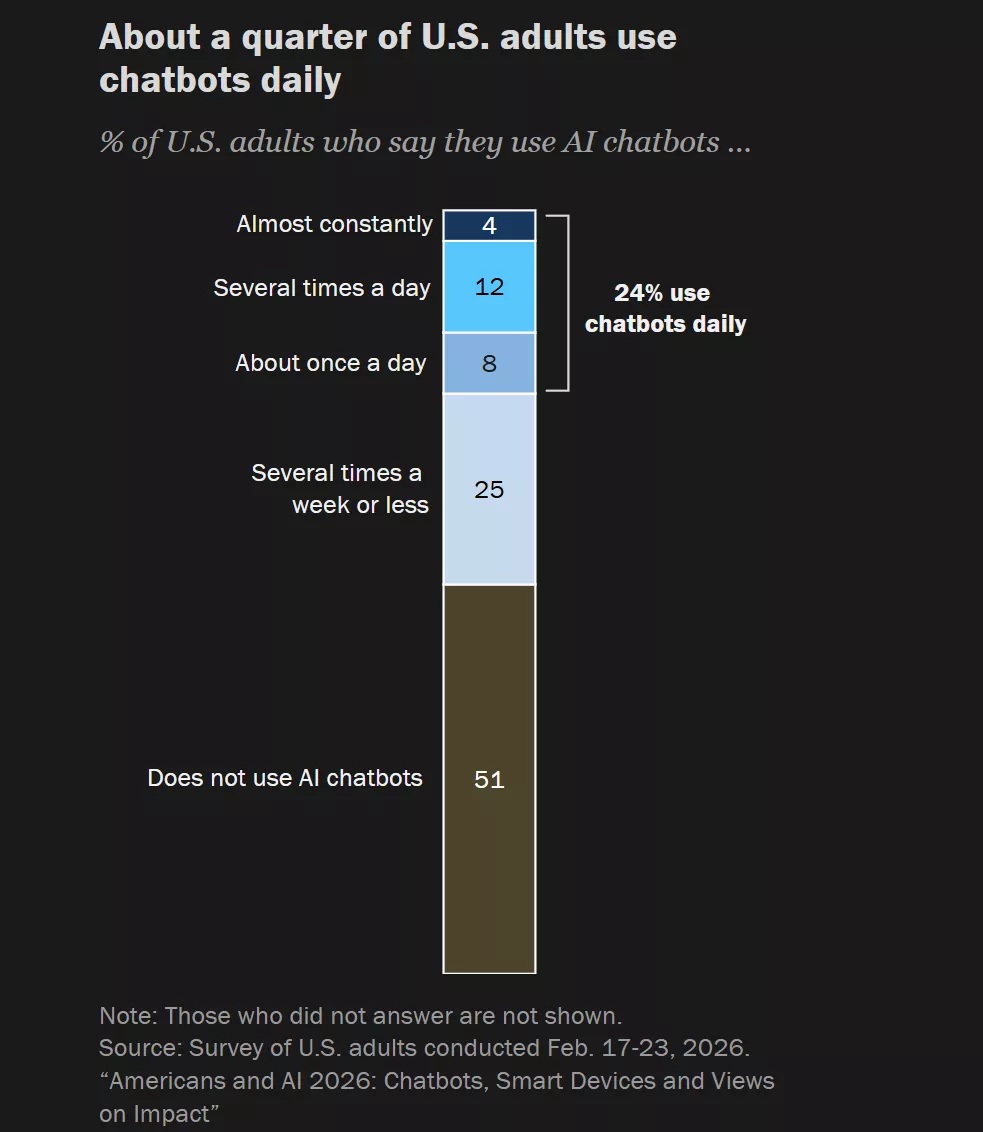
According to Pew Research, 49% of U.S. adults now use AI chatbots, a sharp increase from 33% two years ago. Roughly one in four Americans use chatbot services daily, underscoring how quickly tools such as ChatGPT, Gemini, Copilot, and Meta AI have become embedded in everyday routines.
Register for the next Tekedia Mini-MBA.
Register for Tekedia AI in Business Masterclass.
Join Tekedia Capital Syndicate and co-invest in great global startups.
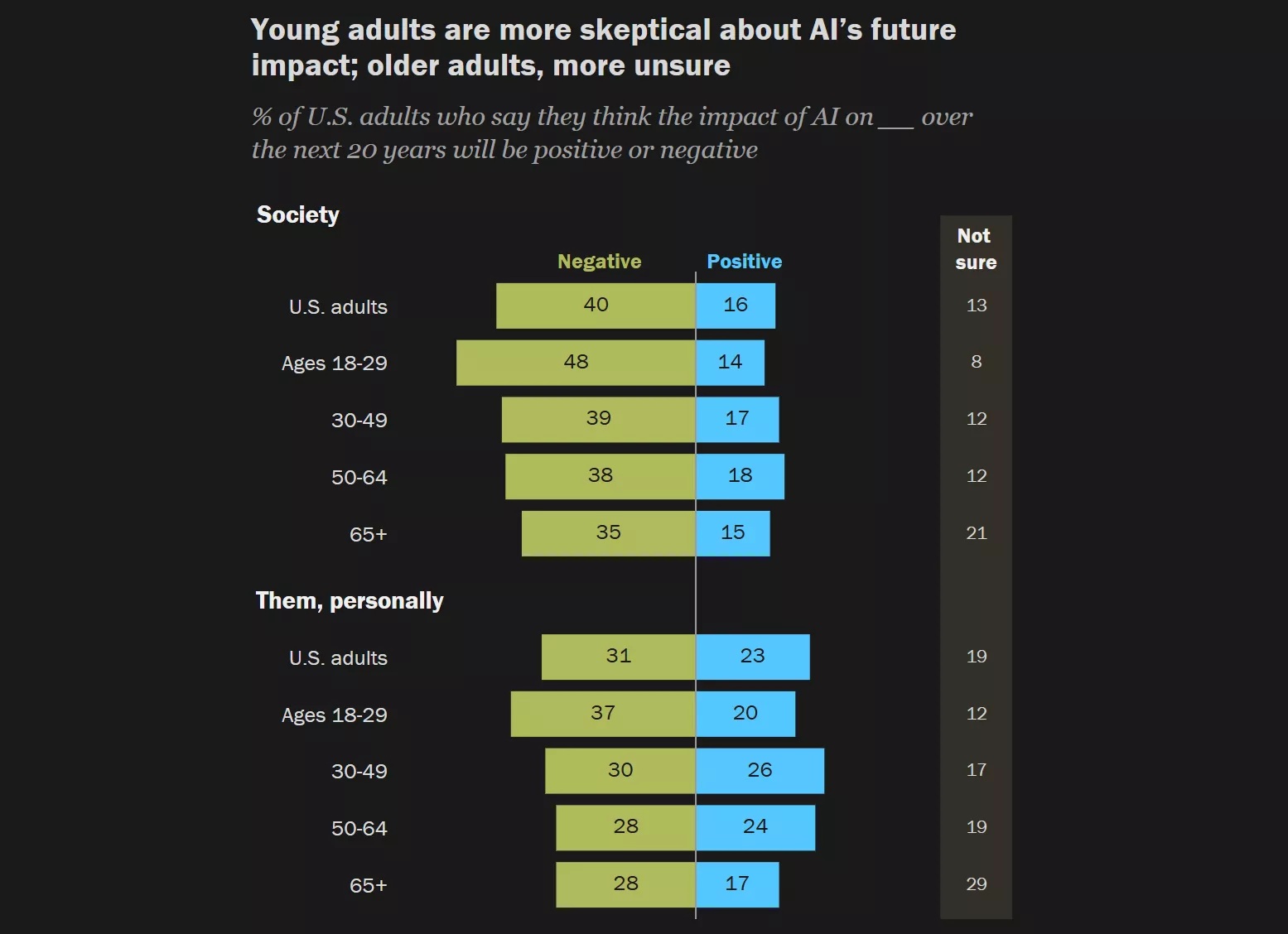
Yet enthusiasm about AI’s future remains limited. Just 16% of survey participants said they expect AI to have a positive impact on society over the next two decades, while 40% believe its effects will be negative. About one-third expect a mix of positive and negative outcomes.
The skepticism extends to personal expectations. Thirty-one percent of respondents said AI would negatively affect their own lives, compared with 23% who expect positive benefits. The results suggest that many Americans are increasingly treating AI as a useful tool while remaining unconvinced that its broader societal consequences will be beneficial.
The survey highlights how AI-powered chatbots are rapidly reshaping the way people access information online.

Searching for information emerged as the most common use case, reflecting a broader shift away from traditional web browsing toward conversational interfaces. Increasingly, users are turning to ChatGPT and competing services instead of visiting websites directly, a trend that continues to raise concerns about the future economics of online publishing and digital advertising.
Other leading use cases include:
- Work-related tasks
- Entertainment and recreation
- Image creation and editing
- Educational assistance
- Health, diet, and fitness information
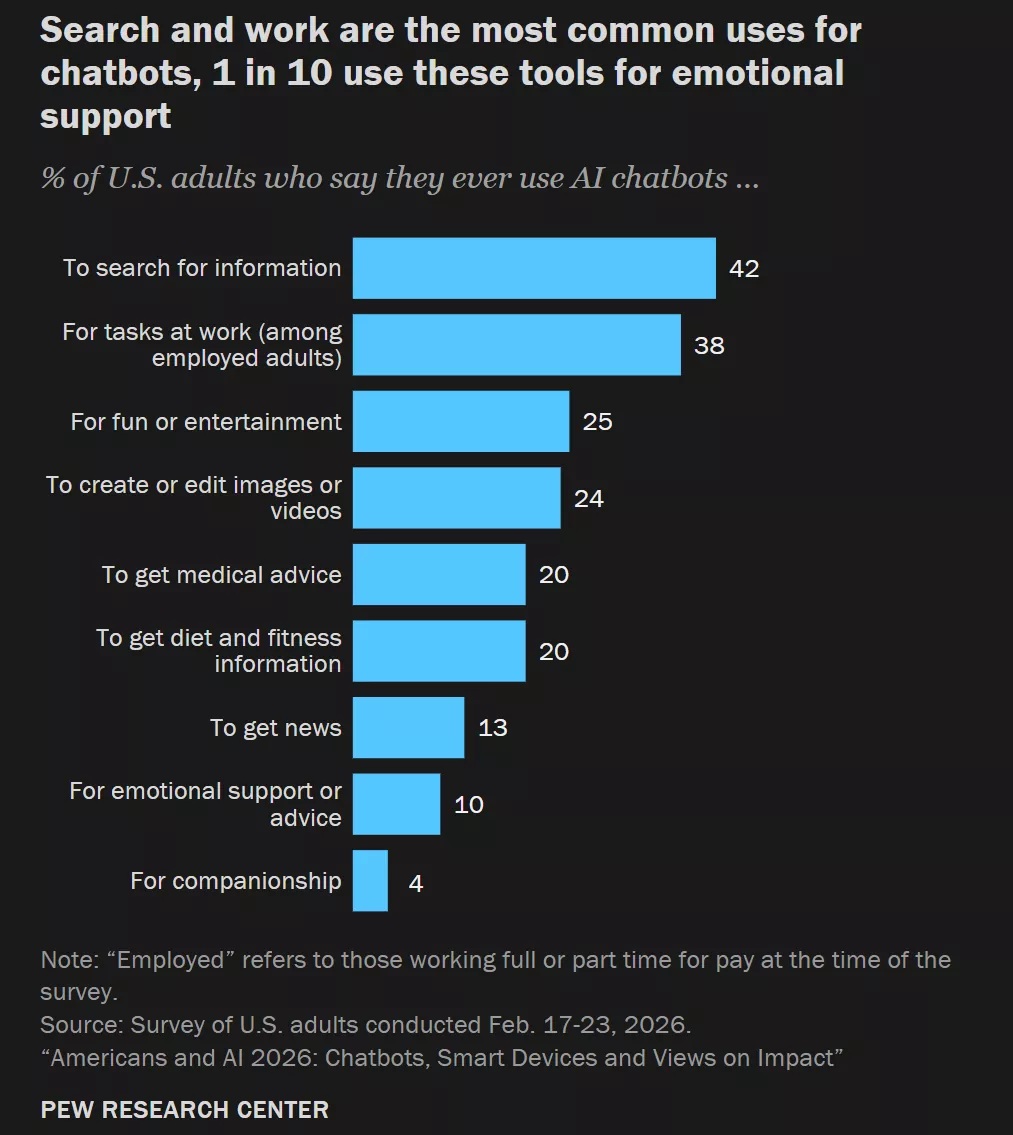
The growing use of chatbots for medical and wellness advice is particularly notable because major AI companies have repeatedly warned users not to rely on these systems for diagnoses, treatment recommendations, or professional medical guidance.

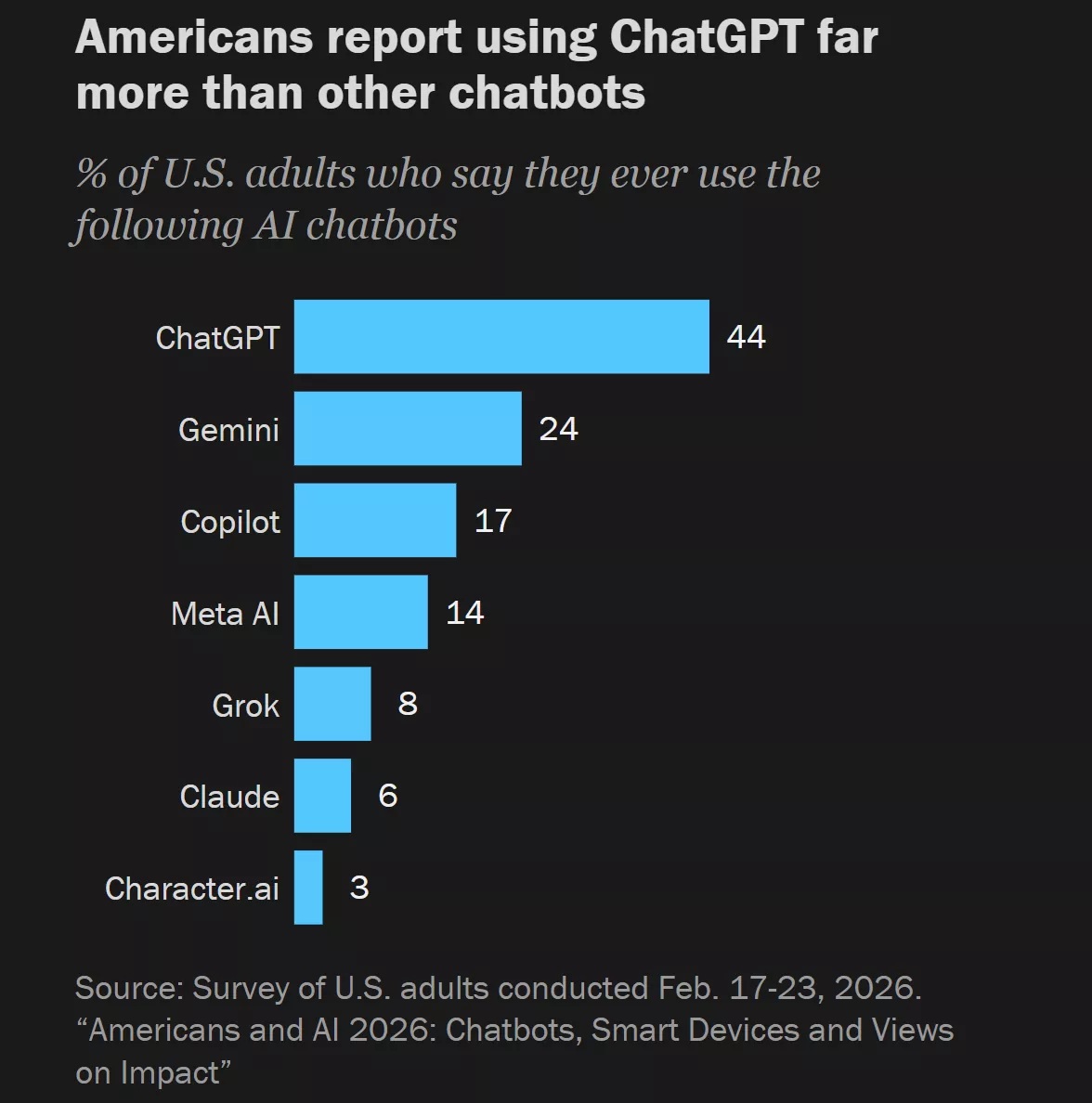
ChatGPT remains the dominant player in the market. According to the survey, 44% of chatbot users reported using ChatGPT, ahead of Google’s Gemini at 24%, Microsoft’s Copilot at 17%, and Meta AI at 14%. The findings reinforce evidence that OpenAI continues to hold a commanding lead in consumer AI adoption, even as rivals invest heavily to narrow the gap.
One of the more revealing findings is that younger Americans appear to be among the most concerned about AI’s future impact. Adults aged 18 to 29 expressed particularly strong concerns about how the technology could affect society and their personal prospects.
That anxiety comes as AI increasingly becomes part of debates around employment, education, and economic opportunity.
The concerns are not occurring in a vacuum. Across multiple industries, companies have begun using AI to automate tasks previously performed by entry-level workers, particularly in areas such as customer service, administrative support, coding, content generation, and data analysis.
Executives remain divided on the long-term employment impact.
Some industry leaders, including Anthropic CEO Dario Amodei, have previously warned that AI could eliminate a substantial share of entry-level white-collar jobs. Others argue that AI will create entirely new categories of work, eventually generating more jobs than it displaces.
However, the Pew findings suggest many Americans remain unconvinced by optimistic forecasts.
Widespread Concern About The Pace Of AI Development
The survey also found broad concern about the speed at which artificial intelligence is advancing. Approximately two-thirds of respondents said AI development is moving too quickly. Such concerns have intensified as AI systems become increasingly capable and autonomous. Recent debates have focused on powerful frontier models developed by companies such as Anthropic, OpenAI, Google DeepMind, and Meta AI.
Warnings from AI developers themselves have added to public unease. Anthropic recently said that advanced AI systems are approaching levels where they may be able to improve themselves, prompting calls for stronger safeguards and even temporary pauses in frontier model development.
The debate has largely shifted from whether AI will transform society to whether governments and companies can manage that transformation safely.
Trust Deficit Grows
The survey reveals a significant trust gap between the public and the institutions developing or regulating AI. Most respondents said they believe AI will make their personal information less secure.
Confidence in government oversight is also limited. Sixty-seven percent of respondents reported little or no confidence in the government’s ability to regulate AI effectively.
Trust in technology companies is similarly weak. About six in ten adults said they are not confident that companies will develop and deploy AI responsibly.
Those findings underscore one of the industry’s biggest challenges: convincing users that the benefits of AI outweigh concerns about privacy, security, misinformation, and economic disruption.
The Pew survey arrives amid evidence that AI adoption is reaching unprecedented levels. Market intelligence firm Sensor Tower recently estimated that ChatGPT became the fastest application ever to reach one billion monthly active users, surpassing the previous record established by Google Maps.
The milestone highlights how rapidly generative AI has moved from a niche technology into a mainstream consumer product.