

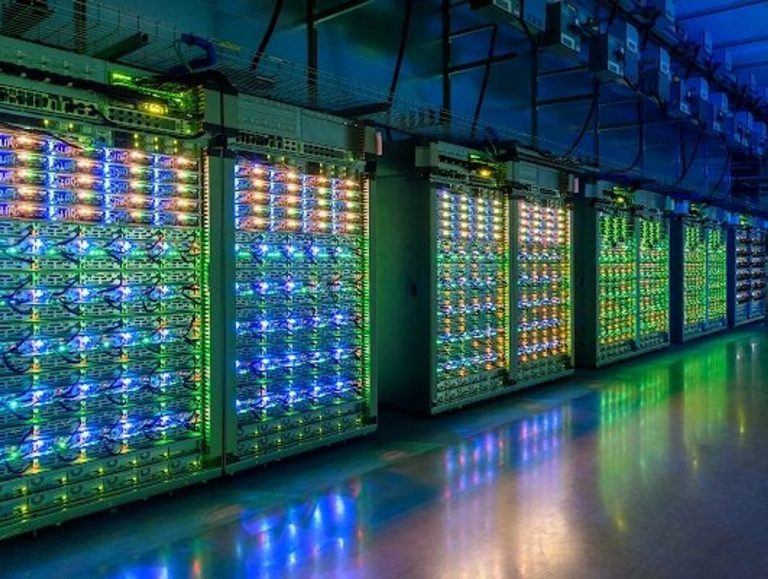
Schneider Electric expects its India data center business to grow significantly faster than its broader operations in the country over the next four to five years, as artificial intelligence adoption triggers a fresh wave of investment in digital infrastructure.
The company said demand for AI-ready data centers, cloud computing capacity, and grid modernization is accelerating across India, turning the country into one of the most important emerging battlegrounds in the global infrastructure race.
Sumati Sahgal, vice-president for Secure Power and Data Centers, Greater India Zone at Schneider Electric, told Reuters that data centers currently contribute about 15% to 20% of the company’s India business, but the segment is expanding at a double-digit pace and is expected to account for a much larger share over time.
Register for the next Tekedia Mini-MBA.
Register for Tekedia AI in Business Masterclass.
Join Tekedia Capital Syndicate and co-invest in great global startups.
“This business will contribute to a much faster pace of growth than what the rest of the core business sees,” Sahgal said, adding that data centers and electricity grid upgrades would remain among the company’s strongest growth drivers.
This means that the AI investment boom, initially concentrated in the United States and China, is now rapidly reshaping India’s industrial and technology landscape. As companies rush to deploy generative AI systems, demand is surging for high-density computing facilities capable of handling enormous workloads, particularly those tied to training and running large language models.
Unlike traditional data centers, AI-focused facilities consume far more electricity and require sophisticated cooling systems, backup power infrastructure, and energy management software. That shift is creating a lucrative opportunity for suppliers such as Schneider Electric, which provides uninterruptible power supply systems, switchgear, cooling technologies, power distribution units, and monitoring software.

India has emerged as a particularly attractive market because of its large digital population, expanding cloud adoption, and government pushes to strengthen domestic manufacturing and digital infrastructure. Industry estimates cited by Schneider Electric suggest India’s data center market could reach $31.36 billion by 2035, growing at a compound annual rate of more than 13%.
Sahgal said India’s installed data center capacity could rise to between 6 gigawatts and 7 gigawatts by 2030, up sharply from around 1.5 gigawatts currently. That scale-up would require billions of dollars in fresh investment in power systems, cooling equipment, and transmission infrastructure.
The expansion is also spreading geographically. While Mumbai and Chennai remain dominant hubs because of submarine cable connectivity and financial infrastructure, companies are increasingly looking toward states such as Gujarat and Rajasthan to build new facilities closer to users and industrial clusters.

That decentralization trend reflects mounting concerns about land availability, power reliability, and latency requirements for AI applications. It also aligns with India’s broader push to develop regional digital ecosystems rather than concentrate infrastructure in a few urban centers.
Schneider Electric’s optimism comes amid a broader global scramble for AI infrastructure. Technology giants, including Microsoft, Amazon, Google, and Meta, are collectively spending hundreds of billions of dollars to build AI computing capacity, while equipment makers and power infrastructure firms are benefiting from the surge in demand.
India is increasingly positioning itself as both a consumer market and a manufacturing base within that ecosystem. Sahgal said the country is becoming an important production hub for power and cooling equipment used in data centers, with local manufacturing helping operators manage costs and supply chain risks.
The shift is also tied to growing energy concerns. AI data centers require enormous amounts of electricity, placing additional strain on power grids already under pressure in many countries. That has elevated the importance of grid modernization and energy efficiency technologies, areas where Schneider Electric has been aggressively expanding.
Investors globally have poured into companies linked to AI infrastructure over the past two years, betting that the demand cycle could last for a decade or more. Semiconductor firms, power equipment makers, utilities, and cooling technology providers have all emerged as major beneficiaries.
For Schneider Electric, India now represents one of the clearest examples of how the AI boom is moving beyond software and chips into the physical infrastructure economy. The company’s strategy is seen as an indication of a broader industry view that the next phase of AI competition will not just be about algorithms, but about who can build enough energy-efficient computing infrastructure to support them.