

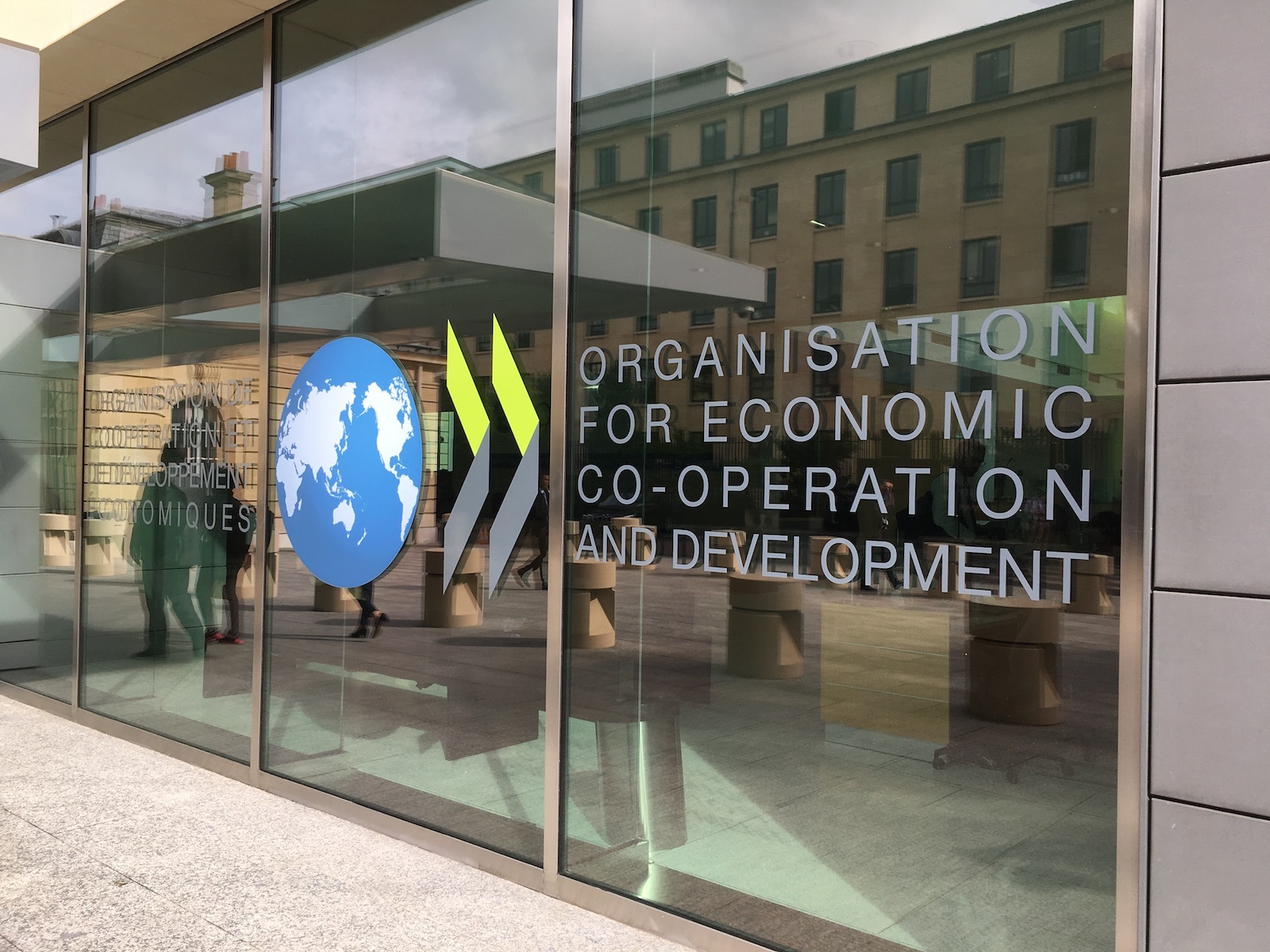
Heavy investment in artificial intelligence infrastructure is helping the global economy remain more resilient than previously expected in 2026, but an increasingly persistent energy shock is threatening to weaken growth and keep inflation elevated into 2027, the Organization for Economic Co-operation and Development said on Wednesday.
The OECD raised its forecast for global economic growth this year to 2.9%, from 2.8% in its June outlook, although the pace would still represent a marked slowdown from the 3.4% expansion recorded last year.
The improvement is being driven in part by an investment cycle centered on AI, with companies continuing to spend heavily on data centers, semiconductors and related infrastructure. The OECD said that spending has become an important source of economic resilience, particularly in the United States, while also supporting technology exports from major Asian producers such as Japan and South Korea.
Register for the next Tekedia Mini-MBA.
Register for Tekedia AI in Business Masterclass.
Join Tekedia Capital Syndicate and co-invest in great global startups.
But the organization’s more cautious outlook for 2027 highlights the growing tension between the AI investment boom and a deteriorating energy environment.
Global growth is now projected at 3.0% next year, down from the 3.1% forecast in June. The downgrade is largely linked to the commodity price shock associated with the conflict in the Middle East, which is expected to weigh on household purchasing power, business costs and economic activity.
The OECD’s assessment points to an important question for the global economy: whether the strength of AI-related capital spending can continue to offset weakness elsewhere, particularly if energy costs remain elevated and financial conditions become more restrictive.

The organization warned that the outlook could deteriorate substantially if several risks materialize simultaneously. These include renewed energy-market volatility, extreme weather associated with a strong El Niño, rising government bond yields and weaker-than-expected returns from AI investment.
Taken together, those risks could reduce global growth by 0.7 percentage points next year while increasing global inflation by 1.1 percentage points, according to the OECD.
That risk has raised concerns because inflation is already proving more persistent than previously anticipated. The OECD raised its forecast for inflation across the G20 economies to 4.1% in 2026, from 4.0% in its June forecast. Its 2027 projection was increased much more sharply, to 3.6% from 3.1%.

The higher inflation outlook could complicate central banks’ path. If energy costs begin feeding into broader prices, monetary policymakers may have less room to reduce interest rates even as economic growth weakens. The OECD said central banks could be forced to adjust policy if price pressures broaden or economic activity deteriorates.
AI Investment Offsets Weaker Demand in The US
The United States remains one of the clearest examples of the economy being supported by the AI investment cycle.
The OECD raised its US growth forecast to 2.2% for 2026 and 2.1% for 2027, both higher than its previous projections. Heavy investment linked to AI is helping offset weaker consumer spending, providing a powerful source of demand at a time when households are facing higher costs.
The resilience, however, comes with a serious vulnerability. Much of the current investment boom is concentrated in a relatively narrow part of the economy, particularly technology infrastructure. Data centers, advanced chips and other computing infrastructure require enormous amounts of capital and energy. That means the economic benefits of the AI boom could weaken if companies begin questioning the returns from the enormous sums being committed to AI infrastructure.
US inflation is expected to reach 3.6% in 2026 before easing to 2.6% in 2027. The OECD said tariffs and higher energy prices are likely to put pressure on household purchasing power and increase costs for businesses.
This creates a difficult combination for policymakers. AI investment can support growth, but higher energy prices and trade costs can simultaneously push inflation higher.
China faces a different set of constraints. The OECD expects the world’s second-largest economy to grow 4.5% in 2026 and 4.2% in 2027, leaving its forecasts unchanged from June.
Beijing’s efforts to curb excess industrial capacity are expected to weigh on investment, while consumer spending is projected to recover gradually. The combination points to a Chinese economy increasingly dependent on domestic consumption as industrial investment faces tighter constraints.
Europe Faces A Sharper Energy Problem
The euro zone is expected to grow just 1.0% in both 2026 and 2027. Higher energy prices and interest rates are weighing on economic activity, although new defense spending initiatives are expected to provide some support.
Inflation presents a more immediate problem. The OECD forecasts euro zone inflation at 3.0% this year and 2.9% next year, well above the European Central Bank’s medium-term objective.
Natural gas prices are a particular concern. European gas storage levels are at 15-year lows heading into the winter heating season, leaving the region more exposed to further increases in energy costs.
The combination of weak growth and elevated inflation could limit the ability of policymakers to provide additional monetary support. If energy prices remain high for an extended period, the shock could also spread beyond headline inflation into transportation, manufacturing, food production and other parts of the economy.
Japan’s outlook is comparatively stable, with growth forecast at 0.8% in 2026 and 0.7% in 2027. Strong business investment is supporting activity, but higher policy rates and more expensive energy imports are expected to offset some of that strength. Japan also stands out because inflation is expected to accelerate rather than decline. The OECD projects inflation at 1.8% this year before rising to 2.6% in 2027, citing a tight labor market and strong wage growth.
Canada’s outlook has deteriorated more sharply. The OECD cut its 2026 growth forecast to 0.9% from 1.2% and reduced its 2027 projection to 1.3% from 1.7%, citing new US tariffs on Canadian exports.
The contrasting forecasts underline how uneven the global expansion has become. AI-related capital spending is providing a significant lift to some economies and industries, while energy costs, trade barriers, monetary tightening and weaker consumers are creating pressure elsewhere.
The central risk for 2027 is therefore not simply slower growth. It is the possibility that several shocks reinforce one another. A prolonged energy shock could raise inflation just as weaker demand reduces growth, while higher government bond yields could increase borrowing costs and put additional pressure on businesses and governments.
At the same time, the global economy is becoming increasingly reliant on whether the enormous investment in AI infrastructure ultimately translates into productivity gains and sustainable returns.
While the spending boom is currently helping prevent a sharper global slowdown, the OECD’s projections suggest, however, that AI investment alone may not be sufficient to shield the world economy from a prolonged energy shock, particularly if inflation remains elevated and financial conditions tighten further.