

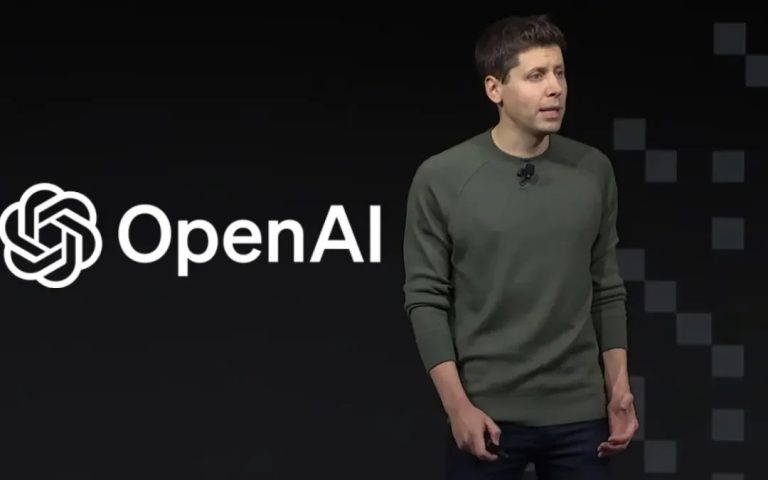
OpenAI is positioning ChatGPT for a new phase of expansion, with CEO Sam Altman outlining a three-part strategy built around artificial intelligence models, developer infrastructure, and a marketplace that could connect businesses and customers across the company’s growing ecosystem.
The strategy comes as ChatGPT reaches 1.2 billion weekly users, giving OpenAI an unusually large distribution network at a time when the company and rivals such as Anthropic are under pressure to turn massive investments in AI models and computing infrastructure into durable businesses.
Speaking at OpenAI’s developer conference in San Francisco on Tuesday, Altman described the company’s progression as a sequence: “models,” followed by “building,” and then “distribution.”
Register for the next Tekedia Mini-MBA.
Register for Tekedia AI in Business Masterclass.
Join Tekedia Capital Syndicate and co-invest in great global startups.
“We want to support you all with a powerful platform for building whatever you can dream of,” Altman told developers and employees gathered at the Fort Mason venue.
The move is significant because OpenAI is increasingly trying to control more than the underlying intelligence. Its ambition is to supply the models, provide the tools developers use to build applications, and then use ChatGPT’s enormous audience to distribute those products.
That could give the company a role closer to an AI platform and marketplace than a conventional model developer.

From AI Models to a Full Developer Platform
The first pillar remains the technology itself. OpenAI began as an AI research laboratory, but the competitive landscape has changed dramatically since ChatGPT became a consumer phenomenon. Anthropic, Google, Meta, and xAI are investing heavily in more capable models, while Chinese developers are competing aggressively on price.
OpenAI continues to devote much of its computing capacity to model research. At the conference, Altman announced GPT-6.1 Sol, positioning it as a more affordable alternative to the company’s latest Astra model.
The company also announced Ultrafast, a significantly more expensive option designed to provide faster access to OpenAI’s models.

“Our goal is to give you the best combination of intelligence and capability at every price point in the whole market,” Altman said.
That pricing strategy reflects one of the central challenges facing frontier AI companies. Model capability is improving, but the cost of training and operating powerful systems remains enormous. Offering different levels of performance and latency allows OpenAI to target different customers rather than forcing every user onto the same expensive model.
It also turns AI inference into a market in which price, speed, and capability can be traded against one another.
OpenAI’s competitors are pursuing the same market, making model leadership difficult to defend permanently. Even if a company establishes a temporary performance advantage, rivals can narrow the gap while lower-cost models put pressure on pricing. That makes the second part of Altman’s strategy particularly important: making OpenAI’s technology easier and more useful to build on.
“We want you to have the same tools we use inside OpenAI,” Altman said.
The company announced that Codex, its AI coding tool, is now available through the cloud, allowing developers to use it across devices. OpenAI also introduced an API designed to allow customers to build AI agents using its technology.
Another API focused on rapid decision-making was also unveiled, broadening the company’s developer infrastructure beyond simply providing access to language models.
Altman described the objective as making OpenAI a “one-stop shop” for developers. That could increase switching costs for businesses. If developers use OpenAI not only for the underlying model but also for coding, agents, APIs, and other infrastructure, replacing the company’s technology becomes a larger technical and commercial undertaking.
ChatGPT’s 1.2 Billion Users Become Distribution Infrastructure
The third pillar may be the most commercially consequential.
OpenAI said ChatGPT now has 1.2 billion weekly users, giving the company an enormous audience that other AI developers and businesses may want access to.
OpenAI is beginning to use that audience as a distribution mechanism.
Altman said business customers can now use portions of their existing OpenAI commitments to purchase products from OpenAI’s partners. Users can also use “Sign in with ChatGPT” to access other AI products while applying part of their existing token allotments.
The mechanics are useful because they potentially change OpenAI’s position in the AI economy. Rather than requiring every AI startup to build its own customer acquisition channel, OpenAI could become a gateway through which businesses discover, access, and pay for AI products. That resembles the role played by cloud platforms, app stores and other technology marketplaces, where the platform owner does not necessarily build every product but controls an important part of the relationship between developers and customers.
Altman said he views cloud computing providers as a useful model for how OpenAI can support a broader ecosystem.
“We want to figure out how to put this everywhere and drive people, revenue, and customers, and help people create these new things and make the most robust, richest ecosystem we can,” he said.
The ambition would give OpenAI another potential source of economic value beyond charging for model access.
It could earn revenue from its own models while also benefiting from the activity of businesses building on top of its platform. More importantly, it could create a feedback loop in which more developers bring more products to the ecosystem, those products attract more users, and the larger user base makes OpenAI more attractive to developers.
The 1.2 billion-user figure therefore matters for more than its scale. It provides the distribution layer that could make the marketplace strategy viable.
OpenAI’s Next Battle Is Ecosystem Control
The strategy also highlights how competition in AI is evolving. The initial race was largely about developing the most capable model. It has since expanded into a battle over computing infrastructure, developer tools, enterprise integration, and consumer distribution.
OpenAI is now attempting to compete across all of those layers. But it comes with substantial execution risk. Building a marketplace requires attracting enough high-quality third-party products to make it useful while ensuring that OpenAI does not alienate developers by competing with them. It also requires a commercial model that gives businesses sufficient incentive to distribute through OpenAI rather than build direct relationships with customers.
The company must simultaneously maintain the underlying models at a competitive price while funding the enormous computing requirements associated with frontier AI development.
That appears to be where the three-part strategy becomes interconnected. Better models attract users and developers. Better developer tools make those models easier to deploy. A larger user base makes OpenAI more valuable as a distribution channel. More ecosystem activity can, in turn, create additional demand for OpenAI’s models and infrastructure.
For OpenAI, the ultimate objective appears to be moving from selling intelligence to operating an ecosystem around it.
ChatGPT’s 1.2 billion weekly users provide the starting point. The challenge is turning that reach into a durable platform advantage without allowing competitors to capture the developers, applications, and business relationships that increasingly determine where AI value is created.
The AI industry is believed to be entering a phase in which model quality remains critical, but may no longer be sufficient. The companies that control how models are built on, accessed, and distributed could capture a larger share of the economics than those competing solely on benchmark performance.
Altman’s three-stage plan is effectively an attempt to ensure OpenAI occupies all three positions at once.