

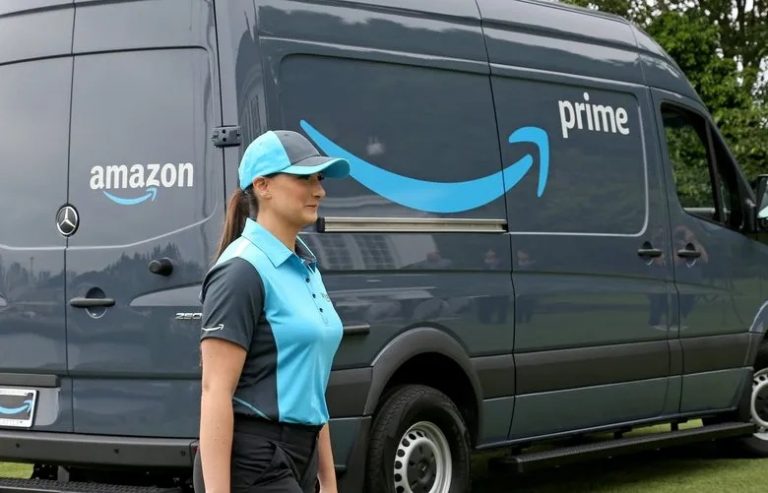
Amazon is making one of its boldest pushes yet beyond e-commerce, opening its sprawling logistics and fulfillment infrastructure to outside businesses in a move that threatens to upend a freight and parcel delivery market long dominated by UPS and FedEx.
The company announced Monday that it is launching “Amazon Supply Chain Services,” a platform that allows businesses to store, transport, and distribute goods through Amazon’s integrated network spanning ocean freight, trucking, rail, air cargo, warehousing, and last-mile delivery.
The expansion signals Amazon’s clearest attempt yet to transform its logistics empire from an internal operational advantage into a standalone infrastructure business, echoing the strategy that turned Amazon Web Services from a tool supporting Amazon’s retail operations into the world’s largest cloud-computing platform.
Register for the next Tekedia Mini-MBA.
Register for Tekedia AI in Business Masterclass.
Join Tekedia Capital Syndicate and co-invest in great global startups.
Industry analysts say the implications could be profound, particularly for legacy logistics providers that have spent decades building high-margin business-to-business shipping operations now directly in Amazon’s crosshairs.
Shares of FedEx and UPS each fell more than 9% following the announcement, while Amazon’s stock rose nearly 1%, reflecting investor belief that the company may be opening another major long-term revenue engine.
The announcement also rattled broader logistics and supply-chain players. Shares of DHL dropped 7.3%, while GXO Logistics plunged nearly 13%. Analysts at Evercore ISI said contract logistics firms, including DHL Supply Chain, GXO, and Maersk, are among the companies most exposed to Amazon’s expansion.

Amazon said businesses in sectors including healthcare, manufacturing, and retail can now use its logistics network for shipments across all sales channels, including physical stores, company websites, and social media storefronts.
The company has already signed up major corporate clients, including Procter & Gamble, 3M, and American Eagle Outfitters. The service gives customers access to Amazon’s two-to-five-day delivery windows, inventory forecasting systems, and fulfillment technology, capabilities originally developed to support the company’s massive retail marketplace and Prime ecosystem.
For years, Amazon quietly built one of the world’s largest logistics operations as it sought to reduce dependence on UPS and FedEx during peak shopping periods. What began as a defensive strategy has evolved into a global transportation machine with more than 100 cargo aircraft, thousands of delivery vans, extensive robotics-driven warehouses, and sophisticated data systems capable of tracking inventory and consumer demand in real time.

That scale now gives Amazon a potentially powerful advantage as businesses increasingly prioritize speed, supply-chain visibility, and automation.
“The move is ‘a direct competitive blow’ to parcel firms such as UPS and FedEx,” analysts at Evercore ISI wrote in a note.
The company’s expansion is remarkable because it targets the lucrative business-to-business logistics segment, an area traditional freight companies have increasingly relied on as consumer delivery growth moderates and retail shipping becomes more expensive. B2B shipments are generally denser, more predictable, and cheaper to serve than residential deliveries, making them a crucial profit driver for logistics operators.
That market has become even more important as UPS and FedEx attempt to pivot away from lower-margin e-commerce deliveries toward sectors such as healthcare logistics, industrial freight, and data-center infrastructure shipments.
Amazon is now moving directly into those same categories. Parth Talsania, CEO of Equisights Research, described the strategy as “Amazon trying to convert logistics from a cost burden into an infrastructure product.”
The comparison to AWS is increasingly difficult to ignore. When Amazon launched AWS in 2006, the service was initially viewed as an effort to monetize excess internal computing infrastructure. It later became Amazon’s most profitable business and fundamentally reshaped the global technology industry.
Analysts say Amazon may now be attempting a similar transformation with logistics by turning warehousing, shipping, and distribution capabilities into a utility-like platform businesses depend on.
The timing is particularly notable as global supply chains remain under pressure from geopolitical tensions, rising shipping costs, and the growing need for resilient distribution networks. Companies are increasingly seeking logistics partners capable of integrating inventory management, transportation, and fulfillment under one ecosystem.
Amazon’s vast data infrastructure could also give it an edge over traditional freight companies that historically focused more narrowly on transportation rather than predictive inventory analytics and integrated commerce systems.
The move may also intensify broader concerns among regulators and competitors about Amazon’s growing reach across industries. The company already dominates major segments of online retail, cloud computing, and digital advertising. Expanding deeper into freight, warehousing, and enterprise logistics could strengthen its influence over how goods move through the U.S. economy.
Analysts at Baird warned that the market is only beginning to assess the competitive consequences.
“We would not be surprised to see near-term weakness across the less-than-truckload, air-freight, and forwarding complexes as the market assesses the competitive implications of the announcement,” they wrote.
For UPS and FedEx, the threat extends beyond losing shipping volumes. Amazon’s entry raises the possibility that logistics itself could increasingly become software-driven and vertically integrated, areas where Amazon has historically excelled.
The company’s growing ability to combine transportation infrastructure with AI-driven forecasting, automation, and cloud-based analytics could reshape expectations around pricing, delivery speed, and supply-chain efficiency across the industry. What was once built to deliver Amazon packages may now become the backbone of a much broader logistics empire.