

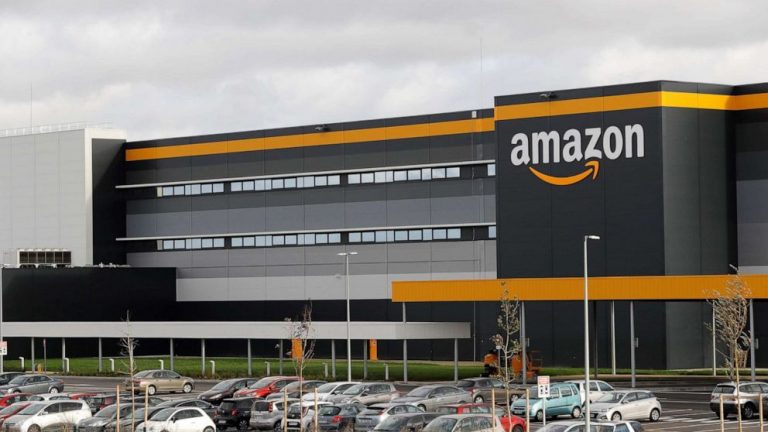
Amazon’s plan to spend $200 billion in capital expenditures this year—nearly 60% higher than last year—has placed it at the center of investor concerns about AI-driven free cash flow compression.
A modest rally in Amazon shares on Tuesday ended one of the stock’s most severe losing streaks in nearly two decades, but it did little to resolve mounting investor unease over the company’s aggressive artificial intelligence spending plans.
The stock closed up more than 1%, snapping a nine-day slide that erased roughly 18% of its value between Feb. 2 and Friday — the longest stretch of consecutive losses since 2006. The decline wiped out more than $450 billion in market capitalization, underscoring how quickly sentiment has shifted around Big Tech’s AI capital expenditure cycle.
Register for Tekedia Mini-MBA edition 20 (June 8 – Sept 5, 2026).
Register for Tekedia AI in Business Masterclass.
Join Tekedia Capital Syndicate and co-invest in great global startups.
Register for Tekedia AI Lab.
The selling pressure followed Amazon’s fourth-quarter earnings report, where management projected $200 billion in capital expenditures for the year. The figure is nearly 60% above last year’s spending and more than $50 billion higher than Wall Street had anticipated.
The bulk of the investment will go toward AI infrastructure — including data centers, custom chips, and networking hardware — to support generative AI services and cloud workloads within Amazon Web Services (AWS).
The size of the increase signals a decisive shift into infrastructure acceleration mode. It also aligns Amazon with peers including Alphabet, Microsoft, and Meta, whose combined capital expenditures could reach $700 billion this year as they race to expand AI capacity.

However, investors are increasingly focused on capital intensity. Large-scale infrastructure buildouts carry long payback periods and can suppress free cash flow in the near term. Markets that previously rewarded AI ambition are now demanding clearer evidence of monetization.
Alphabet and Microsoft shares fell more than 1% on Tuesday, each marking a fifth straight negative session. Meta edged slightly lower, reinforcing the broader rotation away from AI-heavy spending narratives.
AWS: Growth Engine or Margin Risk?
At the center of the debate is AWS, Amazon’s most profitable segment and a key driver of overall operating income.

Chief Executive Officer Andy Jassy defended the spending, telling analysts the investments will “yield strong returns on invested capital.” His thesis rests on the expectation that AI workloads will materially expand cloud demand, driving revenue growth and long-term margin expansion once scale efficiencies are realized.
Matt Garman, head of AWS, told CNBC that the capex increase positions Amazon to seize AI opportunities in the cloud. Management has also indicated that Amazon expects to double data center capacity by 2027 — a move that, if matched by demand growth, could accelerate AWS revenue meaningfully.
Andrew Boone of Citizens described that expansion target as an “underappreciated” catalyst, suggesting capacity additions may drive a reacceleration in AWS growth once deployed.
Still, analysts caution that investors will need tangible proof. Wedbush characterized Amazon as being in “prove it mode,” noting that elevated spending will remain an overhang until measurable returns become visible in revenue growth and cash generation metrics.
Valuation, Cash Flow, and Competitive Dynamics
The magnitude of Amazon’s capex has intensified debate over valuation discipline. Free cash flow is a core pillar of tech stock valuation models. If capex rises faster than operating cash flow, free cash flow can narrow or even turn negative, compressing valuation multiples.
The competitive environment adds its own challenge. With Alphabet, Microsoft, and Meta simultaneously expanding infrastructure, industry-wide supply growth could temporarily outpace demand, pressuring pricing power in certain AI services.
On the other hand, underinvestment carries strategic risk. AI models require immense computing resources, and insufficient capacity could constrain customer growth or shift workloads to competitors.
The calculus for Amazon is to invest heavily now to secure long-term dominance in AI-enabled cloud computing, even at the cost of short-term margin pressure.
Market Psychology and the AI Cycle
The recent sell-off reflects a broader shift in market psychology. In 2024 and early 2025, investors largely rewarded AI-related announcements. By early 2026, attention had turned to capital efficiency and return on invested capital.
The nine-day slide — the worst since 2006 — suggests the market is recalibrating expectations. Rather than questioning AI’s long-term potential, investors appear to be scrutinizing execution timelines and cost structures.
Tuesday’s rebound may signal technical stabilization rather than a full sentiment reversal. The durability of the recovery will likely hinge on forthcoming data: AWS revenue growth, AI service adoption rates, and free cash flow trajectory in subsequent quarters.
However, Amazon’s $200 billion spending plan places it at a pivotal moment. If AI adoption accelerates and AWS revenue scales with new capacity, the company could emerge with reinforced competitive leadership and expanded profit pools.
If returns are slower to materialize, margin compression and valuation pressure could persist, especially in an environment where investors are increasingly sensitive to capital discipline.