

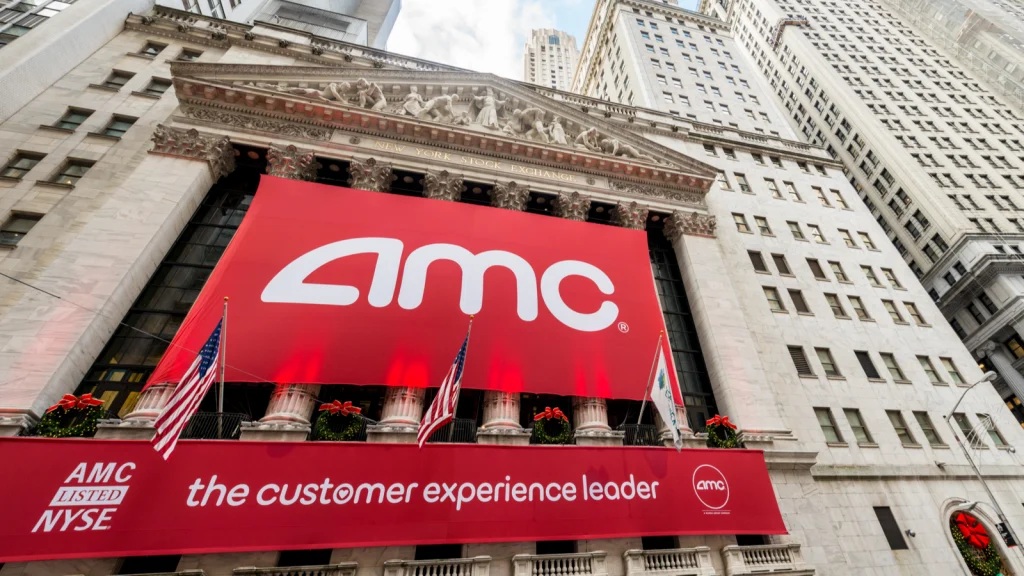
AMC Entertainment CEO Adam Aron has launched a sharp attack on Robinhood over its decision to offer tokenized versions of AMC shares, noting that the products could undermine U.S. securities regulations and create a synthetic market that operates outside the conventional framework governing publicly traded stocks.
“The list of concerns is almost existential,” Aron said in a lengthy post on Friday, escalating a dispute with Robinhood CEO Vlad Tenev over the brokerage’s rapidly expanding tokenized-stock business.
Aron’s tirade came after Tenev responded to an earlier post from the AMC chief that highlighted Robinhood’s offshore entity responsible for issuing the stock tokens.
Register for the next Tekedia Mini-MBA.
Register for Tekedia AI in Business Masterclass.
Join Tekedia Capital Syndicate and co-invest in great global startups.
“What’s the concern?” Tenev asked.
Aron replied by questioning why a U.S. financial company would establish an operation in Jersey, a British Crown Dependency, to issue and market digital instruments representing U.S.-listed securities without being subject to the same U.S. securities framework.
“In good conscience, how can Robinhood as a U.S. company set up an operation in far offshore Jersey, an island 3000 miles away, and market a security sort of posing as AMC in some shape or fashion, and not comply with U.S. securities laws. That is shocking and shameful,” Aron said.

Robinhood launched tokenized versions of popular U.S.-listed stocks and exchange-traded funds as part of a broader push to bring traditional financial assets onto blockchain-based infrastructure and make them available around the clock.
Stock tokens are digital assets designed to track the value of an underlying security, generally on a one-to-one basis. Unlike conventional shares, which trade through regulated exchanges during established market hours, tokenized versions can be transferred and traded on blockchain networks, potentially allowing investors to gain exposure to equities outside traditional market infrastructure.
In Robinhood’s case, the situation is different because the stock tokens are not offered to U.S. customers and are not registered under U.S. securities law. Robinhood’s token issuer is registered in Jersey, according to documents published by the company. The offshore structure allows Robinhood to offer the products internationally while keeping them outside the U.S. market.

That structure is at the heart of Aron’s objection.
The AMC chief argued that tokenized versions of company shares could create what he described as a “fictitious synthetic equity market,” raising questions about how such instruments interact with the actual shares issued by a company.
His concern goes beyond the trading of AMC tokens itself. If digital instruments can provide economic exposure to a publicly traded company’s stock without necessarily passing through the same market infrastructure as the underlying shares, companies and regulators may have to determine how those instruments affect price discovery, liquidity, shareholder rights, and the relationship between a company’s capital structure and the markets in which its securities trade.
Tokenized stockholders may also not have the same rights as holders of the underlying shares. Depending on the structure of a token, investors could receive economic exposure to price movements without directly owning voting rights or having the same legal status as registered shareholders.
For companies such as AMC, the distinction matters because the ability to raise capital depends heavily on the integrity and functioning of the market for its securities.
Aron said he had several concerns about Robinhood’s activities and called on the brokerage to voluntarily stop trading AMC stock tokens.
“These are but a few of my concerns about your actions. I hereby call on you and Robinhood to voluntarily CEASE AND DECIST the trading of AMC stock tokens. If you don’t, our high priced securities counsel has been asked to see whether we can force you to stop,” Aron said.
The confrontation highlights a larger debate emerging as financial institutions increasingly experiment with tokenization.
Supporters of tokenized securities believe that blockchain technology could reduce settlement times, extend trading hours, broaden international access and make financial markets more efficient. Robinhood has framed its stock tokens as a way to provide international investors with exposure to U.S. equities while modernizing the financial system.
But critics are concerned that moving securities-related products onto blockchain networks could create fragmented markets with different regulatory protections, disclosure requirements, and investor rights.
The issue becomes even more complicated when the token represents shares in a company that has not authorized the product.
Robinhood faced a similar backlash last year after announcing plans to allow users to trade tokens linked to shares of OpenAI, the privately held creator of ChatGPT. OpenAI quickly distanced itself from the offering, saying: “We did not partner with Robinhood, were not involved in this, and do not endorse it.”
The episode demonstrated the potential disconnect between a tokenized asset’s marketing and the company whose name or equity it references. An investor could potentially assume that a token has been issued or endorsed by the underlying company even when the company has no involvement in the product.
Robinhood has defended the broader concept.
“We stand firmly behind our Stock Tokens and their ability to provide international exposure to US equities, modernize the financial system and expand opportunities for ownership globally,” a Robinhood spokesperson said.
The disagreement with AMC therefore reflects a much larger question for financial regulators: when a digital asset tracks a conventional security, how closely should it be regulated like the security itself?
Traditional securities markets rely on established rules governing disclosure, custody, settlement, market manipulation, investor protection and corporate rights. Tokenization does not necessarily eliminate those functions; instead, it can move them into new legal and technological structures that may operate across jurisdictions. That creates particular challenges for regulators when an American company offers a token representing a U.S. security through an entity incorporated outside the United States and makes the product available to investors elsewhere.
The dispute also comes at a critical point for the broader tokenization industry. Major financial institutions have increasingly explored blockchain-based versions of stocks, bonds, funds and other assets, betting that tokenization could eventually become part of mainstream financial-market infrastructure.
Industry leaders believe that the success of that transition will depend in part on whether regulators can establish clear rules around ownership, redemption, custody, disclosure and market oversight.
However, Aron’s challenge to Robinhood is expected to accelerate that debate. His demand to stop trading AMC tokens forces a question that the industry will increasingly have to confront: if a digital asset closely tracks a company’s publicly traded shares, where should the boundary lie between a new financial product and the security it represents?