

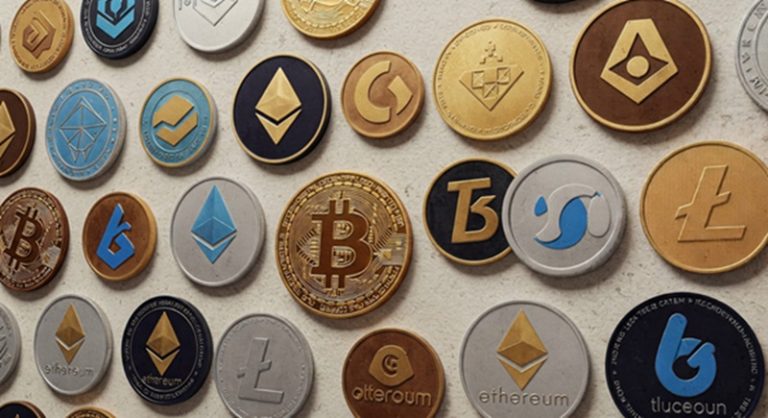
Based on historical data from CoinMarketCap snapshots and current market trackers, this claim is true. The crypto market in 2021 was characterized by a broader distribution of value across many projects during the bull run, leading to more mid-tier assets crossing the $100M threshold.
By November 2025, despite a similar total market cap (~$3.45T), value has concentrated in fewer top assets (e.g., Bitcoin dominance at ~59%), with stricter regulations, project failures, and market maturation weeding out weaker ones.
During the 2021 bull market peak, hype around DeFi, NFTs, and altcoins led to explosive growth. The historical snapshot for November 14, 2021, shows ~350 projects above $100M, including many speculative tokens that surged temporarily. Total tracked assets were around 11,000, with broad participation inflating the count.
Register for Tekedia Mini-MBA edition 20 (June 8 – Sept 5, 2026).
Register for Tekedia AI in Business Masterclass.
Join Tekedia Capital Syndicate and co-invest in great global startups.
Register for Tekedia AI Lab.
As of November 13, 2025, CoinMarketCap ranks ~120 projects above $100M, based on the league table of highest market caps all top 120 exceed this threshold, while lower ranks fall below. This reflects ~50% of projects launched since 2021 failing due to low utility, scams, or bear market pressures.
The market now prioritizes established ecosystems (e.g., Solana, TON) over quantity, with oversaturation (37M+ total tokens created) but fewer sustainable ones. Post-2022 crashes (e.g., FTX), regulatory scrutiny (e.g., SEC actions), and maturation have eliminated ~7,500 projects from the 2020-2021 boom.
Surviving ones are more robust, but the tail-end diversification has shrunk. This trend suggests a healthier, less speculative market in 2025, though it reduces opportunities for “long-tail” investments.

DeFi (Decentralized Finance) and NFTs (Non-Fungible Tokens) both exploded during the 2021 bull market, driving widespread adoption, innovation, and speculation in crypto. However, their impacts diverged post-2022 crash.
DeFi has solidified as a foundational financial infrastructure with sustained growth in utility and institutional integration, while NFTs shifted from hype-driven collectibles to niche, utility-focused applications. This evolution ties into the broader market maturation, where fewer but stronger projects survive, emphasizing real-world value over speculation.
By 2025, DeFi’s Total Value Locked (TVL) has rebounded strongly, reflecting deeper liquidity and cross-chain advancements, while NFT trading volumes remain volatile but show signs of revival through gaming and RWAs (Real-World Assets). DeFi’s scale now dwarfs NFTs, highlighting its role as crypto’s “backbone.”
NFT “market cap” is less standardized than DeFi TVL, often measured by sales volume due to unique asset nature.Economic and Market ImpactDeFi’s Dominance (2021-2025): In 2021, DeFi democratized finance with yield farming and lending, peaking TVL amid low rates and hype—contributing ~20% to crypto’s total cap growth.

By 2025, it powers 28% of on-chain activity, integrating RWAs (e.g., tokenized real estate/bonds, projected $10T+ by 2030) and omnichain bridges for seamless liquidity. This has reduced fragmentation, attracted institutions and generated $61M+ in stablecoin revenues alone.
Stabilizes crypto as “programmable money,” with $3B+ in hacks underscoring security needs but also innovation in privacy tech. The 2021 boom ($25B volume) tokenized art/gaming, drawing mainstream (e.g., CryptoKitties, Beeple sales), but crashed 90%+ by 2023 due to speculation.
In 2025, NFTs focus on utility—gaming (e.g., Axie Infinity clones), IP rights, and DeFi hybrids—with Bitcoin NFTs (Ordinals) adding $633 avg. price (896% rise from 2023). Secondary markets now drive 52% of sales, fostering liquidity. Enhances digital ownership in metaverses/entertainment, but remains niche 12% multiregional projects; diversification benefits in portfolios during volatility.
Overall, DeFi’s impact is systemic (e.g., enabling cross-chain DeFi-NFT lending), while NFTs add cultural flair—together, they’ve grown non-BTC assets to $1.59T cap, surpassing 2021 peaks. DeFi evolved with AI integration, restaking (e.g., EigenLayer), and L2s (Ethereum 100k TPS target), reducing fees 90%+ and enabling microtransactions.
NFTs advanced via dynamic tokens evolving based on real events and BRC-20 on Bitcoin, blending with DeFi for staking/governance. Hybrids like NFT-DeFi 6% BNB Chain share for collateralized assets.
DeFi’s complexity yielded to user-friendly apps (e.g., 6.7M Base NFT sales), drawing 26.7M daily wallets. NFTs excel in engagement, appealing to Gen Z via collectibles/gaming. Institutions favor DeFi over NFTs, but both benefit from regs like MiCA. 140+ Singapore blockchain startups in NFTs; DeFi’s 2100% revenue growth from 2021.
High hacks ($159M lost Aug 2025, +20% MoM); centralization risks in L2s. NFTs: Speculation persists 77% volume drop Q2 2021-2022; environmental concerns eased by PoS shifts.
Studies show NFTs offer diversification from DeFi volatility (e.g., lower spillovers in extremes), but both correlate with BTC/ETH prices. DeFi is poised to hit $100B+ TVL again via RWAs and ETFs, becoming “DeFi 2.0.” NFTs may “overtake” in cultural buzz but lag economically—expect $20B+ volume if metaverse rebounds.
Convergence (e.g., NFT staking in DeFi) could amplify impacts, fostering a $10T tokenized economy. In a maturing market with fewer $100M+ projects, both prioritize utility over hype, promising equitable systems beyond speculation.