

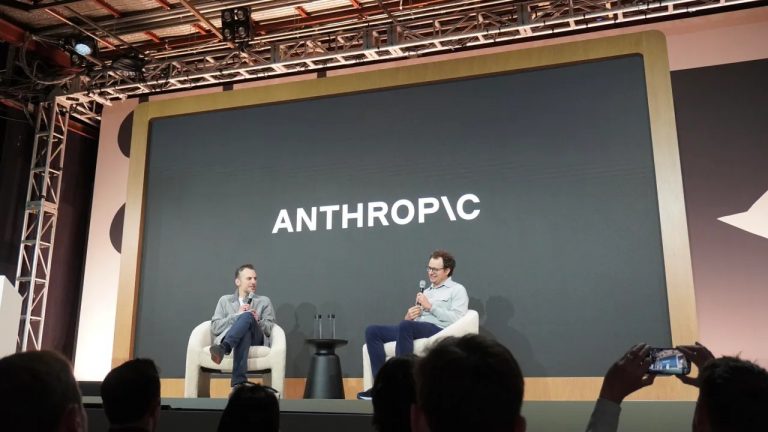
Anthropic is accelerating its push into the enterprise software market by expanding Cowork, its newly launched agentic AI product, with plug-ins designed to automate specialized tasks across business functions.
The move signals the company’s ambition to turn Claude into a configurable operating layer for corporate work rather than just a conversational assistant.
Earlier this month, Anthropic introduced Cowork as a research-preview product aimed at extending the capabilities of Claude Code beyond software developers to non-technical users. The latest update adds plug-ins, which allow companies to create narrowly focused, task-specific AI agents tailored to how work is actually done inside organizations.
Register for Tekedia Mini-MBA edition 20 (June 8 – Sept 5, 2026).
Register for Tekedia AI in Business Masterclass.
Join Tekedia Capital Syndicate and co-invest in great global startups.
Register for Tekedia AI Lab.
The plug-ins are designed to automate repeatable, domain-specific workflows across departments such as marketing, legal, sales, finance, customer support, and data analysis. In practice, that could mean drafting marketing copy that adheres to internal brand guidelines, scanning contracts for risk exposure, preparing customer responses that align with company policy, or pulling insights from internal dashboards and CRM systems.
Anthropic describes plug-ins as a way for enterprises to explicitly define how Claude should behave inside their organization — specifying preferred workflows, approved data sources, internal tools to integrate with, and guardrails for critical processes. The intent is to move beyond generic AI outputs toward consistent, policy-aware execution that mirrors how teams already operate.
Matt Piccolella, a member of Anthropic’s product team, said the company expects enterprise users to build bespoke plug-ins for their own use cases rather than rely solely on prebuilt templates. While Anthropic open-sourced 11 of its own internal plug-ins to demonstrate what’s possible, Piccolella emphasized that custom plug-ins are meant to be easy to create, edit, and share, even for users without deep technical backgrounds.

The expansion of plug-ins into Cowork builds on functionality that has existed inside Claude Code, Anthropic’s AI coding assistant, for some time. The strategic shift is not about inventing new tooling, but about democratizing access to agentic automation. By embedding plug-ins into a more user-friendly, interface-driven environment, Anthropic is attempting to bring the same automation benefits to employees who do not write code but still manage complex, repetitive workflows.
“Really, what we’re doing with this launch is just bringing them to Cowork and giving them that kind of user-friendly, UI-centric flavor that will allow the maximum number of people to use them,” Piccolella said.
Internally, Anthropic has already seen traction in departments such as sales and data analysis. Piccolella said sales teams, in particular, have benefited from plug-ins that connect employees more directly to customer feedback, internal notes, and performance data, helping sales-adjacent staff operate with better context and less friction. That mirrors a broader enterprise trend in which AI tools are increasingly expected to unify fragmented data sources rather than simply generate text.

Anthropic says the more plug-ins an organization uses, the more Claude learns about that company’s workflows, enabling better optimization over time. That approach positions Cowork not just as a productivity tool, but as a system that incrementally absorbs institutional knowledge — a concept that appeals to large enterprises but also raises questions around governance, access control, and data management.
For now, plug-ins are stored locally on a user’s machine, limiting their scalability across large teams. Anthropic has acknowledged this constraint and says organization-wide sharing tools are in development, a step that will be critical for enterprises seeking standardized processes, auditability, and consistent outputs across departments.
Cowork remains in research preview, and Anthropic has not disclosed a timeline for a broader commercial launch. In the interim, plug-ins will be available to all paying Claude customers, allowing the company to observe real-world usage patterns and refine the product before a wider rollout.
The move comes as competition intensifies among AI developers to capture enterprise spending. As large language models converge in raw performance, differentiation is increasingly shifting toward tooling, workflow integration, and ease of deployment. Rather than positioning Claude purely as a chatbot or coding assistant, Anthropic is framing it as a flexible system of AI agents that can be molded to an organization’s specific needs.
That strategy also aligns with Anthropic’s broader positioning around control and safety. By encouraging companies to explicitly define how AI should act within their workflows — rather than leaving behavior implicit — plug-ins offer a way to operationalize guardrails while still delivering automation at scale.
Cowork and its new plug-in framework now mark a clear evolution in Anthropic’s enterprise strategy. The company is no longer just selling access to a powerful model; it is building the scaffolding for AI to become embedded in day-to-day business operations.