

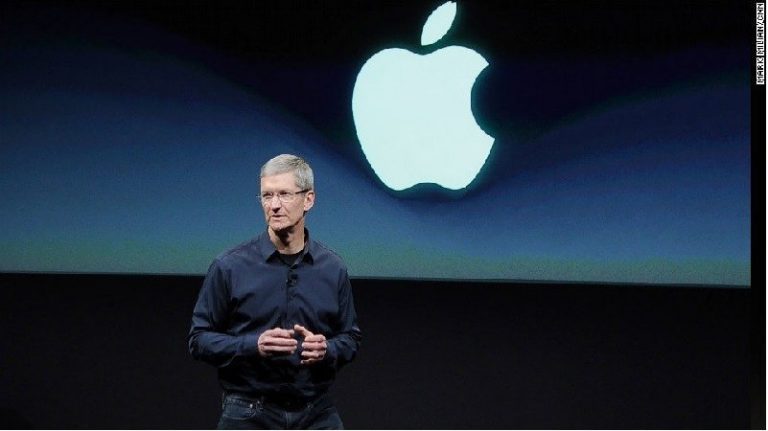
Apple is bracing for a fresh wave of costs tied to President Donald Trump’s trade policies, with CEO Tim Cook revealing that tariffs could add up to $1.1?billion to the company’s expenses in the September quarter.
Cook disclosed during Thursday’s earnings call that Apple had already swallowed about $800?million in tariff costs in the June quarter, a bit less than the $900?million estimate the company gave back in May.
Cook explained that most of the charges stemmed from tariffs imposed under the International Emergency Economic Powers Act (IEEPA), particularly targeting goods sourced from China. While Apple has been trying to diversify its supply chain to mitigate the fallout, Cook warned there were “many factors that could change, including tariff rates,” highlighting the deep uncertainty around U.S.-China trade.
Register for Tekedia Mini-MBA edition 20 (June 8 – Sept 5, 2026).
Register for Tekedia AI in Business Masterclass.
Join Tekedia Capital Syndicate and co-invest in great global startups.
Register for Tekedia AI Lab.
Supply Chain Shuffle: India and Vietnam in Focus
The Trump administration has repeatedly pushed Apple to relocate production to the United States or face even steeper import duties. As a result, Apple has stepped up manufacturing in India, where Cook noted that “the majority” of iPhones sold in the U.S. are now produced.
Meanwhile, most Macs, iPads, and Apple Watches come from Vietnam. These moves, aimed at avoiding the highest Chinese tariffs of around 25%, still leave Apple exposed, since the Trump administration has threatened to expand tariffs to include India and Vietnam if production doesn’t shift to U.S. soil.
Even with this diversification, Apple’s sprawling supply chain, built over decades across Asia, is not easily or cheaply replicated in the U.S., Cook stressed. To blunt the impact of trade threats, Apple has committed to investing $500?billion in U.S. projects over the next four years, including building a Detroit-based manufacturing academy and expanding its domestic semiconductor sourcing.

Apple Powers Ahead Despite Trade Turbulence
Despite the tariff drag, Apple delivered impressive results in the June quarter. Revenue climbed 10% to $94?billion, while net profit rose 9%, thanks to robust demand for the iPhone 16 and steady growth in services. iPhone sales alone jumped 13% to $44.6?billion, and services revenue reached a record $27.4?billion.
Cook credited a mix of “early buy” activity from consumers wary of future price hikes and the sustained popularity of the latest flagship devices. Services—including iCloud, Apple Music, and App Store fees—helped stabilize earnings, offsetting pressure from rising production costs.
As rivals like Microsoft and Google race ahead with large-scale artificial intelligence rollouts, Apple has faced growing pressure to deliver more from its own AI initiatives. Cook confirmed plans to “significantly” expand Apple’s AI investment, and CFO Kevan Parekh said the company could pursue strategic acquisitions to strengthen its position. Analysts argue this shift is crucial if Apple wants to balance tariff-related volatility with new revenue streams.

Industry analysts note that Apple’s focus on “on-device” AI puts it on a different path than cloud-heavy competitors, with the goal of maintaining data privacy while still offering powerful features. However, Apple lags behind its peers in rolling out major consumer-facing AI products, a gap that some fear could widen if trade battles further squeeze margins.
Walking The Tariff Tightrope
Cook’s comments made it clear Apple faces a precarious few months. If tariff rates remain at their current levels, the company could see a cumulative hit of nearly $1.9?billion across two quarters. That figure might rise if Trump follows through on new threats to target imports from India or Vietnam.
Apple is betting that its diversification strategy, robust U.S. investment promises, and a pivot to AI can protect its brand and bottom line from geopolitical turbulence. But the challenges are substantial.
Shares in Apple are down 17% year-to-date, reflecting investor worries about trade risk and competitive pressures. Whether Cook can balance these crosswinds while still keeping Apple’s growth story alive will define the company’s trajectory heading into 2026.